Why You Should Quit Your Office Job for a Remote Career in 2026
Discover the freedom, flexibility, and financial benefits of switching to a remote lifestyle.
3 months ago - Updated 11 days ago
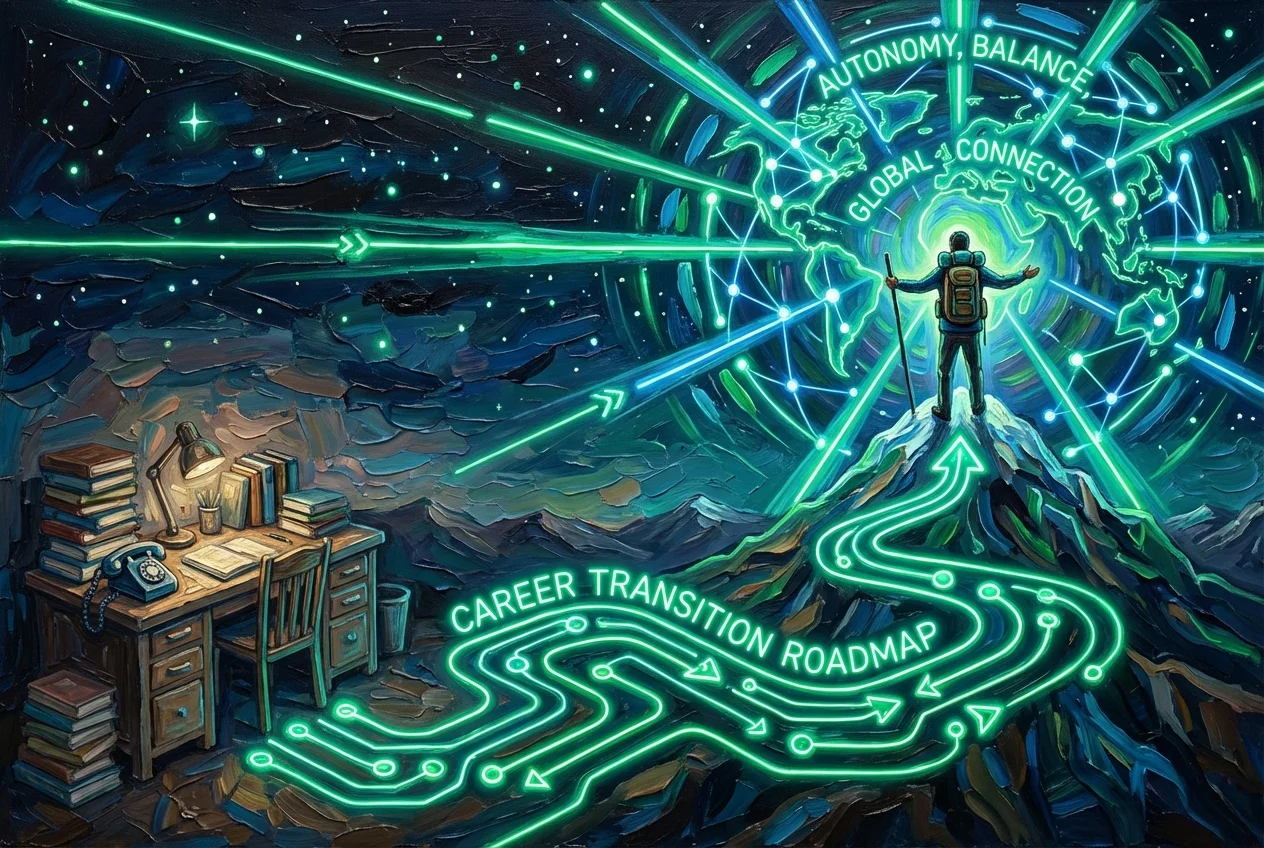
The year 2026 marks a definitive turning point in the history of professional employment. We have moved past the experimental "work-from-home" phase of the early 2020s and entered an era where a remote career is no longer a luxury—it is a strategic lifestyle choice. While some corporate giants have attempted to mandate a full return to the office, the data tells a different story: flexibility has become the primary currency of the modern workforce, driving millions to seek out the best work from home jobs and stable online jobs.
If you find yourself staring at the fluorescent lights of a cubicle, wondering if there is more to life than the 45-minute commute and overpriced office salads, you aren't alone. In early 2026, nearly 38% of professionals are actively planning a career transition to roles that offer greater autonomy. This article explores the multifaceted reasons why quitting your office job for a remote career this year is the smartest move you can make for your wallet, your mental health, and your future, especially if your comfortable job is stalling your career.
The 2026 Landscape: Why Now?
The professional world in 2026 is vastly different from the one we knew just a few years ago. We have entered what economists call "The Intelligent Workplace" era. Technology has finally caught up with our ambitions, making synchronous office presence feel like a relic of the 20th century.
According to recent labor statistics, approximately 32.6 million Americans now work remotely. This isn't a temporary trend; it is a structural transformation. Global workplace data suggests that the shift toward distributed teams is permanent as companies prioritize agility. Many are finding high-paying remote jobs in 2026 and exploring diverse career paths that don't even require a formal degree. Companies have realized that by ditching expensive real estate, they can save an average of $11,000 per employee annually. These savings are increasingly being passed down to workers in the form of better tools, stipends, and competitive salaries.
The Rise of Asynchronous Work
One of the biggest shifts in 2026 is the move away from "Zoom fatigue" toward asynchronous communication. Remote-first companies are now prioritizing documentation and project management over endless meetings. This means your "workday" is no longer defined by being "online" from 9 to 5, but by the value and output you produce. This shift is the foundation of true work-life balance.
1. Unparalleled Work-Life Balance and Mental Well-being
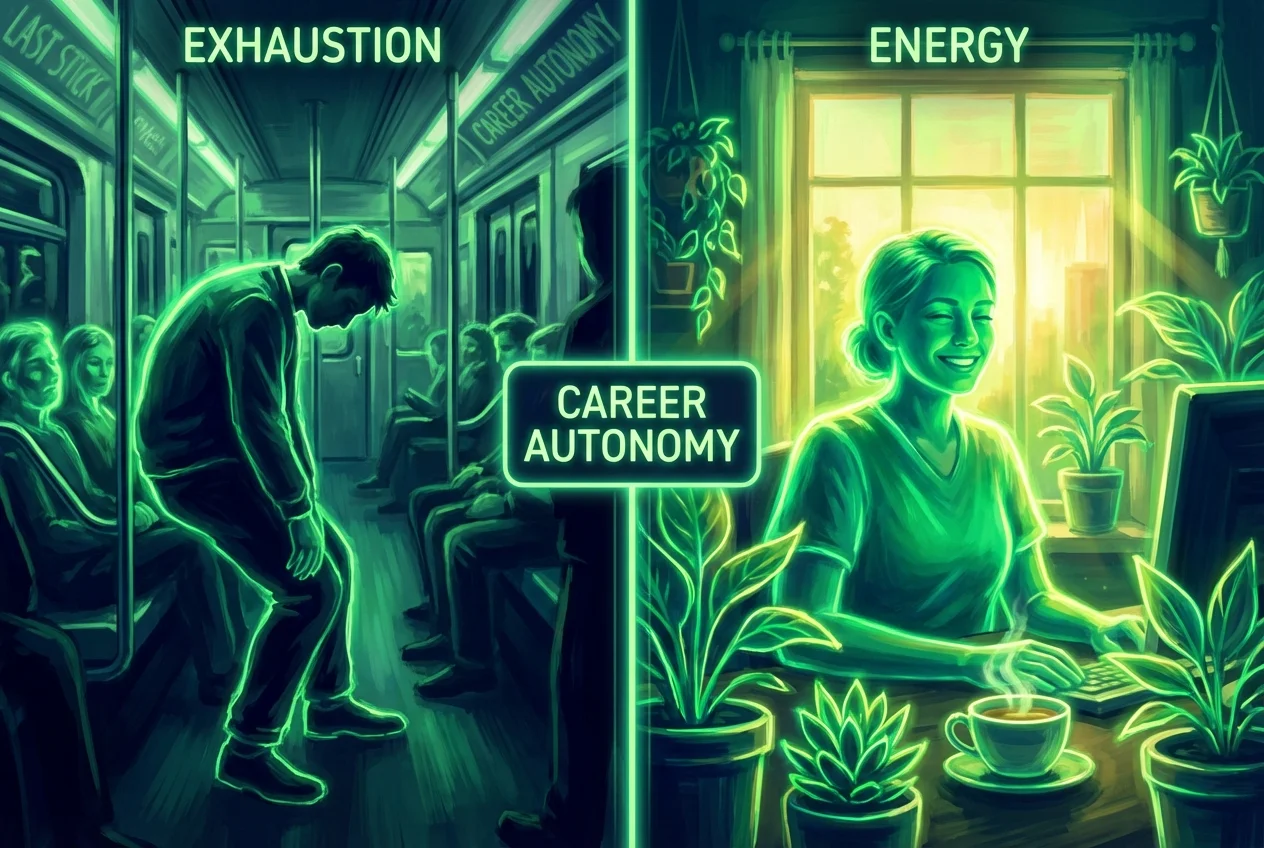
The most cited reason for making a career transition is the pursuit of a healthier work-life balance. In a traditional office setting, your life is often scheduled around your job. You wake up, commute, work, commute back, and then try to squeeze "life" into the remaining four hours of exhaustion. Seeking professional career advice often reveals that autonomy is the number one factor in long-term job satisfaction.
Reclaiming Your Time
In 2026, the average American spends 55 minutes a day commuting. Over a year, that adds up to roughly 9 full days spent sitting in traffic or on a train. Remote workers reclaim this time.
"The time gained back from removing commutes doesn't just disappear; it is reinvested into the things that matter—family, health, and personal growth." — Remote Work Research Institute, 2026
Mental Health Benefits
Studies show that 99% of professionals believe remote or hybrid work is better for their mental well-being. Remote work engagement study findings further support the idea that employees who have control over their environment report higher levels of thriving and lower burnout rates. The reduction in "micro-stresses"—such as office politics, loud environments, and the pressure of "performative busyness"—leads to significantly lower cortisol levels. When you work remotely, you have the autonomy to design an environment that suits your sensory needs, whether that’s a silent room or a sun-drenched patio.
| Benefit Category | Office Impact | Remote Impact |
|---|---|---|
| Stress Levels | High (Commute, noise, politics) | Low (Controlled environment) |
| Physical Activity | Sedentary (Desk-bound) | Flexible (Mid-day walks/gym) |
| Sleep Quality | Reduced (Early alarms for commute) | Improved (Natural wake cycles) |
| Family Time | Limited to evenings/weekends | Integrated throughout the day |
2. The Financial Windfall: It’s Effectively a Raise
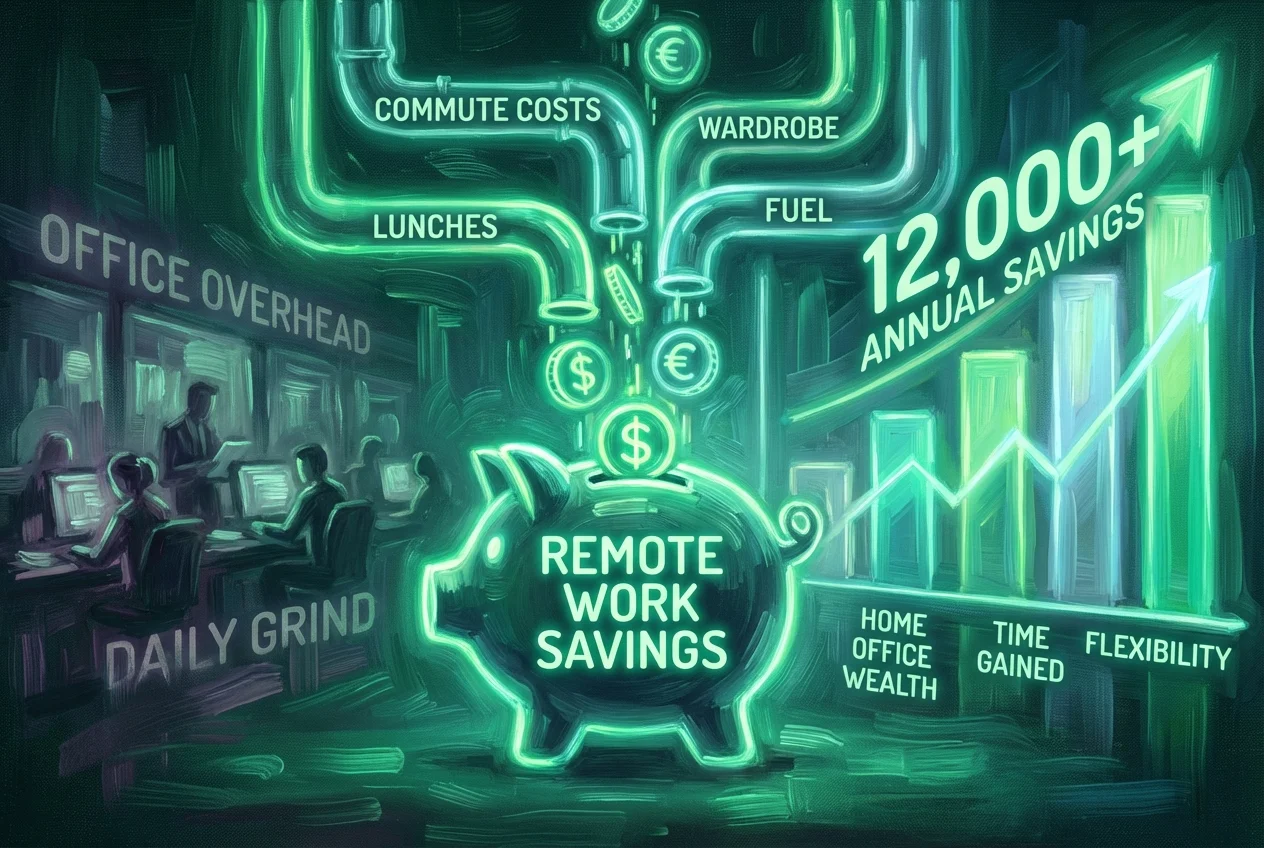
Many professionals hesitate to quit their office jobs because they fear a pay cut. However, in 2026, a remote career is often a "hidden raise." Whether you are looking for full-time employment or freelance opportunities, the financial benefits of staying home become undeniable when you calculate the "Commute Tax."
Savings Breakdown
A fully remote professional in 2026 saves an average of $12,000 annually. Here is where that money goes when you work in an office:
- Transportation: Gas, tolls, parking, and vehicle maintenance or public transit passes.
- Wardrobe: The "Professional Tax" of buying and dry-cleaning office attire.
- Food: The $15 daily lunch and $6 coffee habit that is almost impossible to avoid in a social office setting.
- Time Value: If your time is worth $40/hour, a one-hour daily commute costs you $10,000 a year in "lost labor value."
Real-World Cost Comparison (Annual Estimates)
| Expense Item | Traditional Office Job | Remote Career |
|---|---|---|
| Commuting (Gas/Insurance/Maintenance) | $4,500 | $0 |
| Professional Wardrobe & Upkeep | $1,200 | $300 |
| Lunches & Coffee | $3,000 | $800 |
| Total Out-of-Pocket | $8,700 | $1,100 |
| Estimated Savings | — | $7,600 |
By eliminating these costs, many workers find they can actually accept a slightly lower gross salary in a remote role while still taking home more net income than they did at their high-paying office job, especially if they use salary negotiation secrets to maximize their offer.
3. Geographic Independence: Live Where You Thrive
One of the most exciting aspects of a remote career in 2026 is the total decoupling of your "work" from your "place." For decades, your earning potential was tied to your proximity to a major city. This forced millions into high-cost areas, but today, online jobs allow you to live anywhere.
The "Digital Nomad" Evolution
In 2026, the "Digital Nomad" lifestyle has matured. It includes families moving to "Zoom towns" with better air quality and more space.
- Arbitrage Your Income: Earn a "big city" salary while living in a small town or even relocating to countries with no income tax to maximize your savings.
- Lifestyle Design: If you love skiing, you can live in the mountains. Your career no longer dictates your geography, allowing you to choose from the best cities for remote workers based on your lifestyle.
4. Productivity: The Death of the "Water Cooler Tax"
The old myth that remote workers are "lazy" has been thoroughly debunked. In fact, research in 2026 confirms that remote workers are 13% to 40% more productive than their in-office counterparts.
Why Productivity Soars at Home
The office is often the worst place to actually get work done. Between "quick syncs" and the "water cooler tax," the average office worker loses about 2 hours of productive time per day.
- Deep Work: Remote environments allow for uninterrupted blocks of time where complex problem-solving happens.
- Optimized Energy: Remote work allows you to align your hardest tasks with your natural energy peaks rather than forcing them into a 9-to-5 window.
- Result-Oriented Culture: In a remote setting, you are judged by your deliverables. Key insights from global workplace reports emphasize that companies focusing on output rather than hours are winning the talent war.
5. Access to a Global Job Market
When you quit your local office job, your "available jobs" pool expands from a 30-mile radius to the entire world. In 2026, the best talent is found by browsing Indeed remote jobs, checking LinkedIn jobs, or securing Upwork freelance jobs that span continents.
Diversifying Your Options
A professional living in a small town can now work for a tech startup in Berlin or a marketing firm in Tokyo. This global competition has a two-fold benefit:
- Resilience: You are not dependent on the local economy of your specific city.
- Specialization: You can find a niche role that perfectly matches your unique skills, even if that role doesn't exist in your local market.
6. The 2026 Tech Stack: Future-Proofing Your Career
Transitioning to a remote role in 2026 means immersing yourself in the technologies that will define the next decade. This requires a commitment to continuous professional development. Understanding the upskilling meaning in a digital-first world is essential to remain indispensable as AI advances and to develop robot-proof skills.
AI and VR Integration
Remote work in 2026 is powered by sophisticated tools:
- AI Assistants: Remote workers are 25% more likely to use AI tools to automate routine tasks.
- Virtual Workspaces: VR and AR "hubs" are now common for collaborative brainstorming.
- Advanced Project Management: Proficiency in tools like Asana and Notion is now a baseline requirement for high-paying roles.
How to Successfully Navigate Your Career Transition

Quitting your job is the easy part; landing a high-quality remote role requires a strategic approach, whether you are making a career change at 30, 40, or 50.
Step 1: Audit Your "Remote-Ready" Skills
Employers in 2026 look for specific hard skills and soft skills that prove you can thrive independently. Highlighting essential skills on your remote resume is the first step to getting hired.
- Communication Skills: Can you write clear, concise emails and Slack messages?
- Self-Management: Do you have a proven track record of meeting deadlines?
- Transferable Skills: Can you adapt your previous office experience to a digital environment?
Step 2: Optimize Your Resume and LinkedIn
Your resume needs to scream "I am a remote pro." Use modern resume templates or an AI-powered resume builder like CareerBoom.ai to align your profile with specific job descriptions.
- Highlight Remote Experience: List any hybrid or distributed team experience clearly.
- Focus on Outcomes: Use data to show your impact.
- Keywords: Naturally integrate terms like asynchronous collaboration and distributed teams. Don't forget to look at cover letter examples for tailoring your cover letter for remote companies. Utilizing proven LinkedIn tips and tricks can also boost your visibility.
Step 3: Targeted Job Searching
Avoid the "black hole" of massive job boards. In 2026, the best roles are found on specialized remote job sites:
- FlexJobs & Remote OK: For vetted, high-quality flexible roles.
- Virtual Assistant Jobs: A great entry point for those looking to start a remote career quickly.
- LinkedIn Filters: Use the "Remote" location filter effectively. However, stay vigilant and learn to spot remote job scams.
Step 4: Master the Virtual Interview
The remote interview is your first "test." Prepare for common interview questions and master the STAR interview method to demonstrate your competency. Following a Zoom interview guide and practicing with the simulation tools at CareerBoom.ai can help you refine your delivery. Use a remote interview day checklist to ensure everything runs smoothly.
Overcoming the Challenges of the Remote Lifestyle
While the benefits are immense, a remote career isn't without its hurdles. To succeed long-term, you must be proactive:
1. Combatting Isolation
Without the "forced" social interaction of an office, some workers feel lonely.
- The Fix: Join a co-working space once a week or schedule "virtual coffee" chats with colleagues.
2. Setting Boundaries
When your home is your office, work can bleed into your personal life.
- The Fix: Have a dedicated workspace and a strict "shut down" time to maintain your work-life balance.
3. Staying Visible
"Out of sight, out of mind" can be a threat to promotions.
- The Fix: Be proactive in sharing your wins and participate actively in public company channels.
Conclusion: The Future belongs to the Flexible
The decision to quit your office job for a remote career in 2026 is about more than just avoiding traffic. It is a fundamental reclaiming of your most precious resource: time. By making this career transition, you are choosing a path that prioritizes your mental health, financial stability, and professional growth in an increasingly digital world.
The office of the past was built for a world that no longer exists. The "office" of the future is wherever you choose it to be. 2026 is the year to stop asking for permission and start designing the life you actually want to live.
Frequently Asked Questions
Quick answers to common questions
1
Why should I switch to a remote career in 2026?
Switching to a remote career in 2026 offers unparalleled flexibility, better work-life balance, and significant financial savings. With the rise of asynchronous work and AI tools, professionals can reclaim nearly 9 days a year previously lost to commuting while gaining the freedom to live anywhere.
2
How much money can I save by working remotely?
A fully remote professional in 2026 saves an average of $12,000 annually. These savings come from eliminating the "Commute Tax," which includes:
- Transportation: Gas, tolls, and vehicle maintenance.
- Food: Avoiding expensive daily lunches and coffees.
- Wardrobe: Reducing the cost of professional office attire.
3
Are remote workers actually more productive than office workers?
Yes, research confirms that remote workers are 13% to 40% more productive. This boost is driven by the ability to engage in Deep Work without office interruptions, the elimination of the "water cooler tax," and the freedom to align tasks with personal natural energy peaks.
4
What are the best skills for a remote career transition?
To successfully navigate a career transition, you should highlight "remote-ready" skills such as:
- Asynchronous Communication: Clear, concise writing for Slack and email.
- Digital Fluency: Proficiency in AI assistants and project tools like Notion or Asana.
- Self-Management: A proven ability to meet deadlines independently.
5
Where can I find high-paying remote jobs in 2026?
The best remote roles are found on specialized job boards like FlexJobs, We Work Remotely, and Remote OK. For a competitive edge, use AI-driven platforms like CareerBoom.ai to optimize your resume and match your skills with global remote-first companies.
6
How do I maintain work-life balance while working from home?
To prevent burnout, establish clear boundaries:
- Dedicated Workspace: Use a specific room or area only for work.
- Physical Shutdown: Close your laptop and "leave" the office at a set time.
- Proactive Socializing: Join co-working spaces or schedule virtual coffees to combat isolation.
7
Is a remote career better for mental health?
Studies show 99% of professionals believe remote work improves mental well-being. By reducing "micro-stresses" like office politics and long commutes, remote workers report lower cortisol levels, improved sleep quality, and more time for family and physical activity.
8
How do I prepare for a remote job interview?
Mastering the virtual interview is key. Ensure you have a professional backdrop and high-quality audio. Focus on showing your remote culture fit by asking about the team's asynchronous workflows and using tools like CareerBoom.ai to practice your delivery.
Was this article helpful?
Table of Contents
The 2026 Landscape: Why Now?
1. Unparalleled Work-Life Balance and Mental Well-being
2. The Financial Windfall: It’s Effectively a Raise
3. Geographic Independence: Live Where You Thrive
4. Productivity: The Death of the "Water Cooler Tax"
5. Access to a Global Job Market
6. The 2026 Tech Stack: Future-Proofing Your Career
How to Successfully Navigate Your Career Transition
Overcoming the Challenges of the Remote Lifestyle
Conclusion: The Future belongs to the Flexible
1Why should I switch to a remote career in 2026?
2How much money can I save by working remotely?
3Are remote workers actually more productive than office workers?
4What are the best skills for a remote career transition?
5Where can I find high-paying remote jobs in 2026?
6How do I maintain work-life balance while working from home?
7Is a remote career better for mental health?
8How do I prepare for a remote job interview?
Share this article
Other articles
10 High-Paying Remote Jobs Without a Degree in 2026
Discover lucrative remote careers earning $90K-$270K+ annually without formal credentials—backed by real salary data and proven entry pathways.
21 Best Remote Job Sites in 2026 (Verified Platforms)
Discover verified platforms from CareerBoom.AI to LinkedIn for landing high-paying remote careers.

Quit Your Boring Job: The 3-Step Blueprint for a Fearless Career Change
Ready for a bold move? This blueprint outlines the exact steps to transition into a new career path with confidence and without fear.