How to Tailor Your Cover Letter for Fully Remote Companies
Remote-first companies have unique cultures. Learn how to align your application with their values.
3 months ago - Updated 3 days ago

In the modern job market, the traditional cover letter has undergone a radical transformation. No longer is it merely a polite formality used to introduce a resume; do you really need a cover letter? In the world of remote work, it has become a critical diagnostic tool. For remote-first companies, the cover letter is the first real test of your ability to communicate effectively in writing—the primary mode of interaction in a distributed workforce.
When you apply for a role at a company that operates without a central office, you aren't just competing with local talent; you are competing with a global pool of professionals looking for high-paying remote jobs. To stand out, a generic, one-size-fits-all approach will not suffice. You need a tailored cover letter that speaks the specific language of company culture in a digital environment. This guide will walk you through the nuances of researching remote organizations and weaving their unique values into a narrative that proves you are the perfect fit for their virtual team, much like how you would tailor your resume for each specific application.
The Fundamental Shift: Why Remote Cover Letters are Different
In a traditional office setting, cultural fit is often assessed through "water cooler" chats, office tours, and face-to-face interviews. In a remote-first environment, culture is built on documentation, intentionality, and trust. Because managers cannot see you working at a desk, they rely heavily on your ability to articulate your thoughts, manage your time, and demonstrate alignment with their core principles through written text.
The "Written-First" Culture
Most successful remote companies (like GitLab, Buffer, or Zapier) prioritize written communication above all else. If your cover letter is disorganized, vague, or riddled with typos, it sends a clear signal: This person cannot communicate effectively in an asynchronous environment. Your cover letter is your first "work product." It should demonstrate that you can be clear, concise, and persuasive without the benefit of body language or tone of voice.
The Trust Factor
Remote managers have one major fear: hiring someone who needs constant hand-holding. Your cover letter must proactively alleviate this fear by showcasing your autonomy. You are not just applying for a job title; you are applying to be a reliable, self-starting node in a global network.
Phase 1: Deep-Dive Research into Remote Company Culture
Before you type a single word, you must become an investigator. Before searching the best remote jobs websites, remember that mastering the remote job cover letter requires deep research into the company's DNA. Remote companies tend to be more transparent than their brick-and-mortar counterparts because they have to document everything to keep their distributed teams aligned.
1. The Public Handbook
Many remote-first organizations publish their internal handbooks online. GitLab’s handbook, for example, is thousands of pages long and covers everything from how they use Slack to their philosophy on "short toes" (the idea that people should feel empowered to contribute across departments).
- Action: Search for "[Company Name] Employee Handbook" or "[Company Name] Culture Memo."
- What to look for: Do they value "radical transparency"? Do they prioritize "asynchronous over synchronous"? Use these exact terms in your letter.
2. Social Media and Digital Footprints
Follow the company’s founders and current employees on LinkedIn and X (formerly Twitter). Remote leaders often post about the challenges and triumphs of distributed work. Using effective LinkedIn tips and tricks can help you uncover deeper insights into the team's daily operations and recent milestones.
- Action: Look for recent "wins" or blog posts written by the team.
- What to look for: Are they currently focusing on "scaling sustainably" or "improving work-life harmony"? Mentioning a recent company milestone shows you are already engaged with their journey.
3. The "About Us" Page (Beyond the Basics)
Don't just skim the mission statement. Look for the unspoken values.
- Is the tone formal or quirky?
- Do they emphasize "results-only" or "collaborative process"?
- Do they mention specific tools (Notion, Slack, Loom)?
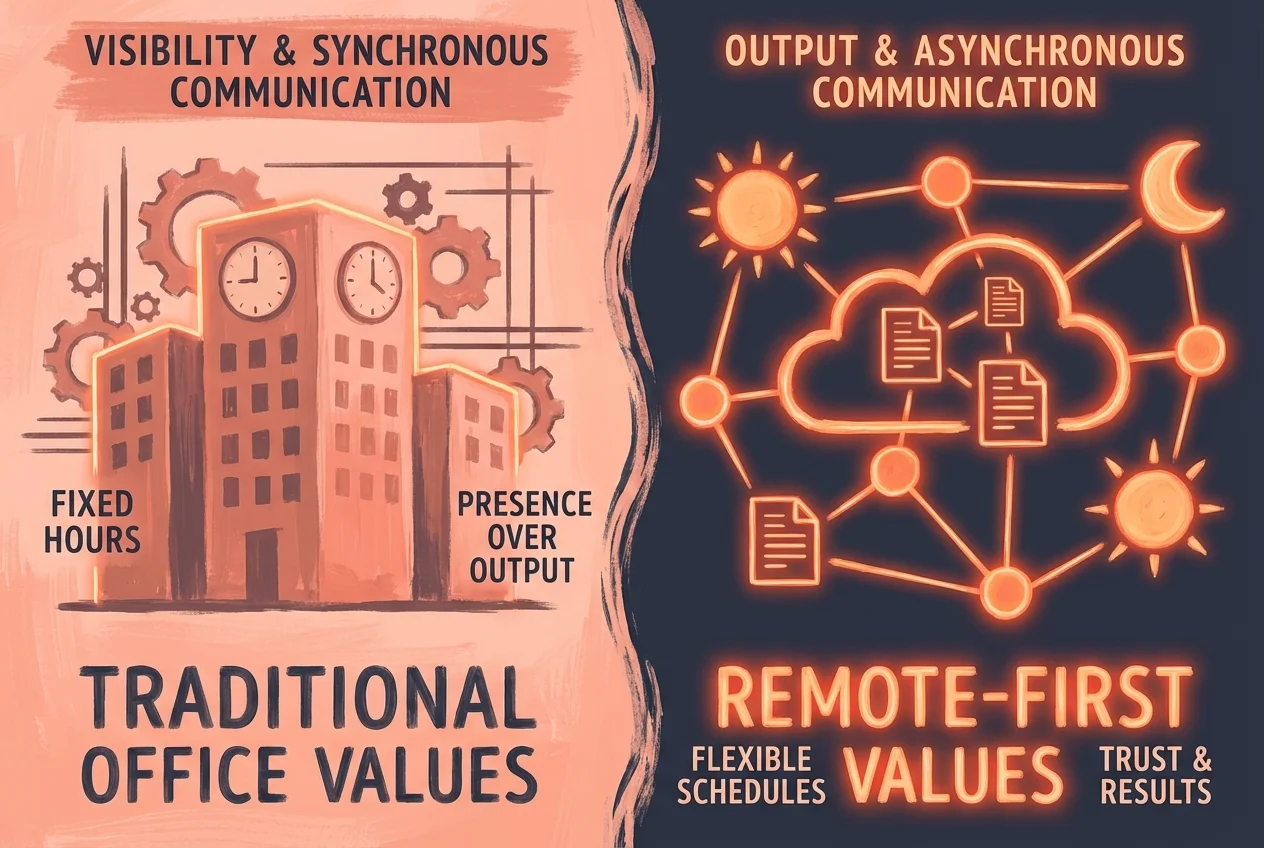
Comparison: Traditional vs. Remote Culture Values
| Value Category | Traditional Office Focus | Remote-First Focus |
|---|---|---|
| Communication | Face-to-face, meetings, "open door" | Asynchronous, documentation-heavy, clear writing |
| Visibility | "Bums in seats," staying late | Output-based, hitting milestones, transparency |
| Collaboration | Brainstorming sessions, whiteboards | Collaborative docs, Loom videos, GitHub issues |
| Work Style | Fixed 9-5, synchronous presence | Flexibility, time-zone management, autonomy |
Phase 2: Identifying and Highlighting Remote-Specific Skills
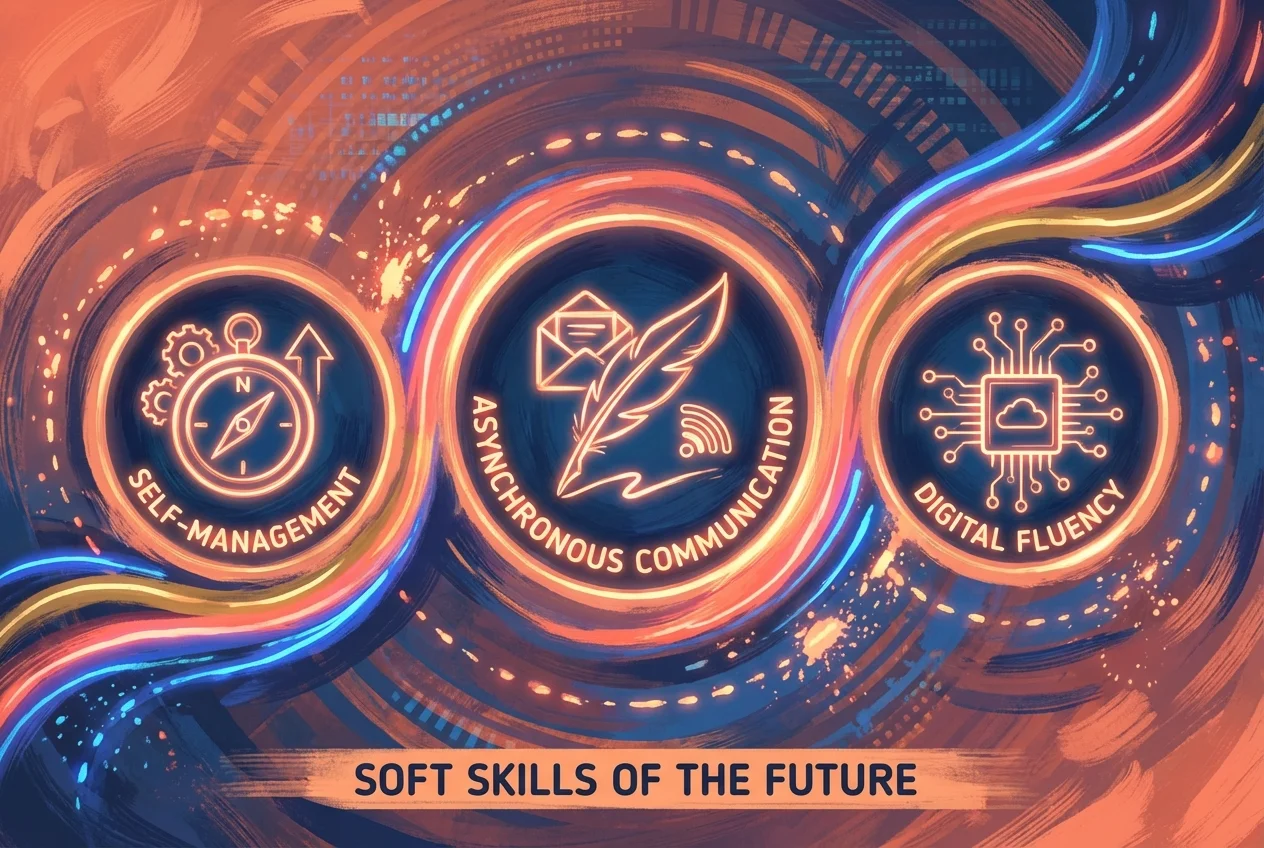
To align with a remote-first company culture, your cover letter must go beyond your technical abilities. You need to prove you have the "Soft Skills of the Future," many of which are also essential skills to showcase on your remote resume.
Asynchronous Communication
In a remote world, you might be working while your manager is asleep. You must demonstrate that you can move projects forward without real-time feedback.
- How to mention it: "I thrive in asynchronous environments where clear documentation reduces the need for constant meetings, allowing for deeper focus and faster execution."
Self-Management and Proactivity
Without a manager looking over your shoulder, how do you stay on track?
- How to mention it: "I have spent the last three years refining my personal productivity systems using tools like Trello and Timeular to ensure I consistently meet deadlines without external supervision."
Digital Fluency
You don't just "know how to use a computer." You are a master of the remote tech stack.
- How to mention it: Mention specific tools. "I am highly proficient in managing complex workflows via Notion and maintaining team cohesion through intentional Slack communication and Loom updates."
Phase 3: Structuring Your Tailored Cover Letter
A high-impact cover letter for a remote role should follow a logical flow that builds trust and demonstrates cultural alignment. Using strategic remote job cover letter tips can help you bridge the gap between your experience and the company's specific needs.
1. The Hook: The "Why Them"
Start by acknowledging their remote identity. Using strong cover letter opening lines that hook recruiters is essential. Don't just say "I want to work from home." Say "I am inspired by your commitment to [Specific Value, e.g., Open Salaries or Radical Transparency]."
"As a long-time follower of [Company Name]’s engineering blog, I’ve been consistently impressed by your commitment to radical transparency—especially your public-facing roadmap. I am eager to bring my five years of backend development experience to a team that values open documentation as much as I do."
2. The Evidence: The "Remote Proof"
If you have worked remotely before, highlight it. If you haven't, highlight projects where you worked independently or managed a distributed group (even if it was a volunteer project or a college club).
"During my time at [Previous Company], I led a cross-functional team across four time zones. By implementing an asynchronous 'Daily Stand-up' via Slack, we reduced meeting time by 40% while increasing project velocity."
3. The Cultural Bridge: Connecting Your Values to Theirs
This is where the tailored cover letter truly shines. Pick one or two core values you found during your research and explain why they resonate with you. To make this process more efficient, you can use AI-driven tools like CareerBoom.ai to help align your cover letter and resume directly with the specific requirements and values listed in the job description.
"I noticed in your Culture Memo that you prioritize 'Low Ego.' In my previous roles, I’ve found that the best solutions come from a culture where ideas are critiqued, not people. I am looking for an environment where I can contribute to a 'best idea wins' philosophy."
4. The Tech Stack Shout-out
Briefly mention your comfort with their specific tools. This reduces the "onboarding risk" in the eyes of the hiring manager.
"I am already well-versed in the 'Remote-First' stack, including Jira for project tracking, Figma for design collaboration, and Zoom for high-bandwidth synchronous sessions when needed. (If you land the meeting, make sure you know how to ace a Zoom interview beforehand)."
Phase 4: Weaving Culture into Your Narrative
Let’s look at how to take a standard sentence and "remote-ify" it to match a remote-first company culture. Choosing the right words to describe yourself can make all the difference in how your narrative is perceived.
Standard Sentence: "I am a hard worker who always gets my tasks done on time."
Remote-Tailored Version: "I am a disciplined self-starter who excels in results-oriented work environments. I pride myself on my ability to manage my own schedule and provide transparent progress updates, ensuring that stakeholders are never left wondering about the status of a deliverable."
Why the second version works:
- "Results-oriented": Appeals to the ROWE (Results-Only Work Environment) philosophy common in remote companies.
- "Transparent progress updates": Addresses the fear of "the black hole," where remote employees disappear for days.
- "Manage my own schedule": Proves autonomy.
Phase 5: Addressing the "Why Remote?" Question
Many applicants make the mistake of focusing on how remote work benefits them (no commute, more time with family, working from a beach). While these are valid perks, remote-first companies want to know how you working remotely benefits them.
Focus on Productivity, Not Convenience
Instead of saying you want to avoid a commute, explain that you find you are most productive in a controlled, quiet environment where you can enter "Deep Work" states.
Focus on Global Perspective
Explain that you enjoy working with diverse teams from around the world and that you value the different perspectives that a distributed workforce brings to problem-solving.
The "Over-Communication" Clause
In a remote setting, there is no such thing as over-communication. Mentioning that you are an "intentional communicator" tells the hiring manager that you will be proactive in reaching out, asking for clarity, and sharing your wins.
Phase 6: Common Mistakes to Avoid
Even with great research, certain "red flags" can sink your application at a remote-first company. Be sure to avoid the 7 deadly cover letter sins that often lead to instant rejection.
- The "Digital Nomad" Trap: While many remote companies are fine with you traveling, don't lead with your desire to travel the world. Lead with your desire to do great work. They want an employee, not a tourist.
- Generic Salutations: If the company culture is casual and uses first names, don't start your letter with "To Whom It May Concern." It shows you haven't researched the "vibe."
- Ignoring Time Zones: If the job description mentions they need someone in the EST time zone, and you are in GMT+8, address this immediately. Explain how you will manage the overlap.
- Focusing Only on Technical Skills: In a remote role, your personality and communication style are just as important as your ability to code or design. Don't let the letter become a dry list of software you know.
Sample Scenarios: Tailoring for Different Remote Cultures
Scenario A: The "High-Growth Startup" (Fast-paced, chaotic, bold)
- Focus: Adaptability, speed, and "wearing many hats."
- Keywords to use: Pivot, scale, ownership, bias for action.
- Tone: Energetic and confident.
Scenario B: The "Established Remote Leader" (Process-driven, documented, stable)
- Focus: Documentation, long-term thinking, and communication systems.
- Keywords to use: Asynchronous, handbook-first, intentionality, sustainability.
- Tone: Professional, thoughtful, and organized.
Scenario C: The "Creative Agency" (Collaborative, visual, personality-driven)
- Focus: Connection, inspiration, and digital collaboration.
- Keywords to use: Synergy, brainstorm, Loom, visual storytelling.
- Tone: Creative, warm, and engaging.
The "Final Polish" Checklist for Your Remote Cover Letter

Before you hit send, run through this checklist to ensure your tailored cover letter is ready for the remote-first world. For a visual breakdown of these strategies, you can watch this guide on remote job applications. To stay organized throughout this process, consider using a centralized dashboard like CareerBoom.ai to track your applications and manage your follow-ups efficiently.
- Is it a PDF? Never send a Word doc unless specifically asked. PDFs preserve formatting across all devices.
- Did I mention a specific company value? (e.g., "I love your 'no-meeting Wednesdays' policy...")
- Is my contact info clear? Include your LinkedIn, portfolio, and—most importantly—your time zone.
- Is it concise? Remote managers are busy. Knowing how long a cover letter should be is key; if you can say it in 300 words, don't use 600.
- Does it sound like a human? Avoid "corporate speak." Use a professional but conversational tone that reflects the company's social media presence.
- Did I proofread for "Remote Red Flags"? Ensure you didn't accidentally imply you need a lot of direction or that you're only interested in the job for the flexibility.
Putting It All Together: A Sample Template
Here is an example of how these elements come together in a tailored cover letter for a remote-first marketing role.
Subject: Application for Content Strategist - [Your Name] - [Time Zone: PST]
Dear [Hiring Manager Name or Team Name],
I’ve been following [Company Name]’s journey since your series B announcement, and what has always stood out to me isn't just your product—it’s your commitment to "Default to Open." As a content strategist who believes that documentation is the foundation of a healthy remote team, I was thrilled to see an opening for a Content Strategist.
For the past four years, I have worked in a fully remote-first capacity at [Previous Company]. I understand that in a distributed team, my writing isn't just a way to complete tasks—it’s the way I build trust with my colleagues. I have extensive experience using Notion to build content calendars that are accessible to all stakeholders, and I am a firm believer in using Loom to provide context for complex strategies, reducing the need for synchronous "catch-up" meetings.
Your recent blog post about "Sustainable Growth in Remote Teams" resonated deeply with me. I’ve found that the key to avoiding burnout in a remote setting is intentionality and clear boundaries. I manage my workflow using the Pomodoro technique and Trello, ensuring that I am always delivering high-quality work on time, regardless of where my desk happens to be.
I am particularly excited about the prospect of bringing my experience in SEO and community building to a team that values [Specific Value from Research]. I am confident that my ability to self-manage and my passion for asynchronous collaboration make me a great fit for [Company Name].
Thank you for your time and for fostering such an inspiring company culture. I look forward to the possibility of discussing how I can contribute to your team.
Best regards,
[Your Name] [LinkedIn Profile Link] [Portfolio Link]
Conclusion: Your Letter is Your Digital Handshake
In the world of remote-first employment, your cover letter is more than just an introduction; it is a demonstration of your ability to exist and thrive in a digital space. By taking the time to conduct deep research into a company culture, identifying the specific needs of a distributed team, and crafting a tailored cover letter that speaks to those nuances, you position yourself as a "remote-ready" professional.
Remember, the goal isn't just to prove you can do the job—it's to prove you can do the job without an office. Show them your autonomy, your tech-savviness, and your alignment with their vision. When a hiring manager reads your letter and thinks, "This person already sounds like they work here," you’ve already won half the battle. From there, you can move on to your remote job interview day checklist to ensure you're fully prepared for the next stage. Leveraging a comprehensive platform like CareerBoom.ai can further accelerate your search by providing smart job matching and interview simulations that prepare you for the unique challenges of remote hiring.
Frequently Asked Questions
Quick answers to common questions
1
Why is a tailored cover letter important for remote jobs?
In a remote-first environment, your cover letter is your first "work product." It proves you can communicate effectively in writing—the primary mode of interaction for distributed teams. A tailored letter shows you understand the company culture and can thrive without physical supervision.
2
How do I research a remote company’s culture for my cover letter?
Start by reviewing the company’s public employee handbook and social media. Look for specific values such as:
- Asynchronous communication
- Radical transparency
- Results-oriented work
Using these specific terms demonstrates deep alignment with their unique digital DNA.
3
What specific skills should I highlight for a remote-first role?
Focus on soft skills that ensure remote success:
- Asynchronous Communication: Moving projects forward without real-time feedback.
- Self-Management: Using tools like Trello or Notion to stay organized.
- Digital Fluency: Mastery of the remote tech stack (Slack, Zoom, Loom, Jira).
4
Should I explain why I want to work remotely in my cover letter?
Yes, but focus on productivity, not convenience. Instead of mentioning your commute, explain how a remote setting allows for "Deep Work" and better output. Show how working from home benefits the employer through your increased focus and global perspective.
5
What are common mistakes to avoid in a remote cover letter?
Avoid the "Digital Nomad" trap—don't lead with your desire to travel. Other red flags include:
- Using generic salutations (e.g., "To Whom It May Concern").
- Ignoring time zone requirements.
- Focusing solely on technical skills while ignoring communication style.
6
How can I prove I am a self-starter in a cover letter?
Provide "Remote Proof" by citing specific examples of when you managed projects independently. Mention your use of productivity systems and how you provide transparent progress updates to ensure stakeholders are always informed without needing to micromanage you.
Was this article helpful?
Table of Contents
The Fundamental Shift: Why Remote Cover Letters are Different
Phase 1: Deep-Dive Research into Remote Company Culture
Phase 2: Identifying and Highlighting Remote-Specific Skills
Phase 3: Structuring Your Tailored Cover Letter
Phase 4: Weaving Culture into Your Narrative
Phase 5: Addressing the "Why Remote?" Question
Phase 6: Common Mistakes to Avoid
Sample Scenarios: Tailoring for Different Remote Cultures
The "Final Polish" Checklist for Your Remote Cover Letter
Putting It All Together: A Sample Template
Conclusion: Your Letter is Your Digital Handshake
1Why is a tailored cover letter important for remote jobs?
2How do I research a remote company’s culture for my cover letter?
3What specific skills should I highlight for a remote-first role?
4Should I explain why I want to work remotely in my cover letter?
5What are common mistakes to avoid in a remote cover letter?
6How can I prove I am a self-starter in a cover letter?
Share this article
Other articles
7 Essential Skills to Showcase on Your Fully Remote Job Resume to Get Hired
Discover the top 7 crucial skills to highlight on your resume to secure your dream work-from-home position.

21 Best Remote Job Sites in 2026 (Verified Platforms)
Discover verified platforms from CareerBoom.AI to LinkedIn for landing high-paying remote careers.

Your Essential Remote Job Interview Day Checklist: Don't Miss a Step!
Master your remote job interview! Get career advice and ensure employability for work from home jobs.