7 Deadly Cover Letter Sins That Instantly Get You Rejected
Avoid these critical mistakes that are sabotaging your job applications. Discover the fatal errors that lead to instant rejection and how to fix them today.
8 months ago - Updated 3 months ago
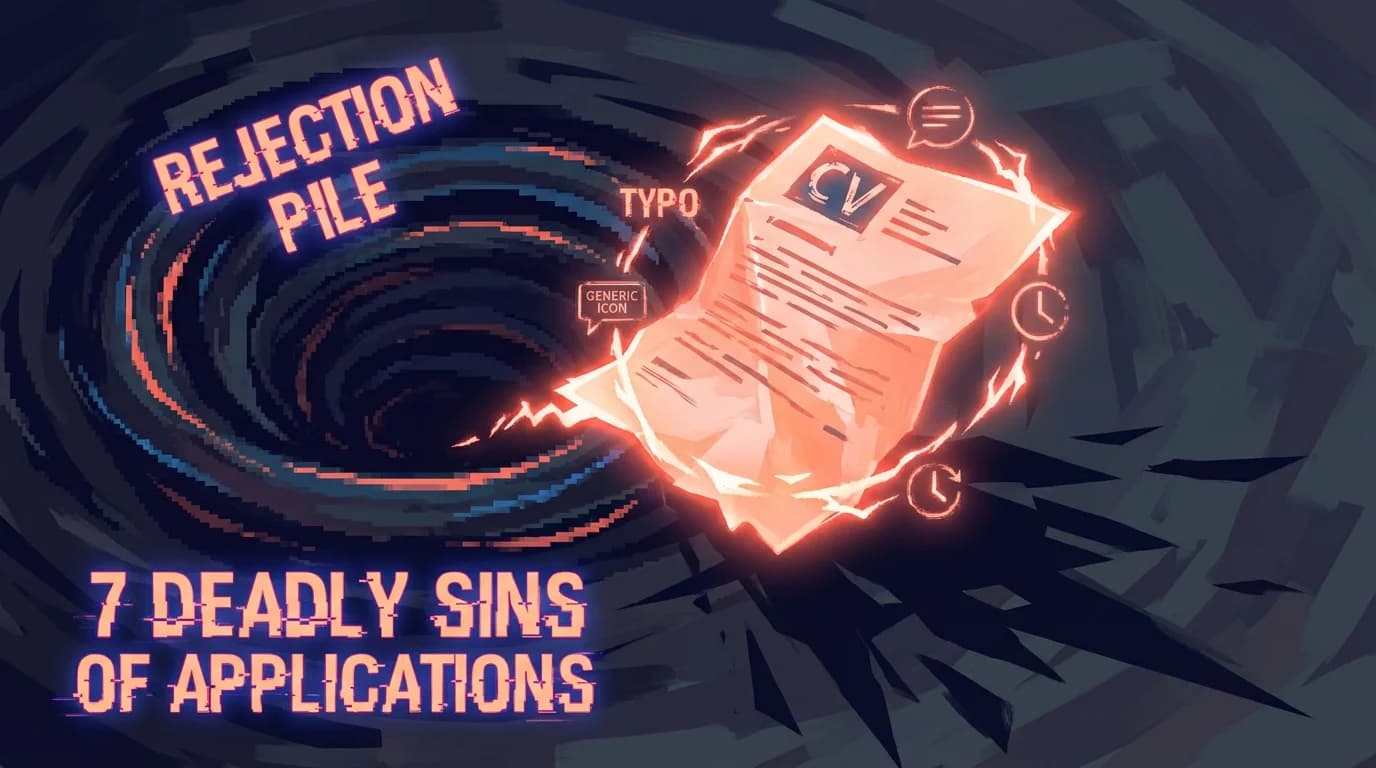
The cover letter, often seen as a mere formality, is in reality a powerful tool in your job application arsenal. It's your chance to make a compelling first impression, to tell your story beyond bullet points, and to convince a hiring manager that you're not just qualified, but the right fit for their team. However, many job seekers inadvertently commit "deadly sins" in their cover letters that lead to instant rejection, often before their resume even gets a thorough look. These common cover letter mistakes can sabotage an otherwise strong application, leaving you wondering why you're not landing interviews. Fortunately, platforms like CareerBoom.ai offer professional cover letter builders designed to help you craft compelling, error-free letters that stand out.
In today's competitive job market, where recruiters often sift through hundreds of applications, a generic or poorly crafted cover letter is a fast track to the "no" pile. Employers expect you to use this space wisely, to highlight your enthusiasm, relevant skills, and potential contributions in about three to four paragraphs. This article will expose the 7 deadly cover letter sins and what not to put in a cover letter that lead to instant rejection and provide you with actionable cover letter tips to transform your approach and secure those coveted interview invitations.
The Power of a Polished Cover Letter
Before diving into the pitfalls, it's crucial to understand why a cover letter holds such weight. Your resume provides a snapshot of your professional history and achievements, typically in a concise, bullet-point format. A cover letter, on the other hand, allows you to elaborate on your suitability, convey your personality, motivation, and enthusiasm, and create a personal connection with the employer. It's a narrative that complements your resume, adding context and demonstrating your interest in the specific role and company.
A well-written cover letter shows you've done your homework and are genuinely interested in the position, not just sending out a mass application. It's an opportunity to explain how your skills and experience align with the role and to showcase your communication skills – an essential trait for most jobs. In essence, a compelling cover letter can be the difference between landing an interview and getting lost in the shuffle.
Now, let's explore the critical job application errors that can doom your cover letter from the start.
Sin 1: Generic Greetings and Lack of Personalization
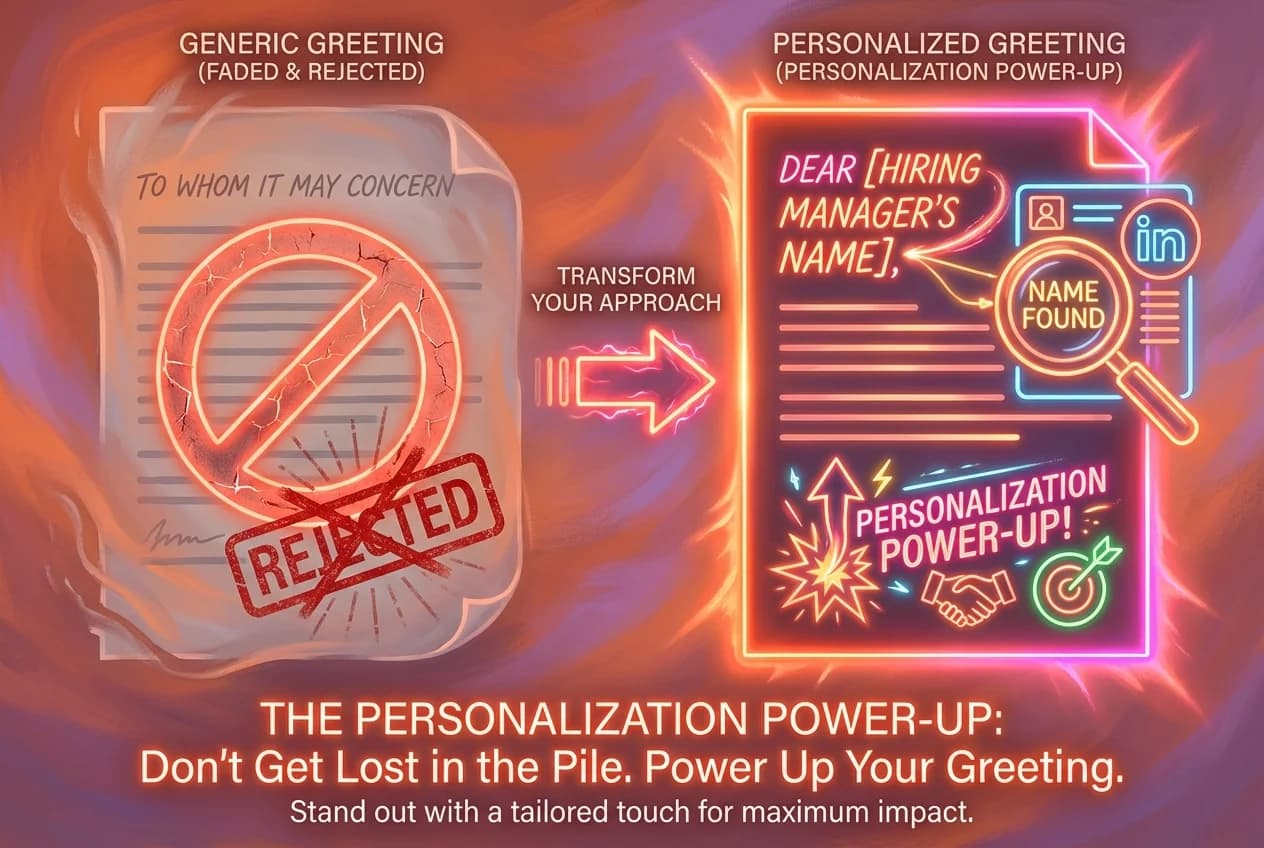
One of the quickest ways to signal a lack of genuine interest and attention to detail is by using a generic greeting. Phrases like "To Whom It May Concern," "Dear Sir/Madam," or "Dear Hiring Manager" immediately tell the recruiter that you haven't taken the time to personalize your application. This is a major cover letter mistake that can lead to instant rejection. Recruiters value tailored applications "significantly more" than generic ones, and applicants who personalize their cover letters receive more interviews.
Why it's deadly:
- Shows lack of effort: It implies you're sending out mass applications without specific interest in their company or role.
- Lack of respect: It can come across as lazy or indifferent, suggesting you don't care enough to find out who you're addressing.
- Missed opportunity: You lose the chance to make an immediate, positive personal connection.
How to fix it: The Personalization Power-Up
The solution is simple: always try to find the hiring manager's name.
- Scour the job posting: Sometimes the name is explicitly mentioned.
- Check the company website: Look for team pages, "About Us" sections, or leadership directories.
- Leverage LinkedIn: This is often the most effective tool. Search for the company and the job title, or similar roles, to identify potential hiring managers or department heads. You might find the recruiter who posted the job.
- Make a polite call: If all else fails, a quick, polite call to the company's reception can sometimes yield the name of the hiring manager for the specific department.
Once you have a name, use it: "Dear [Mr./Ms./Mx. Last Name]". If you absolutely cannot find a specific name, use a relevant title such as "Dear [Department Name] Hiring Manager" or "Dear [Team Name] Manager". Avoid "Sir/Madam" whenever possible, as it can sound overly formal and outdated, especially in more modern or creative industries. Beyond just the greeting, remember that true personalization extends to the content itself; AI-powered tools like CareerBoom.ai can help you align your entire cover letter with the specific job description, ensuring every paragraph resonates with the employer's needs.
Example Transformation:
| Before (Generic) | After (Personalized) |
|---|---|
| "To Whom It May Concern," | "Dear Ms. Johnson," |
| "Dear Sir/Madam," | "Dear Marketing Team Hiring Manager," |
Sin 2: Simply Repeating Your Resume
One of the most common and wasteful cover letter mistakes is using the letter as nothing more than a prose retelling of your resume. If a hiring manager has to read the same information twice, your cover letter adds zero value — and wastes their time.
Why it's deadly:
- It's redundant: The hiring manager already has your resume. Repeating it shows a lack of strategic thinking.
- It wastes precious space: Your cover letter is prime real estate. Use it to expand, not duplicate.
- It signals a lack of storytelling ability: Employers want to see that you can communicate beyond bullet points.
How to fix it: Add Context and Color
Your cover letter should complement your resume, not mirror it. Use it to tell the story behind your achievements. If your resume says you "increased sales by 30%," your cover letter is where you explain how you did it, what obstacles you overcame, and what it meant for the business. Pick two or three of your most relevant accomplishments and give them the narrative treatment. Show what drove you, what you learned, and how it connects to the role you're applying for now.
Sin 3: Making It All About You (Instead of the Employer)
There's a subtle but critical shift in perspective that separates average cover letters from exceptional ones. Many applicants write entirely about what they want — the experience they hope to gain, the salary they're targeting, the career growth they're seeking. While your goals matter, a cover letter is not the place to lead with them.
Why it's deadly:
- It signals self-centeredness: Employers are trying to solve their problems, not yours.
- It misses the point: The hiring manager wants to know what you can do for them, not what the job can do for you.
- It's off-putting: Framing everything around your needs can come across as entitled or tone-deaf.
How to fix it: Flip the Script
Reframe every sentence with the employer in mind. Instead of "I'm looking for a role where I can develop my leadership skills," try "I'm eager to bring my cross-functional collaboration experience to help your team scale its operations." Research the company's current goals, challenges, and culture. Then mirror that language back to them, showing that you understand what they need and that you're the solution. Tools like CareerBoom.ai can help you tailor your language to match the specific tone and priorities of each employer.
Sin 4: Being Too Long or Too Short
Length matters more than most candidates realize. A cover letter that sprawls across multiple pages suggests poor editing and a lack of respect for the reader's time. On the other hand, a cover letter that's only two or three sentences can seem dismissive — as if you couldn't be bothered to make a real effort.
Why it's deadly:
- Too long: Recruiters spend an average of just a few seconds scanning each application. A wall of text is an immediate deterrent.
- Too short: It signals low enthusiasm and gives the hiring manager nothing to work with.
- Poor length management: Both extremes suggest you struggle with communication, which is a red flag for virtually any role.
How to fix it: Aim for the Sweet Spot
The ideal cover letter is about three to four paragraphs long, fitting comfortably on one page. Each paragraph should have a clear purpose: an opening that hooks the reader, a body that connects your experience to the role, and a closing that invites further conversation. Edit ruthlessly. If a sentence doesn't add value, cut it.
Sin 5: Focusing on Responsibilities Instead of Achievements
Many cover letters read like a job description — a dry list of duties the candidate has performed. "I was responsible for managing social media accounts" tells an employer very little. What they really want to know is: what changed because of your work?
Why it's deadly:
- It's forgettable: Generic duty-based statements blend into the background.
- It doesn't differentiate you: Every other candidate in the pool has likely done similar tasks.
- It fails to prove your value: Employers hire for outcomes, not activities.
How to fix it: Lead with Impact
Wherever possible, quantify your achievements. Numbers, percentages, and concrete outcomes are far more compelling than vague descriptions. "Managed social media" becomes "Grew our Instagram following by 45% in six months, resulting in a 20% increase in website traffic." If you can't quantify something, at least describe the tangible result or the problem you solved. Think in terms of: what did things look like before you, and what did they look like after?
Sin 6: Typos, Grammar Errors, and Sloppy Formatting
This one might seem obvious, but it remains one of the most common reasons cover letters get rejected. A single typo can undermine an otherwise strong application. It signals carelessness — the very opposite of what an employer wants to see.
Why it's deadly:
- It's an immediate red flag: If you can't proofread a one-page letter, how careful will you be on the job?
- It undermines your professionalism: Sloppy writing reflects poorly on your attention to detail.
- It's entirely avoidable: Unlike some weaknesses, this one has no excuse.
How to fix it: Proofread Like Your Career Depends on It (Because It Does)
Never submit a cover letter you've only read once. Here's a reliable proofreading process:
- Read it aloud: This forces you to slow down and catch errors your eyes skip over silently.
- Use spell-check and grammar tools: Tools like Grammarly can catch issues that slip through manual review.
- Read it backwards: Starting from the last sentence and working forward disrupts your brain's pattern-matching and surfaces errors.
- Have someone else read it: A fresh set of eyes is invaluable.
- Check formatting: Ensure consistent font, spacing, and margins throughout.
Platforms like CareerBoom.ai can help you generate polished, well-formatted cover letters from the start, reducing the risk of these errors ever appearing.
Sin 7: A Weak or Passive Closing
After spending time crafting a strong cover letter, many applicants stumble at the finish line. A closing like "I hope to hear from you" or "Please let me know if you have any questions" is passive, forgettable, and does nothing to move the conversation forward.
Why it's deadly:
- It lacks confidence: Passive language suggests you don't fully believe you're right for the role.
- It puts the burden on them: You're essentially waiting to be picked, rather than actively pursuing the opportunity.
- It ends on a flat note: Your closing is the last thing the reader sees — make it count.
How to fix it: Close with Confidence and a Clear Call to Action
End your cover letter with enthusiasm, gratitude, and a direct next step. Express genuine excitement about the opportunity, thank the hiring manager for their time, and make it clear you'll follow up or that you welcome the chance to speak further. For example:
"I would welcome the opportunity to discuss how my background in product marketing can contribute to [Company Name]'s growth goals. Thank you for your time and consideration — I look forward to speaking with you."
This is assertive without being aggressive, and it signals that you take initiative — a quality every employer values.
Final Thoughts: Avoiding the Deadly Sins
A cover letter is never just a formality. It's a strategic document that can open doors, spark conversations, and set you apart from a crowded field of applicants. By avoiding these seven deadly sins — generic greetings, resume repetition, self-centered framing, poor length, duty-focused language, careless errors, and weak closings — you dramatically increase your chances of making it to the interview stage.
The common thread running through all seven sins is a lack of intentionality. Every word in your cover letter should be there for a reason. Every sentence should serve the purpose of convincing a hiring manager that you understand what they need and that you're the person to deliver it.
If you want a shortcut to cover letters that avoid all of these pitfalls, CareerBoom.ai offers an AI-powered cover letter builder that helps you craft personalized, compelling, and polished letters tailored to each role you apply for. Because in a competitive job market, a great cover letter isn't just a nice-to-have — it's your first and best opportunity to make a lasting impression.
Frequently Asked Questions
Quick answers to common questions
A cover letter is your chance to tell your story beyond your resume, conveying your personality, motivation, and enthusiasm. It creates a personal connection, demonstrates your genuine interest in the specific role and company, and showcases your communication skills, helping you stand out.
Common cover letter mistakes include using generic greetings like "To Whom It May Concern," lacking personalization for the specific role/company, failing to highlight relevant skills, and making grammatical errors. These signal a lack of effort and interest, leading to instant rejection.
Always try to find the hiring manager's name by checking the job posting, company website, or LinkedIn. Use "Dear [Mr./Ms./Mx. Last Name]". If a name isn't available, use "Dear [Department Name] Hiring Manager" instead of generic phrases.
No, "To Whom It May Concern" is a deadly cover letter sin. It signals a lack of effort and personalization, often leading to instant rejection. Recruiters prefer tailored applications that show specific interest in their company and role.
A cover letter should generally be concise, ideally about three to four paragraphs long. This length allows you to highlight your enthusiasm, relevant skills, and potential contributions without overwhelming the hiring manager, as mentioned in the article.
Yes, AI-powered tools like CareerBoom.ai can significantly help. They assist in crafting compelling, error-free letters and can align your entire cover letter content with the specific job description, ensuring maximum relevance and impact.
A cover letter with errors or a generic approach is a fast track to the "no" pile. It often leads to instant rejection, with recruiters not even giving your resume a thorough look. It signals a lack of attention to detail and genuine interest in the role.
Was this article helpful?
Table of Contents
The Power of a Polished Cover Letter
Sin 1: Generic Greetings and Lack of Personalization
Sin 2: Simply Repeating Your Resume
Sin 3: Making It All About You (Instead of the Employer)
Sin 4: Being Too Long or Too Short
Sin 5: Focusing on Responsibilities Instead of Achievements
Sin 6: Typos, Grammar Errors, and Sloppy Formatting
Sin 7: A Weak or Passive Closing
Final Thoughts: Avoiding the Deadly Sins
1Why is a cover letter crucial for a job application?
2What are some common cover letter mistakes that lead to instant rejection?
3How can I personalize my cover letter greeting?
4Is it acceptable to use 'To Whom It May Concern' in a cover letter?
5How long should a cover letter typically be?
6Can AI tools help improve my cover letter?
7What happens if my cover letter contains errors or is too generic?
Share this article
Other articles
Cover Letter Opening Lines That Hook Recruiters (18 Proven Examples)
Ditch the boring intro. These attention-grabbing first sentences will make hiring managers actually want to read your cover letter.
Do You Really Need a Cover Letter? (+ When to Skip It in 2026)
The definitive answer to whether cover letters still matter—plus the exact scenarios when you can skip them without hurting your chances.
How to Write a Cover Letter That Actually Gets Read
Your guide to writing cover letters that get noticed by recruiters and beat the ATS.