Do You Really Need a Cover Letter? (+ When to Skip It in 2026)
The definitive answer to whether cover letters still matter—plus the exact scenarios when you can skip them without hurting your chances.
8 months ago
⚡ Quick Answer for 2026
- Do you need one? Yes, for 83% of professional roles.
- When to skip? If explicitly forbidden, if there's no upload option, or for high-volume hourly roles.
- The Golden Rule: A generic, bad cover letter is worse than no cover letter. If you can't tailor it, skip it.
The debate over cover letters has raged for years. Career advice ranges from "absolutely essential" to "completely obsolete." With AI-powered application systems, one-click apply buttons, and hiring managers drowning in resumes, job seekers are left wondering: Do I really need a cover letter in 2026?
The short answer: Yes, in most cases. But there are strategic exceptions.
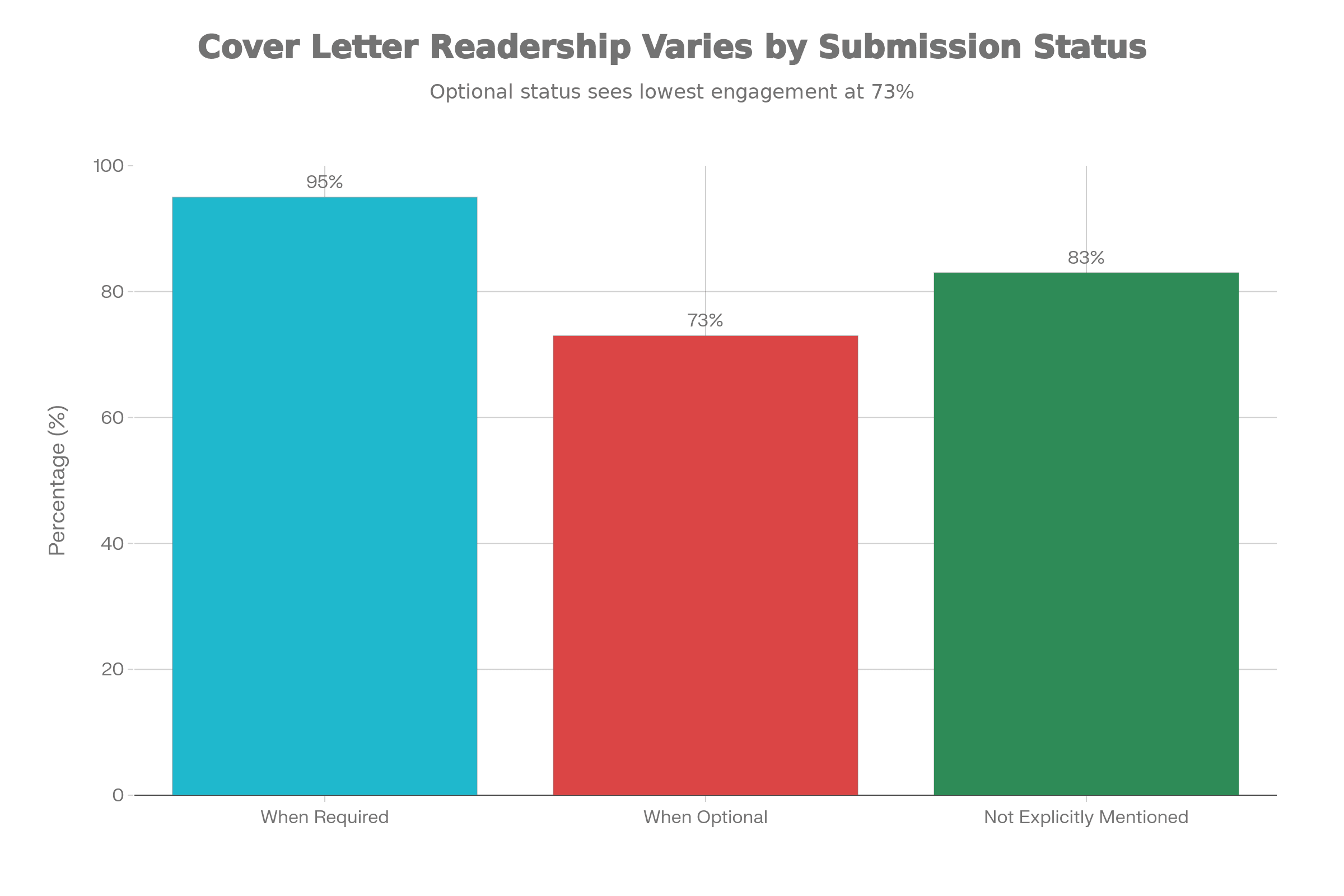
Recent data reveals something surprising: cover letters aren't just surviving in the modern job market—they're experiencing a resurgence. 83% of hiring managers read cover letters even when they're not required, and 45% review them before examining the resume itself. Even more striking: 49% of hiring managers have been convinced to interview a candidate whose resume alone wouldn't have warranted consideration—all because of a strong cover letter.
But here's the nuance: not every application requires one. Understanding when to invest time in crafting a compelling cover letter (and when to skip it entirely) could be the difference between landing interviews and wasting hours on applications that go nowhere.
The Current State of Cover Letters in 2026
Cover Letters Are Making a Comeback
Despite predictions of their demise, cover letters have proven remarkably resilient. The numbers tell a compelling story:
- 83% of hiring managers read cover letters even when they're marked as optional
- 72% of companies expect candidates to submit cover letters when they're marked "optional"
- 79% of companies that indicate cover letters are optional still read them
- Nearly half (49%) of hiring managers have been swayed to interview someone based on the cover letter alone
What's driving this resurgence? Several factors are at play:
1. AI Has Made Resumes Too Similar
With applicant tracking systems (ATS) requiring standardized formats and AI tools helping candidates optimize keywords, resumes increasingly look identical. Hiring managers need a way to distinguish between candidates with comparable qualifications—and cover letters provide that differentiation.
2. The Fight Against Generic AI Content
As AI writing tools become ubiquitous, employers are desperately seeking evidence of authentic human communication. A well-written cover letter that avoids AI-generated buzzwords signals genuine interest and critical thinking ability. Ironically, 80% of hiring managers view obviously AI-generated cover letter content negatively—not because they oppose AI, but because generic, robotic writing reveals communication deficiencies.
3. Remote Work Requires Stronger Written Communication
With remote and hybrid work becoming standard, written communication skills have never been more critical. Your cover letter is concrete proof you can articulate ideas clearly and persuasively—essential skills when you're collaborating across time zones via email and Slack.
Cover Letter vs Resume: Understanding the Difference
 Before we dive into when you need one, let's clarify the fundamental distinction:
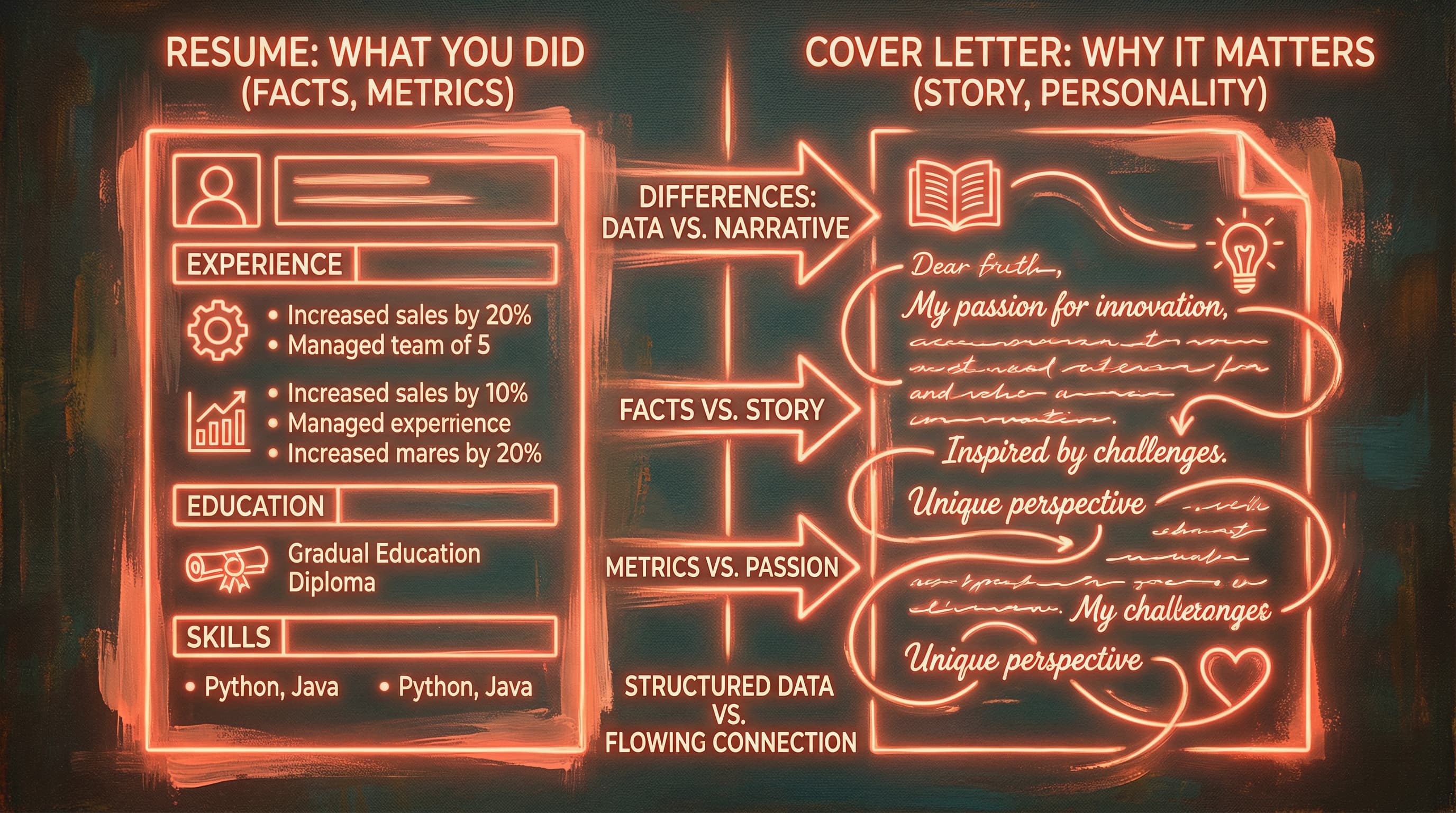
| Aspect | Resume | Cover Letter |
|---|---|---|
| Purpose | Structured summary of qualifications, experience, and achievements | Narrative explaining your fit, motivation, and personality |
| Format | Bullet points, sections, chronological or functional layout | Paragraphs, storytelling, conversational tone |
| Length | 1-2 pages | 250-400 words (half page) |
| Content Focus | What you've done (facts, metrics, titles) | Why you did it and what it means for this role |
| ATS Optimization | Heavily keyword-optimized for automated screening | Natural language for human readers (with strategic keywords) |
| Emotional Appeal | Minimal—focuses on data and credentials | High—showcases personality, passion, and cultural fit |
| Information Gaps | Cannot explain gaps, career changes, or context | Perfect vehicle for narrative context |
The Bottom Line: Your resume lists your qualifications. Your cover letter tells the story of why those qualifications make you the ideal candidate for this specific role.
When You Absolutely Need a Cover Letter
1. The Job Posting Explicitly Requests One
This is non-negotiable. If the application instructions say "cover letter required," submitting without one signals you cannot follow basic directions—an immediate disqualification.
Even when marked "optional," remember that 72% of hiring managers prefer you submit one anyway. "Optional" often means "strongly recommended."
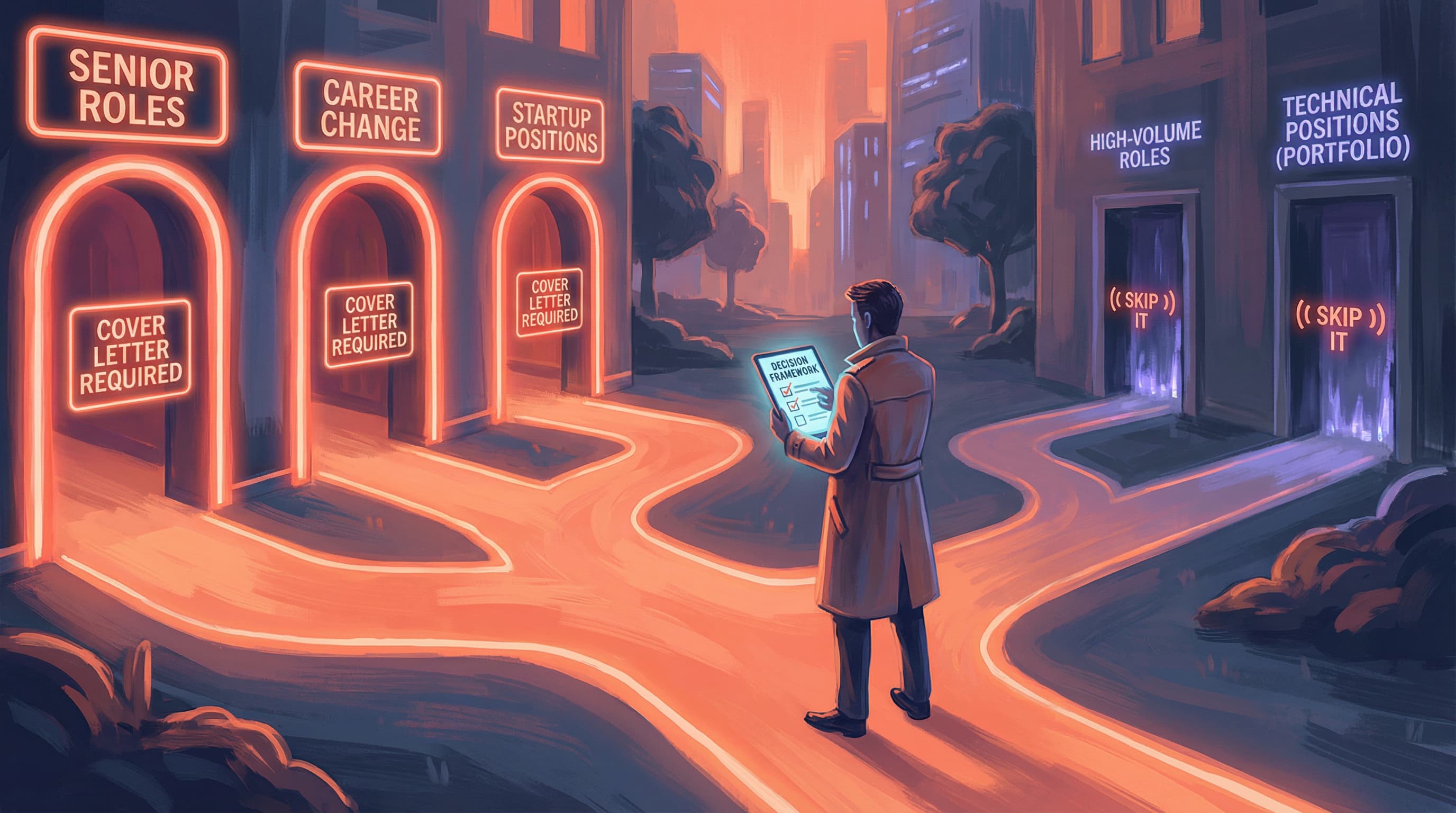
2. You're Applying for Senior-Level or Leadership Positions
Executive, director, and C-suite roles require cover letters as a matter of professional protocol. These positions demand:
- Strategic vision
- Leadership philosophy
- Cultural alignment at the highest levels
- Evidence of executive communication skills
A cover letter is your opportunity to convey these intangibles that a resume cannot capture. At senior levels, submitting only a resume looks incomplete.
3. You're Changing Careers or Industries
If your resume doesn't immediately explain why you're credible for a dramatically different role, your cover letter must bridge that gap.
Example: Transitioning from teaching to corporate training, from finance to fintech product management, or from military service to civilian business operations all require narrative explanation.
Your cover letter should:
- Acknowledge the career change directly
- Highlight transferable skills
- Explain your motivation clearly
- Demonstrate you've done research on the new field
Without this context, hiring managers may assume you're randomly applying to roles outside your expertise.
4. Strong Writing and Communication Are Core Job Requirements
For roles in marketing, communications, public relations, journalism, content creation, sales, customer success, or any client-facing position, your cover letter is your writing sample.
These fields demand clear, persuasive communication. If you can't craft a compelling cover letter, how will you write email campaigns, client proposals, or press releases?
Pro Tip: In creative fields, your cover letter's voice and style should reflect the company's brand. Applying to a playful startup? Write conversationally. Applying to a law firm? Keep it formal and precise.
5. You Have a Referral or Personal Connection
When someone has referred you internally or you can mention a personal connection to the company, the cover letter amplifies that advantage.
Example Opening:
"Jane Smith, your Director of Product, suggested I reach out regarding the Senior Product Manager opening. After discussing the role's focus on user retention strategies, I'm confident my experience scaling SaaS products from launch to profitability aligns perfectly with your growth goals."
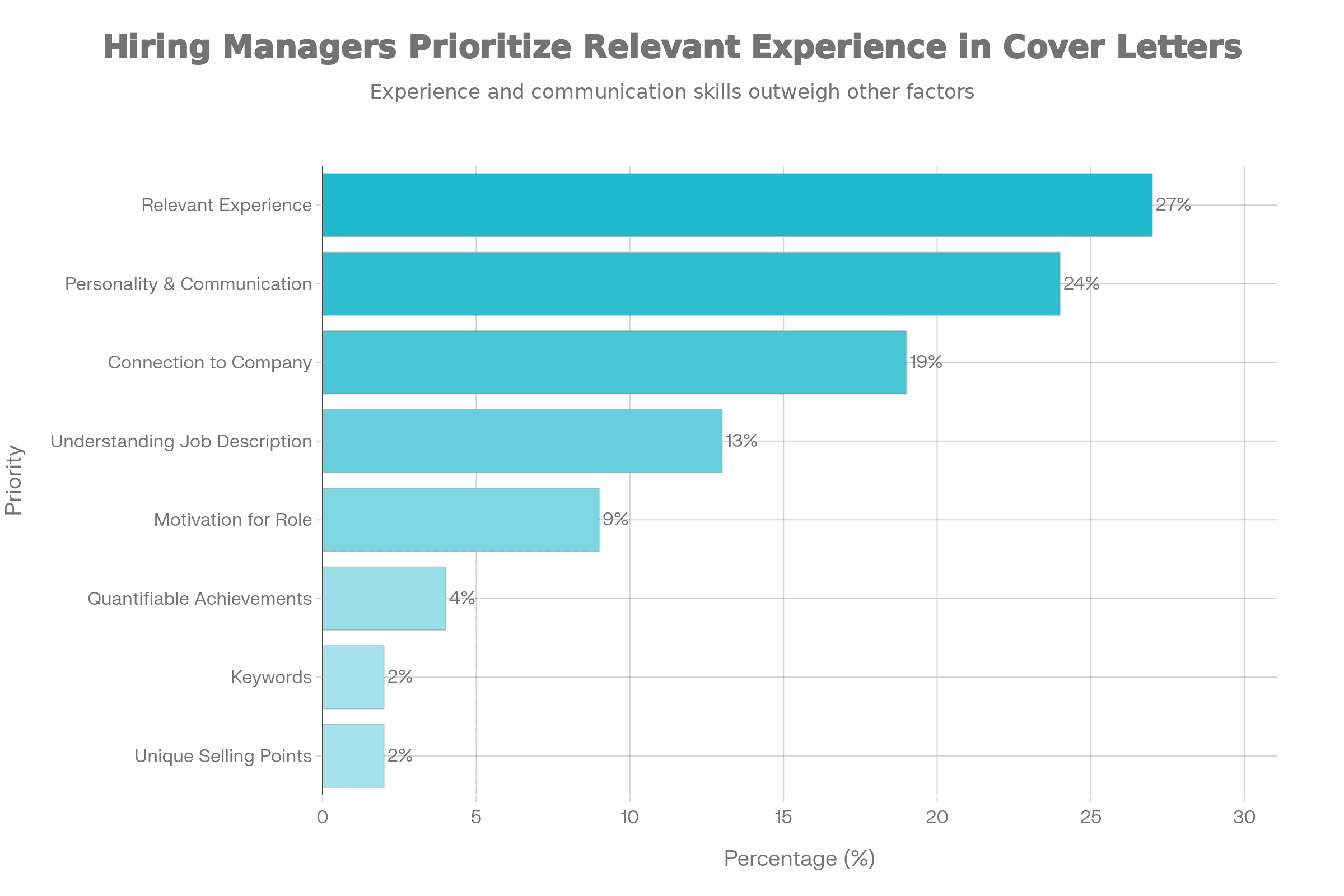
This immediately establishes credibility and gives context the resume cannot provide. 27% of hiring managers specifically look for how your experience connects to role demands—and a referral connection strengthens this link.
6. You're Explaining Employment Gaps or Resume Red Flags
Career gaps, frequent job changes, relocations, sabbaticals, or other factors that might raise questions should be addressed proactively in your cover letter.
The goal isn't to apologize—it's to provide context so the hiring manager understands before forming assumptions. (For detailed templates on this, check our guide on how to explain employment gaps in 2026).
Good Example:
"After five years in agency marketing, I took a planned 18-month sabbatical to care for a family member. During this time, I maintained my skills through freelance consulting projects and completed certifications in Google Analytics and HubSpot. I'm now eager to return full-time and bring my refreshed perspective to a dynamic team."
What this accomplishes: Acknowledges the gap, demonstrates continued professional development, signals commitment to return.
7. You're Applying to a Startup or Small Business
Startups and smaller companies (under 200 employees) place significant weight on cultural fit and personality alignment—precisely what cover letters convey.
65% of startups require cover letters specifically to gauge problem-solving ability and cultural fit. While large corporations may rely heavily on resume credentials, smaller companies value the personal connection and communication style a cover letter provides.
Additionally, your application may go directly to the founder or hiring manager rather than through an HR department—making your cover letter a direct conversation starter.
8. The Role Requires Problem-Solving or Strategic Thinking
Product managers, consultants, strategists, and similar roles benefit enormously from cover letters that demonstrate how you approach problems.
Rather than simply listing achievements, use the problem-solution format:
"I noticed [Company Name] recently expanded into the European market. In my role at [Current Company], I led our international expansion into three new markets, navigating regulatory compliance challenges and localizing our product for diverse customer bases. This resulted in $4M in new revenue within 18 months. I'd love to discuss how this experience could accelerate your growth in the EU."
This format shows you've researched the company's challenges and can immediately contribute value—far more compelling than generic enthusiasm.
When You Can—and Should—Skip the Cover Letter
1. The Job Posting Explicitly States "No Cover Letter"
When an employer explicitly prohibits cover letters, respect that directive. This isn't a hidden test of your initiative—it's a clear instruction.
Companies like Amazon explicitly prohibit cover letters in their application system. Their hiring process is designed around structured interviews and work samples, not traditional application materials.
Submitting a cover letter when told not to demonstrates you cannot follow basic directions—an immediate red flag.
2. There's No Field or Mechanism to Submit One
Some application portals simply don't accommodate cover letter uploads. If there's genuinely no way to attach one and the posting doesn't mention it, don't force it.
Exception: If you have a direct email address for the hiring manager or recruiter, you could send a brief introductory email separately. But if you're applying through a rigid online system with no cover letter field, the company has intentionally excluded this step.
3. You're Working with a Recruiter or Staffing Agency
When you work with an external recruiter, the recruiter functions as your cover letter. They pitch you to the hiring manager, provide context about your background, and answer questions.
Most recruiters won't request a formal cover letter because they're providing that narrative themselves. However, it never hurts to ask: "Would a brief cover letter strengthen my candidacy for this role?"
4. You're Applying for High-Volume, Entry-Level, or Hourly Positions
Large-scale hiring for retail, hospitality, warehouse, food service, or manufacturing roles often doesn't involve cover letter review due to sheer application volume.
When a company is hiring 50+ people for similar roles, they're optimizing for efficiency—not personalized applications.
Exception: Even in these industries, if you're applying to a small, specialty company (boutique retailer, craft brewery, artisan manufacturer), a brief cover letter can help you stand out.
5. The Role Is Highly Technical and Your Portfolio Speaks for Itself
For certain technical roles where your GitHub contributions, portfolio projects, certifications, or technical assessments demonstrate clear fit, a cover letter may be less critical.
However, even in tech: 60-70% of hiring managers still value cover letters for roles requiring cross-functional communication, product intuition, or strategic thinking.
When to skip in tech:
- Pure backend engineering roles where your code is the primary evaluation
- Data science positions where your Kaggle profile or published research demonstrates expertise
- DevOps/Infrastructure roles where certifications and system design experience speak for themselves
When you still need one in tech:
- Product management, design, or UX roles
- Engineering leadership positions
- Developer relations or technical advocacy
- Roles requiring stakeholder communication
6. You Don't Have Time to Write a Quality, Tailored Letter
Here's an uncomfortable truth: A generic, AI-generated, or poorly written cover letter can hurt more than help.
If you're faced with the choice between:
- Option A: Submitting a thoughtful resume without a cover letter
- Option B: Rushing a generic, templated cover letter full of buzzwords
Choose Option A every time.
Hiring managers can spot generic cover letters instantly. Phrases like "I am passionate about innovation," "I'm a team player who thinks outside the box," and "I leverage synergies to drive results" are immediate red flags.
Better strategy: Focus your time on 5-7 high-priority applications with fully customized cover letters rather than submitting 20 applications with templated letters.
Time-saving tip: If you're struggling to tailor cover letters for multiple applications, tools like CareerBoom's AI Cover Letter Generator can help you create personalized letters based on your profile and each specific job posting—saving hours while maintaining quality and authenticity.
What Makes a Cover Letter Actually Work in 2026
If you decide to write a cover letter (which you should in most cases), here's what actually works:
Keep It Concise: 250-400 Words Maximum
Hiring managers spend 30 seconds to 2 minutes reviewing cover letters. Every word must earn its place. (If you want to master the art of brevity, read our detailed guide on exactly how long a cover letter should be in 2026).
The ideal length:
- Email body: 150-200 words
- Attached PDF: 250-400 words (half a page)
- Never exceed: Half a page when printed
Use a Clear, Compelling Structure
Opening Paragraph (40-80 words):
- Name the specific role you're applying for
- Mention how you found it (especially if referred)
- Immediately communicate one standout achievement or relevant credential
Example:
"As a product manager who has scaled three SaaS products from beta to profitability, I was immediately drawn to your Growth Product Manager role posted on LinkedIn. My experience driving user retention through data-driven experimentation aligns perfectly with the metrics-focused approach described in your job posting."
Evidence Section (150-220 words, 2-3 paragraphs):
Move beyond restating your resume. Provide specific examples of how your experience directly addresses job requirements.
Use the Challenge → Action → Result formula with quantifiable metrics:
"At my current company, we faced declining user engagement after the initial onboarding period. I led a cross-functional initiative to redesign our activation flow, implementing A/B testing and personalized email sequences. Within three months, we increased 30-day retention by 35% and reduced time-to-value by 40%."
What this accomplishes: Shows concrete results, demonstrates problem-solving, uses metrics that matter.
Company Research & Cultural Fit (40-60 words):
Reference a specific product, initiative, company value, or recent news to show you've done your homework.
"I've been following your recent expansion into healthcare AI, particularly your partnership with Johns Hopkins. Having worked in regulated industries, I understand the unique compliance and UX challenges this market presents."
Closing with Clear Call to Action (30-50 words):
"I'd welcome the opportunity to discuss how my experience scaling B2B SaaS products can contribute to your growth targets this quarter. I'm available for a call at your convenience."
What NOT to Do
❌ Don't use obvious AI-generated language
Hiring managers can spot ChatGPT's writing patterns instantly. Phrases like:
- "I am excited to leverage my core competencies..."
- "Synergize cross-functional stakeholders..."
- "Passionate self-starter with a proven track record..."
These are immediate red flags. Write in your authentic voice.
❌ Don't duplicate your resume
If every sentence in your cover letter could be pulled directly from your resume, you've wasted the opportunity. Use the cover letter to provide context, personality, and narrative that your resume cannot.
❌ Don't waste space on generic motivation
Only 9% of hiring managers care about abstract motivation ("I've always wanted to work in marketing"). They care about specific value you bring (27%) and how your experience connects to role demands.
❌ Don't apologize or highlight weaknesses
Don't use the cover letter to explain what you're missing. Lead with confidence and focus on what you bring.
Bad: "Although I don't have 5 years of experience as listed in the job description, I'm a quick learner..."
Good: "My three years leading product launches have delivered measurable results, including a 45% increase in customer adoption through user-centered design principles."
How Company Size Affects Cover Letter Expectations
Large Corporations (1,000+ employees)
Cover Letter Importance: High
Large companies rely on cover letters to:
- Distinguish between similar candidates
- Assess cultural fit within structured processes
- Screen for communication skills before interviews
Tone: Formal and professional Length: 300-400 words Key Focus: Demonstrate you understand the company's scale, structure, and values
Mid-Size Companies (200-1,000 employees)
Cover Letter Importance: Moderate to High
Mid-size companies value cover letters but may be more flexible about format and tone.
Tone: Professional but approachable Length: 250-350 words Key Focus: Balance professionalism with personality; show you can adapt to growth-stage dynamics
Small Businesses and Startups (Under 200 employees)
Cover Letter Importance: Very High
65% of startups require cover letters to evaluate cultural fit, problem-solving, and communication style.
Tone: Conversational and authentic (while maintaining professionalism) Length: 200-300 words Key Focus: Show personality, demonstrate resourcefulness, explain why you're drawn to startup culture
Your application may go directly to the founder—make it feel like a conversation, not a corporate memo.
Tech Companies: The Wild Card
Tech recruiting is increasingly candidate-driven, with opinions on cover letters split:
- Some tech companies (especially high-growth startups) rarely read them, preferring portfolios and technical assessments
- Others (particularly for non-engineering roles) value them highly for assessing communication and strategic thinking
General Tech Guidelines:
- Pure engineering roles: Optional unless specified
- Product, design, marketing, sales: Strongly recommended
- Leadership positions: Required
- Roles requiring cross-functional collaboration: Highly valuable
The AI Question: Using Tools Without Losing Authenticity
AI writing tools can be helpful—when used correctly. 80% of hiring managers react negatively to obviously AI-generated content, but that doesn't mean you can't use AI strategically.
Smart Ways to Use AI:
✅ Analyze the job description to identify key themes and requirements ✅ Generate an outline or structural framework ✅ Suggest opening hooks or attention-grabbing lines ✅ Identify keywords to incorporate naturally ✅ Create a rough first draft that you heavily revise ✅ Use specialized tools like CareerBoom's Cover Letter AI that automatically tailor cover letters by analyzing both your career profile and the specific job requirements—ensuring personalization without the generic AI buzzwords
What Will Get You Rejected:
❌ Copying ChatGPT output verbatim without personalization ❌ Using generic AI phrases and buzzwords ❌ Failing to add specific examples and metrics from your experience ❌ Writing in a robotic, overly formal tone that doesn't sound human
The Rule: Use AI as a brainstorming partner, not a ghostwriter. The final product must sound authentically like you, with specific details only you can provide.
The Verdict: When in doubt, write a brief, authentic, tailored cover letter. 98% of the time, a well-crafted cover letter strengthens your candidacy.
Real-World Examples: Cover Letters That Worked
Example 1: Career Change (Teaching → Corporate Training)
"After seven years developing curriculum and teaching high school English, I'm excited to transition into corporate learning and development. While my background is in education, the core skills are directly transferable: designing engaging learning experiences, adapting communication for diverse audiences, and measuring learning outcomes through assessment.
At my current school, I redesigned our 11th-grade curriculum using backward design principles, resulting in a 28% increase in standardized test scores and significantly higher student engagement metrics. I'm confident these instructional design skills will translate directly to creating effective corporate training programs.
I'm particularly drawn to [Company]'s focus on microlearning and data-driven training effectiveness—approaches that align with modern educational best practices I've implemented in the classroom."
Why this works:
- Acknowledges the elephant in the room: It directly addresses the career change instead of hiding it.
- Transfers the skills: Explicitly translates "teaching" terms into "corporate" terms (e.g., curriculum -> instructional design).
- Uses numbers: "28% increase" proves competence.
Example 2: Senior Product Manager (Tech)
"I noticed [Company] is scaling your B2B platform to support enterprise customers—a transition I've navigated twice before. At [Previous Company], I led the evolution from SMB to enterprise focus, implementing role-based permissions, SSO integration, and advanced security features that helped us land three Fortune 500 clients in the first year.
Your job posting emphasizes cross-functional leadership and data-driven decision-making. In my current role, I manage a team of 8 across product, design, and engineering, using experimentation frameworks to validate assumptions before committing development resources. This approach has reduced our feature failure rate by 60% while accelerating time-to-market.
I'd welcome the opportunity to discuss how my experience scaling products for enterprise customers could support your growth objectives this year."
Why this works:
- Immediate Value Prop: Shows they have solved the exact problem the company is facing (scaling to enterprise).
- Strategic Language: Uses terms like "SSO," "role-based permissions," and "experimentation frameworks."
- Outcome-Focused: "Reduced feature failure rate by 60%."
Final Verdict: Do You Really Need a Cover Letter?
Submit a cover letter unless:
- The job posting explicitly forbids it
- There is no mechanism to submit one
- You're working with a recruiter who advises against it
- You don't have time to write a quality, tailored version
In all other cases, write one. The data is clear: 83% of hiring managers read them, 72% expect them even when optional, and 49% have been swayed to interview someone based on the cover letter alone.
The cover letter isn't dead in 2026—it's evolved. It's no longer about expressing generic passion or repeating resume bullets. Modern cover letters:
- Bridge gaps in your narrative
- Demonstrate authentic communication skills
- Show you've researched the company and role
- Provide context your resume cannot
When you do need to write one, learn how to write a cover letter that actually gets read using the three-act structure that hooks recruiters.
In a job market increasingly filtered by AI and ATS systems, the cover letter remains one of your most powerful tools for being remembered as a human being with something meaningful to contribute. However, if you choose to skip the cover letter, strengthen your application through other channels. Optimize your LinkedIn profile with these 40 tips and tricks to ensure recruiters can discover your value through networking and direct outreach.
Your action plan:
- Assess each application individually using the decision framework above
- Prioritize quality over quantity: 5 tailored applications with strong cover letters beat 20 generic ones
- Keep it concise: 250-400 words maximum
- Make it authentic: Use AI for structure, but write the content yourself (or use CareerBoom to generate tailored drafts that match your voice and experience)
- Focus on value: What can you do for them, not what they can do for you
The cover letter is your opportunity to stand out in a sea of similar resumes. Use it strategically, write it authentically, and watch your interview rate climb.
Was this article helpful?
Table of Contents
The Current State of Cover Letters in 2026
Cover Letter vs Resume: Understanding the Difference
When You Absolutely Need a Cover Letter
When You Can—and Should—Skip the Cover Letter
What Makes a Cover Letter Actually Work in 2026
How Company Size Affects Cover Letter Expectations
The AI Question: Using Tools Without Losing Authenticity
Real-World Examples: Cover Letters That Worked
Final Verdict: Do You Really Need a Cover Letter?
Share this article
Other articles
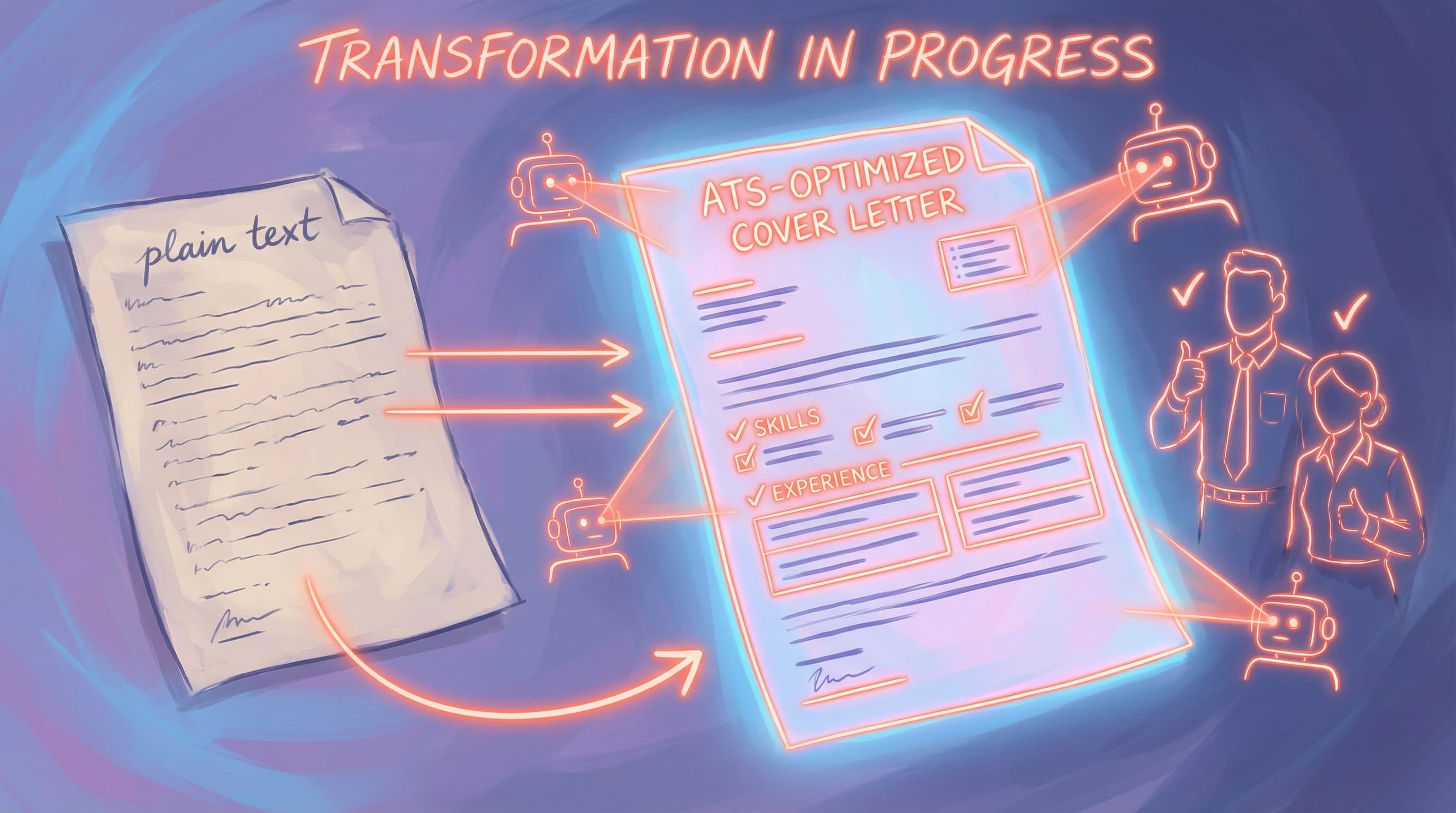
How to Write a Cover Letter That Actually Gets Read
Your guide to writing cover letters that get noticed by recruiters and beat the ATS.
Cover Letter Opening Lines That Hook Recruiters (18 Proven Examples)
Ditch the boring intro. These attention-grabbing first sentences will make hiring managers actually want to read your cover letter.
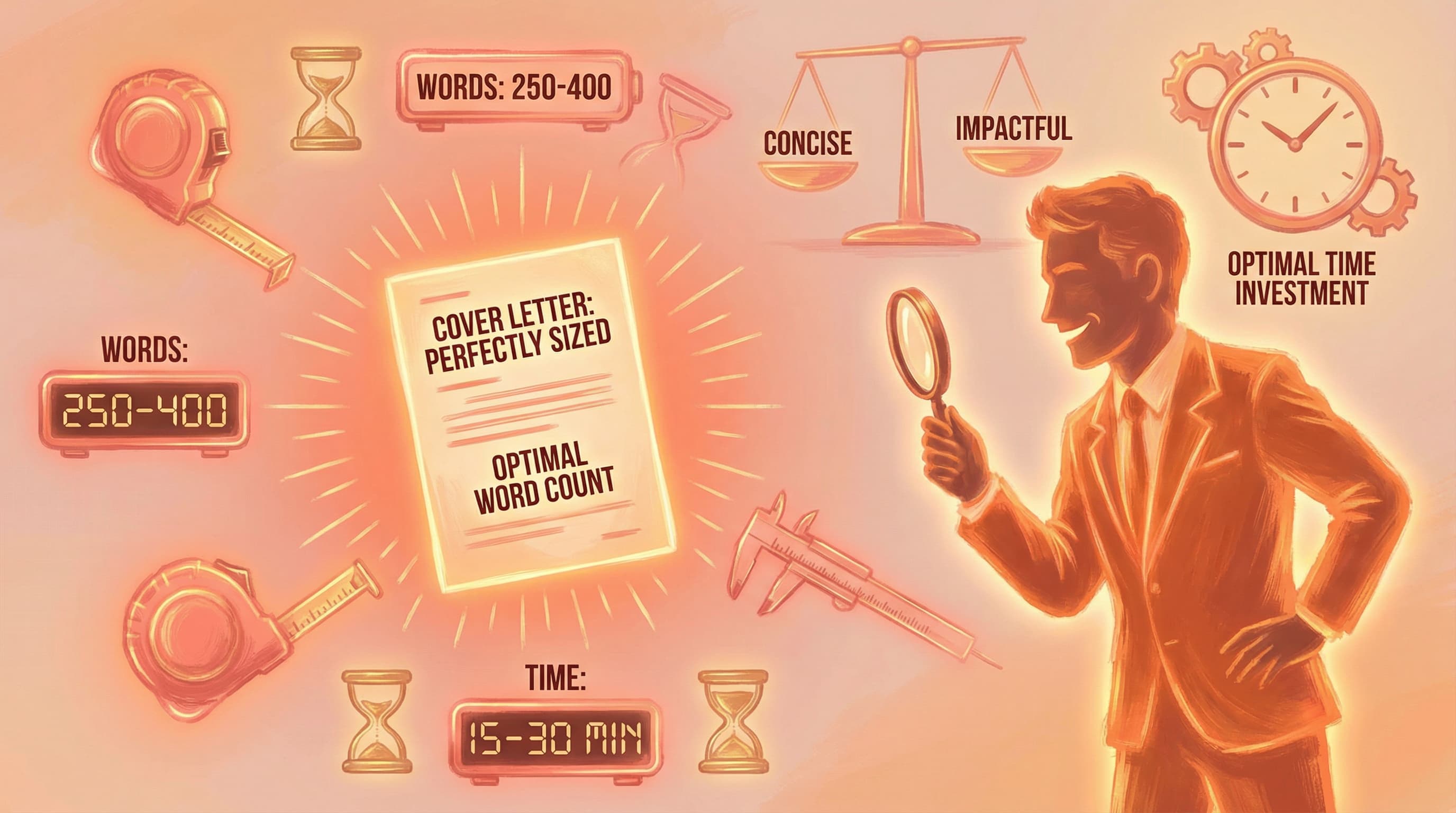
How Long Should A Cover Letter Be in 2026? (The Definitive Guide)
Stop writing essays. Discover the perfect word count for email and attached cover letters to get more interviews.