How to Write a Cover Letter That Gets Noticed Instantly
Master the art of crafting cover letters that demand attention and secure interview invitations.
2 months ago - Updated 2 days ago
A cover letter is far more than just a formality; it's a powerful marketing tool that can differentiate you from a sea of applicants and secure that coveted interview invitation. In today's competitive job market, where a single job posting can attract hundreds of resumes, a generic cover letter simply won't cut it. To truly stand out, you need to craft an attention-grabbing, interview-winning document that speaks directly to the hiring manager and showcases your unique value.
This comprehensive guide will equip you with the secret techniques to make your cover letter pop, captivate hiring managers in seconds, and ensure your application gets noticed instantly. We'll delve into the strategies that transform a standard introduction into a powerful personal pitch, demonstrating not just what you've done, but why you are the perfect fit for this specific role at this specific company.
Why Your Cover Letter is More Important Than You Think
Many job seekers wonder if cover letters are still relevant in the age of digital applications and Applicant Tracking Systems (ATS). The answer is a resounding "yes." While some hiring managers might initially skim them, a well-crafted cover letter significantly influences hiring decisions.
Consider these compelling statistics:
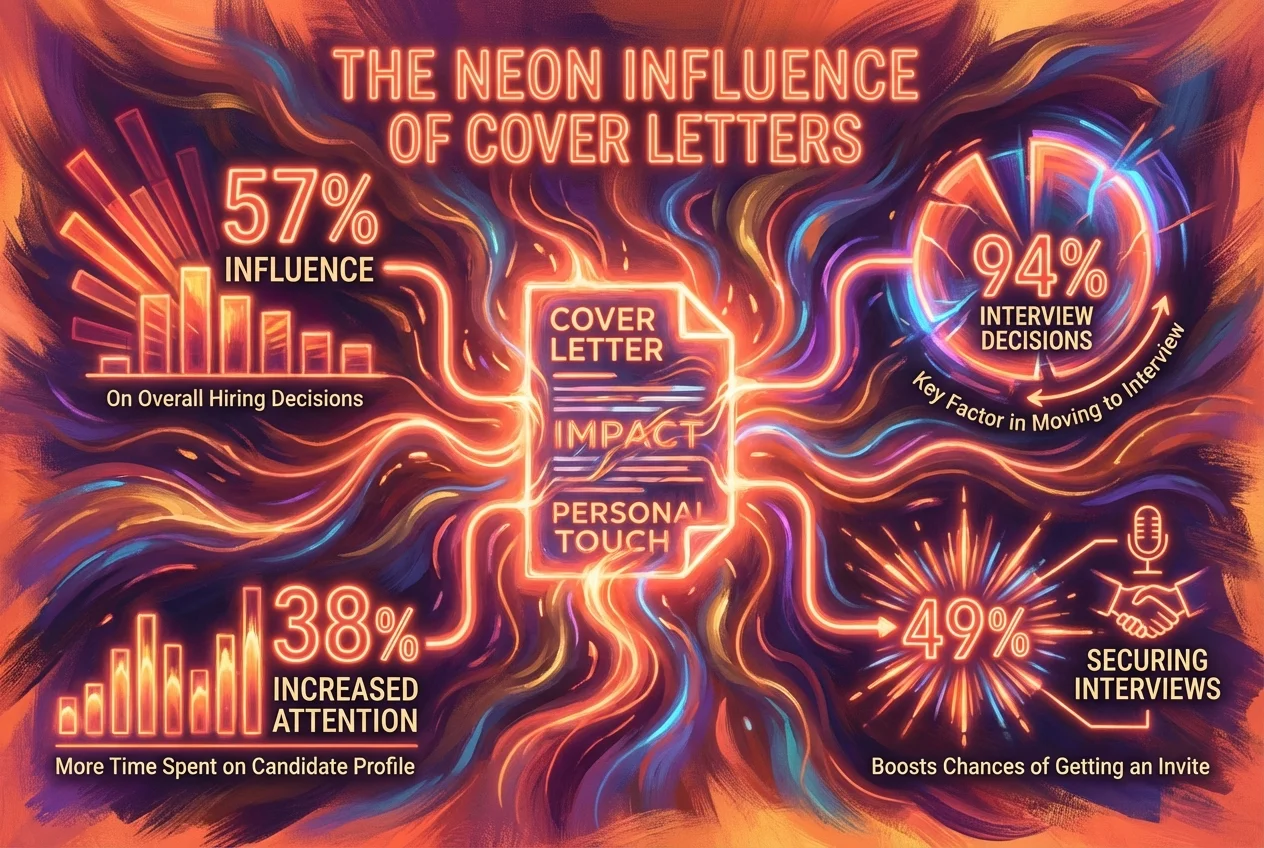
- Influence on Hiring Decisions: Over half (57%) of surveyed hiring managers and recruiters consider cover letters influential or extremely influential in their hiring decisions. This number jumps higher for smaller companies.
- Hiring Manager Engagement: A significant 94% of hiring managers believe cover letters influence interview decisions, with one in four calling them "very important." Even when not required, 83% of hiring managers read most cover letters.
- Increased Attention: Including a cover letter can increase hiring managers' attention to an application by up to 38%.
- Securing Interviews: A strong cover letter can secure an interview for nearly half (49%) of candidates, while a weak one can sink an otherwise strong candidate (18%).
These numbers underscore a critical truth: your cover letter is an opportunity to tell a story that your resume alone cannot. It allows you to express your motivations, highlight relevant skills and experiences, and explain why you're the ideal candidate for the job. It's your chance to convey personality, enthusiasm, and a genuine connection to the company's work culture.
The Core Problem: Why Most Cover Letters Fail to Get Noticed
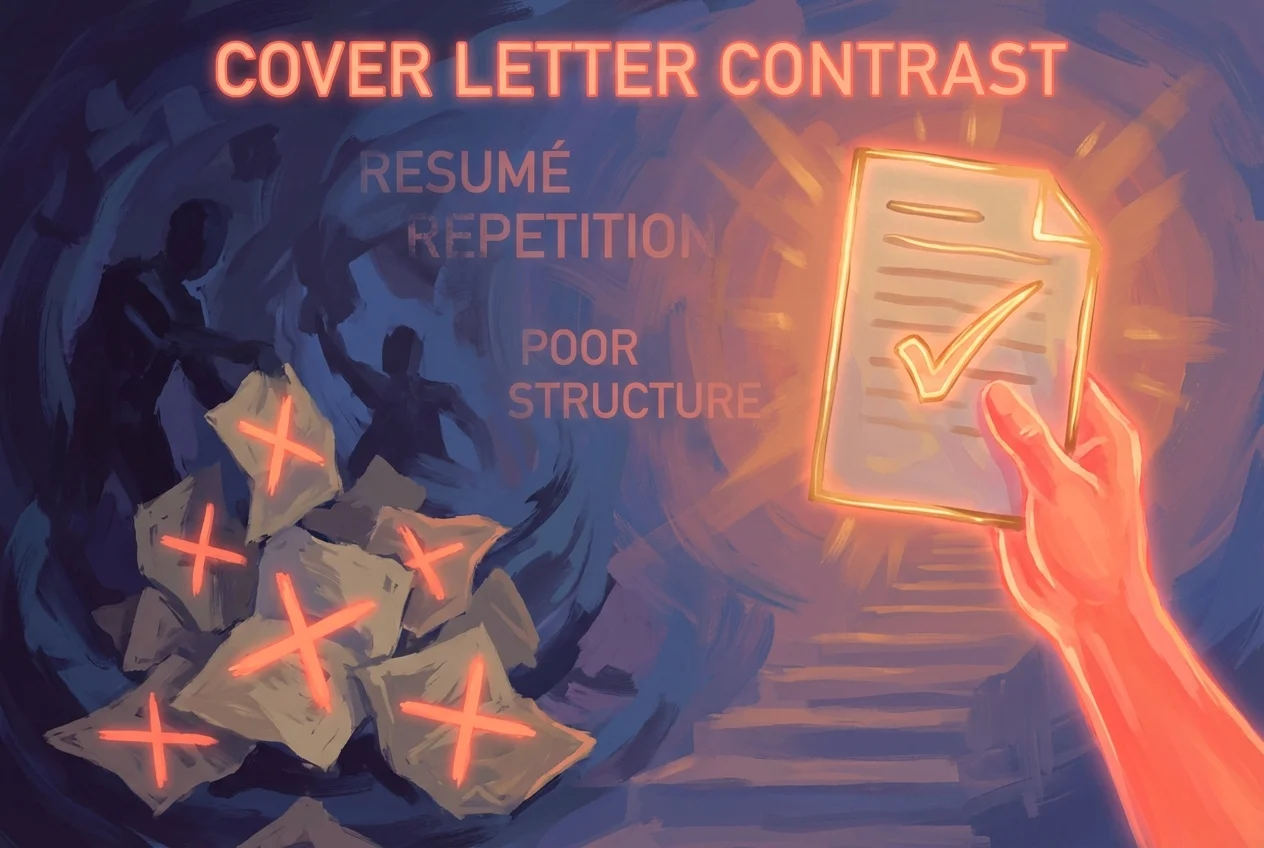
The majority of cover letters unfortunately fall flat, ending up in the "no" pile before they've had a real chance to make an impression. This isn't usually due to a lack of qualifications, but rather a failure in presentation and personalization.
Here are the primary reasons why most cover letters fail:
- Genericity: The biggest culprit is a lack of personalization. Many applicants use a generic template, changing only the company name and job title. Hiring managers can spot these a mile away, and they signal a lack of genuine interest and effort. To overcome this, leveraging tools like CareerBoom.ai can be invaluable, as its AI-powered platform helps align your resume and cover letter directly with job descriptions, ensuring genuine customization.
- Resumé Repetition: A common mistake is simply rehashing the resume. The cover letter should complement, not duplicate, your resume by adding depth and context. It's an opportunity to elaborate on key achievements and connect them to the specific role.
- Focusing Solely on "Me": Applicants often spend too much time talking about what they want or need, rather than focusing on what the employer needs and how they can solve the company's problems.
- Poor Structure and Length: Letters that are too long or too short, lack clear paragraphs, or are poorly organized can deter a busy hiring manager. Ideally, a cover letter should be concise, around three to five paragraphs, and no more than one page.
- Grammar and Spelling Errors: Typos and grammatical mistakes instantly undermine credibility and suggest a lack of attention to detail, which can be a deal-breaker.
- Lack of a Strong Opening and Closing: The introduction fails to grab attention, and the conclusion lacks a clear call to action, leaving the reader unimpressed or unsure of the next steps.
Understanding these pitfalls is the first step toward crafting a powerful cover letter that truly gets noticed.
The "Instant Notice" Philosophy: What Makes a Cover Letter Truly Stand Out?
An "instant notice" cover letter isn't just about avoiding mistakes; it's about actively engaging the reader and demonstrating immediate value. It's a strategic document designed to quickly answer the hiring manager's unspoken questions: "Why are you writing to me?", "Why this company?", "Why this role?", and most importantly, "What can you do for us?". For more cover letter tips on how to stand out to a hiring manager, consider these expert strategies.
The philosophy behind an attention-grabbing cover letter hinges on three core pillars:
- Relevance: Every sentence, every example, and every skill mentioned must be directly relevant to the job description and the company's needs. This requires thorough research and a highly tailored approach.
- Personality & Authenticity: While professional, your cover letter should convey a glimpse of your unique personality and genuine enthusiasm. It's an opportunity to showcase your soft skills and cultural fit.
- Value Proposition: Clearly articulate the specific benefits you bring to the organization. Don't just list what you've done; explain how your past achievements will translate into future success for them.
By embracing these principles, you move beyond a mere application and present yourself as a thoughtful, engaged, and highly desirable candidate.
Key Strategies for an Attention-Grabing, Interview-Winning Cover Letter
Now, let's dive into the actionable strategies that will help you write a cover letter that gets noticed instantly and secures those coveted interview invitations. For a comprehensive guide on how to write a cover letter that makes an impact, explore further resources.
1. Research is Your Secret Weapon: Tailoring for Impact
A generic cover letter is a wasted opportunity. The most crucial step to make your cover letter stand out is to thoroughly research the company and the specific role. This isn't just about finding facts; it's about understanding their needs, values, and culture.
How to Conduct Effective Research:
- Analyze the Job Description (JD) Meticulously: Go beyond a quick read. Highlight keywords, required skills, and responsibilities. Pay attention to the language used – this will inform your tone and vocabulary.
- Explore the Company Website: Delve into their "About Us" section, mission statement, values, and recent news. Look for projects, initiatives, or company philosophies that resonate with you.
- Check Social Media and News: Look at their LinkedIn, Twitter, or other relevant platforms. Are there recent achievements, community involvement, or industry insights you can reference?
- Investigate the Hiring Manager (If Possible): If the job posting names a hiring manager, a quick LinkedIn search can provide insights into their professional background, interests, or recent posts. This can offer a personal touch point.
- Understand Company Culture: Does the company emphasize innovation, teamwork, customer service, or social impact? Align your narrative with these values.
Integrating Your Research: Your research should subtly weave throughout your cover letter, demonstrating genuine interest and a clear understanding of the role and company. Instead of saying, "I am a hard worker," say, "My commitment to [specific company value, e.g., sustainable innovation] aligns perfectly with [Company Name]'s recent initiative in [specific project]."
2. Crafting an Irresistible Opening: Hook the Hiring Manager Immediately
The opening paragraph is arguably the most critical part of your cover letter. It's your one chance to grab the hiring manager's attention and compel them to read on. Avoid bland, overused phrases like "I am writing to apply for the position of..."
Techniques for an Attention-Grabbing Opening:
- Lead with a Strong Accomplishment: Start with a compelling achievement that directly relates to the job's core requirements.
- Example: "As a Marketing Specialist at XYZ Corp, I spearheaded a digital campaign that increased lead generation by 30% in six months, a result I believe directly aligns with your goals for the Senior Marketing Manager role at [Company Name]."
- Express Genuine Enthusiasm and Specific Interest: Show you've done your homework and are genuinely excited about this particular opportunity.
- Example: "Having closely followed [Company Name]'s groundbreaking work in AI-driven healthcare solutions, particularly your recent success with the [Specific Project], I am incredibly excited by the prospect of contributing my expertise as a Data Scientist."
- Mention a Mutual Connection or Referral: If someone referred you, lead with their name. This immediately establishes credibility.
- Example: "Dr. Jane Smith, a Senior Researcher at [Company Name], highly recommended I reach out regarding the [Job Title] position, believing my background in [relevant field] would be a strong asset to your team."
- Highlight a Core Value Alignment: Connect your personal or professional values with the company's mission.
- Example: "My passion for fostering collaborative and innovative team environments perfectly mirrors [Company Name]'s commitment to a dynamic workplace culture, making the Project Manager role a compelling next step in my career."
Addressing the Hiring Manager: Always try to address your letter to a specific person by name. If you can't find a name, use a specific job title (e.g., "Dear Head of Marketing Department") rather than a generic "To Whom It May Concern."
3. Show, Don't Just Tell: Quantify Your Impact and Use the STAR Method
Your resume lists your responsibilities; your cover letter showcases your achievements and their impact. Instead of simply stating you have a skill, provide concrete examples of how you've used it to achieve measurable results.
Quantify Your Achievements: Whenever possible, use numbers, percentages, and specific outcomes to illustrate your contributions.
| Vague Statement | Powerful, Quantified Statement |
|---|---|
| "Responsible for sales growth." | "Increased quarterly sales by 15% through strategic client outreach and negotiation." |
| "Improved website performance." | "Optimized website loading speed by 25%, resulting in a 10% reduction in bounce rate." |
| "Managed social media accounts." | "Grew social media engagement by 40% across three platforms, leading to a 20% increase in brand mentions." |
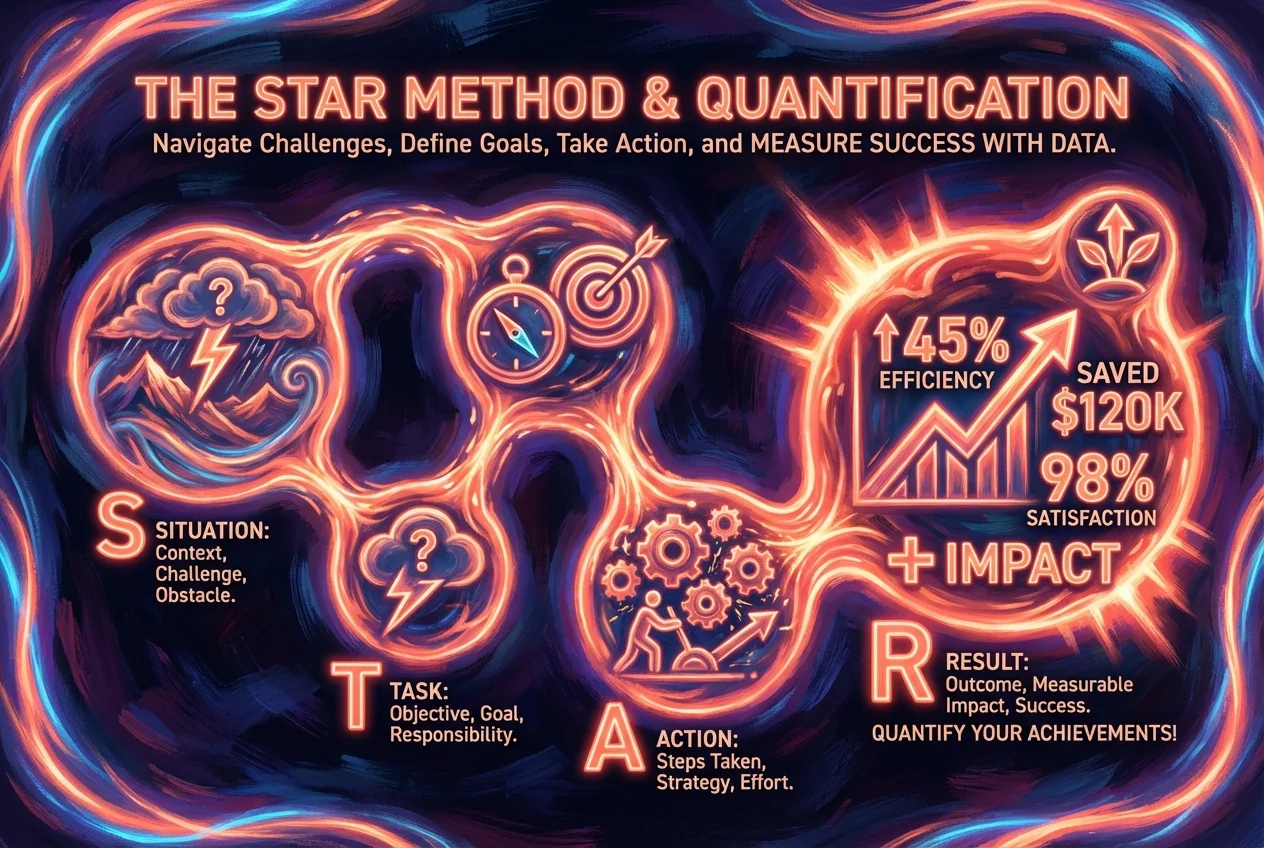
Employ the STAR Method: The STAR (Situation, Task, Action, Result) method is excellent for structuring your examples and demonstrating problem-solving capabilities.
- Situation: Briefly describe the context or challenge.
- Task: Explain your responsibility in that situation.
- Action: Detail the specific steps you took to address the task.
- Result: Quantify the positive outcome of your actions.
Example: "In my previous role as a Customer Success Manager, I encountered a situation where client churn was increasing due to delayed support responses (Situation). My task was to streamline our support process and improve client satisfaction (Task). I implemented a new ticketing system and trained the team on best practices for rapid response, reducing average response time by 50% (Action). This initiative resulted in a 20% decrease in client churn and a 15% improvement in customer satisfaction scores within three months (Result)."
4. Aligning with Company Values and Culture: Beyond Skills
Hiring managers aren't just looking for someone with the right skills; they're looking for someone who will be a good cultural fit and genuinely contribute to the team's success. Your cover letter is the perfect place to demonstrate this alignment.
How to Showcase Cultural Fit:
- Reference Specific Company Values: If the company emphasizes collaboration, innovation, or integrity, share an anecdote that highlights your embodiment of that value.
- Discuss Shared Passions: If the company is involved in a particular cause or industry trend that you are passionate about, mention it.
- Connect Your Soft Skills: Use your narrative to showcase soft skills like teamwork, adaptability, leadership, or problem-solving, which are crucial for cultural fit.
- Use Their Language: Mirror the tone and some keywords used in the job description and on the company's website to subtly show you understand their environment.
Example: "As someone who thrives in fast-paced, collaborative environments, I was particularly drawn to [Company Name]'s reputation for fostering innovation through cross-functional teamwork. My experience leading agile development sprints, where open communication and shared problem-solving were paramount, has prepared me to immediately contribute to your dynamic engineering team."
5. The Power of Storytelling: Making it Memorable
A cover letter should tell a compelling, concise story that connects your background to the job requirements. It's not just a list of facts; it's a narrative that makes you memorable.
Elements of Effective Storytelling:
- Focus on a Theme: Choose one or two central themes (e.g., problem-solving, leadership, innovation) that are highly relevant to the role and weave your examples around them.
- Create a Narrative Arc: Briefly introduce a challenge, describe your actions, and present the positive outcome. This creates a mini-story that is engaging and easy to follow.
- Show Personality (Appropriately): While maintaining professionalism, infuse your writing with a touch of your authentic voice. If you're enthusiastic, let it show through energized language and action verbs.
- Avoid Jargon (Unless Industry-Specific): Use clear, concise language. If using industry-specific jargon, ensure it's used correctly and enhances understanding.
A well-told story can transform a dry application into a vivid portrayal of your potential, helping you stand out from other applicants.
6. Addressing the "Why Me?" Question: Clearly Articulating Your Value Proposition
Beyond showing what you've done, your cover letter must clearly answer why you are the best candidate for this specific role. This is your unique value proposition.
How to Articulate Your Value:
- Directly Address Job Requirements: For each key requirement in the job description, briefly explain how your skills and experience directly fulfill it. You can even use bullet points for clarity if appropriate, though generally, a narrative is preferred for cover letters.
- Connect the Dots: Don't make the hiring manager guess how your past experience relates to their needs. Explicitly draw connections.
- Highlight Unique Skills/Experiences: What do you bring that other candidates might not? Perhaps a unique combination of technical and soft skills, or experience in a niche area.
- Future-Oriented Language: Shift from what you have done to what you will do for the company. How will your skills contribute to their future success?
Example: "My five years of experience in full-stack development, coupled with a proven track record in leading cross-functional teams and optimizing system architecture, directly aligns with the technical leadership and innovation required for your Senior Software Engineer position. I am confident I can contribute to [Company Name]'s ambitious roadmap by delivering robust, scalable solutions and mentoring junior developers."
7. A Strong Call to Action: Guiding the Next Steps
A powerful cover letter concludes with a clear, confident call to action. Don't just thank them for their time; express your eagerness for the next step.
Elements of an Effective Call to Action:
- Reiterate Enthusiasm: Briefly restate your strong interest in the role and the company.
- Express Readiness for Interview: Explicitly state your desire for an interview to discuss your qualifications further.
- Suggest Next Steps (Optional but impactful): While not always necessary, you can subtly indicate you'll follow up. (Be mindful of company policies on follow-ups).
- Professional Closing: Use a professional closing like "Sincerely" or "Regards."
Example: "Thank you for considering my application. I am genuinely excited by the opportunity to bring my [specific skills/experience] to [Company Name] and am confident I can make an immediate impact. I eagerly await the opportunity to discuss how my qualifications align with your team's goals in an interview."
8. Proofreading and Polishing: The Final Crucial Steps
Even the most brilliant content can be undermined by a single typo or grammatical error. Proofreading is not just a final check; it's a critical component of making your cover letter professional and polished.
Your Proofreading Checklist:
- Read Aloud: Reading your letter aloud helps catch awkward phrasing, missing words, and grammatical errors that your eyes might skip over.
- Multiple Reads: Review for different types of errors (e.g., one pass for grammar, one for spelling, one for flow and clarity).
- Fresh Eyes: Ask a trusted friend, mentor, or career advisor to review your letter. A fresh perspective can catch mistakes you've overlooked.
- Check Company/Name Details: Double-check that all company names, job titles, and contact persons are spelled correctly and are accurate for this specific application.
- Consistency: Ensure consistent formatting, font style, and size with your resume.
- Conciseness: Aim for one page, ideally 3-5 paragraphs. Eliminate any unnecessary words or phrases.
Important Formatting Considerations:
- Length: Keep it to one page. A concise, focused letter demonstrates effective communication and respects the reader's time.
- Paragraphs: Typically 3-5 paragraphs.
- Font: Use a professional, readable font (e.g., Arial, Calibri, Times New Roman) in a size between 10-12 points, matching your resume.
- Margins: Standard 1-inch margins.
- Contact Information: Include your contact information (name, phone, email, LinkedIn profile) clearly at the top, matching your resume.
Common Mistakes to Avoid When Writing a Powerful Cover Letter
Beyond the positive strategies, knowing what not to do is equally important for crafting a cover letter that gets noticed. Avoiding these common pitfalls will significantly increase your chances of securing an interview.
1. Using a Generic Template Without Customization
This is perhaps the most significant error. A generic cover letter indicates a lack of genuine interest and effort.
- Solution: Tailor every cover letter to the specific job and company. Reference specific company projects, values, or aspects of the role that genuinely excite you.
2. Rehashing Your Resume
Your cover letter is not a narrative version of your resume. It should complement your resume by providing context, highlighting motivations, and expanding on key achievements that directly relate to the job.
- Solution: Focus on elaborating on 1-2 key accomplishments that align perfectly with the job description, using the STAR method to show impact.
3. Focusing Too Much on Yourself Instead of the Employer
Hiring managers want to know how you can benefit their company, not just what you want.
- Solution: Shift your focus to the employer's needs. Frame your skills and experiences in terms of solutions you can provide and value you can add to their team and goals.
4. Overloading with Irrelevant Details
Keep your cover letter concise and focused. Irrelevant information dilutes your message and wastes the hiring manager's time.
- Solution: Stick to information directly pertinent to the job description and the value you bring. Avoid personal anecdotes unrelated to your professional capabilities.
5. Poor Spelling and Grammar
Errors in spelling and grammar are immediate red flags, suggesting carelessness and a lack of professionalism.
- Solution: Proofread meticulously. Use grammar checkers, read aloud, and ask others to review it.
6. Being Too Wordy or Too Short
A cover letter that is too long (over a page) can be tedious, while one that is too short can seem superficial.
- Solution: Aim for a concise, one-page letter, typically 3-5 paragraphs. This demonstrates strong communication skills.
7. Talking About Salary Expectations
Unless explicitly asked, avoid discussing salary in your cover letter. This topic is best reserved for later stages of the interview process.
- Solution: Focus on your value, skills, and enthusiasm for the role.
8. Highlighting Where You Lack Specific Skills
Never draw attention to your weaknesses or what you don't have.
- Solution: Emphasize your existing strengths, transferable skills, and relevant experiences. Focus on what you can do, not what you can't.
9. Using a Passive Tone or Weak Language
A cover letter should be a persuasive document, showcasing your confidence and enthusiasm.
- Solution: Use strong action verbs and an active voice. Be confident in articulating your accomplishments and potential.
10. Forgetting a Strong Call to Action
A weak or missing call to action leaves the hiring manager unsure of the next steps or your level of interest.
- Solution: Conclude with a clear statement expressing your eagerness for an interview and how you look forward to discussing your qualifications further.
11. Not Addressing the Right Person
Sending a letter to "Dear Sir or Madam" when a specific hiring manager's name is available shows a lack of effort.
- Solution: Always strive to find the name and correct title of the hiring manager. If unavailable, use a specific departmental title.
12. Relying Solely on AI Tools
While AI can assist with drafting ideas, relying entirely on AI for your cover letter can strip it of personality and authenticity, and may even lead to generic or plagiarized content.
- Solution: Use AI as a starting point for ideas or editing, but ensure the final product reflects your unique voice, experiences, and genuine enthusiasm.
By consciously avoiding these common mistakes, you can elevate your cover letter from merely adequate to truly exceptional, significantly improving your chances of making an instant, positive impression.
The Digital Edge: Considerations for Online Applications
In today's job market, most applications are submitted online, either through a portal or via email. The format of your cover letter needs to adapt to this digital environment.
- Email Body vs. Attachment: If applying via email, it's often best to use the body of the email as your cover letter for instant visibility. Keep it concise, potentially leaning towards a half-page. If the instructions specify an attachment, ensure it's a PDF to preserve formatting.
- Subject Line: For email applications, your subject line is your first impression. Make it clear, concise, and attention-grabbing. Include the job title and your name.
- Example: "Application: Senior Marketing Manager - [Your Name]" or "Experienced Data Scientist - [Your Name] for [Job Title]"
- Keywords for ATS: While your cover letter is primarily for human eyes, integrating relevant keywords from the job description can help it pass through Applicant Tracking Systems (ATS) that some companies use for initial screening. However, prioritize natural language over keyword stuffing.
- Hyperlinks: In a digital cover letter, you can include clickable hyperlinks to your online portfolio, LinkedIn profile, or relevant projects, making it easy for the hiring manager to explore your work further. For a streamlined approach to managing your entire job search, from crafting tailored documents to tracking applications and preparing for interviews, a complete AI-powered platform like CareerBoom.ai can significantly accelerate your efforts.
Conclusion
Crafting a cover letter that gets noticed instantly is an art, but it's an art that can be mastered with strategic effort and attention to detail. For more insights on how to write a cover letter that truly stands out, consider exploring additional expert advice. It's about moving beyond generic statements and creating a personalized, powerful cover letter that acts as your personal advocate.
Remember, your cover letter is your opportunity to build a connection, showcase your personality, and articulate your unique value proposition in a way your resume cannot. By thoroughly researching the company and role, opening with an irresistible hook, quantifying your achievements, demonstrating cultural fit, leveraging storytelling, clearly articulating your value, and finishing with a strong call to action, you transform a mere document into an interview-winning tool.
Avoid the common pitfalls of genericity, resume repetition, and errors, and always proofread meticulously. Embrace the digital landscape by optimizing for online submission. With these strategies, you won't just submit an application; you'll make an unforgettable first impression that demands attention and paves the way for your next career success. Your powerful cover letter is the key to standing out and securing those coveted interview invitations.
Frequently Asked Questions
Quick answers to common questions
1
Are cover letters still important for job applications?
Yes, absolutely! Over 57% of hiring managers consider cover letters influential. They provide an opportunity to tell your story, express motivation, and highlight relevant skills beyond your resume, significantly increasing attention to your application.
2
What are the biggest reasons most cover letters fail to get noticed?
Most fail due to genericity, simply rehashing the resume, focusing too much on the applicant's needs, poor structure, and grammar errors. Lack of personalization and a weak opening are major culprits.
3
How can I make my cover letter's opening paragraph attention-grabbing?
Start with a strong accomplishment, express genuine enthusiasm for this specific role, mention a mutual connection, or highlight core value alignment. Avoid generic phrases like "I am writing to apply..."
4
What is the STAR method, and how should I use it in my cover letter?
The STAR method (Situation, Task, Action, Result) helps you quantify achievements. Use it to provide concrete examples of how you've used skills to achieve measurable results, demonstrating your problem-solving capabilities.
5
How can I show that I'm a good cultural fit for the company in my cover letter?
Showcase cultural fit by:
- Referencing specific company values.
- Discussing shared passions.
- Connecting your soft skills (teamwork, adaptability).
- Mirroring the company's language and tone. This demonstrates you understand their environment.
6
What's the ideal length and formatting for a cover letter that gets noticed?
Aim for one page, typically 3-5 concise paragraphs. Use a professional, readable font (10-12 points) with standard 1-inch margins. Ensure consistent formatting with your resume and include clear contact info.
7
Should my cover letter just repeat information from my resume?
No, your cover letter should complement, not duplicate, your resume. It's an opportunity to add depth, context, and elaborate on 1-2 key achievements that directly align with the job description, using the STAR method.
Was this article helpful?
Table of Contents
Why Your Cover Letter is More Important Than You Think
The Core Problem: Why Most Cover Letters Fail to Get Noticed
The "Instant Notice" Philosophy: What Makes a Cover Letter Truly Stand Out?
Key Strategies for an Attention-Grabing, Interview-Winning Cover Letter
Common Mistakes to Avoid When Writing a Powerful Cover Letter
The Digital Edge: Considerations for Online Applications
Conclusion
1Are cover letters still important for job applications?
2What are the biggest reasons most cover letters fail to get noticed?
3How can I make my cover letter's opening paragraph attention-grabbing?
4What is the STAR method, and how should I use it in my cover letter?
5How can I show that I'm a good cultural fit for the company in my cover letter?
6What's the ideal length and formatting for a cover letter that gets noticed?
7Should my cover letter just repeat information from my resume?
Share this article
Other articles

Top 10 Job Search Platforms in China for 2026: The Ultimate Guide
Navigate the complex Chinese job market with our curated list of the most effective recruitment tools for the coming year.
Top 10 Job Platforms in France for 2026: Your Ultimate Guide
Navigate the evolving French job market with the most effective digital recruitment tools and platforms of the future.
10 Best Job Search Platforms in Romania for 2026: The Ultimate Guide
Navigate the Romanian job market with our curated list of the most effective hiring platforms for the year 2026.