Quit Your Boring Job: The 3-Step Blueprint for a Fearless Career Change
Ready for a bold move? This blueprint outlines the exact steps to transition into a new career path with confidence and without fear.
3 months ago - Updated 12 days ago

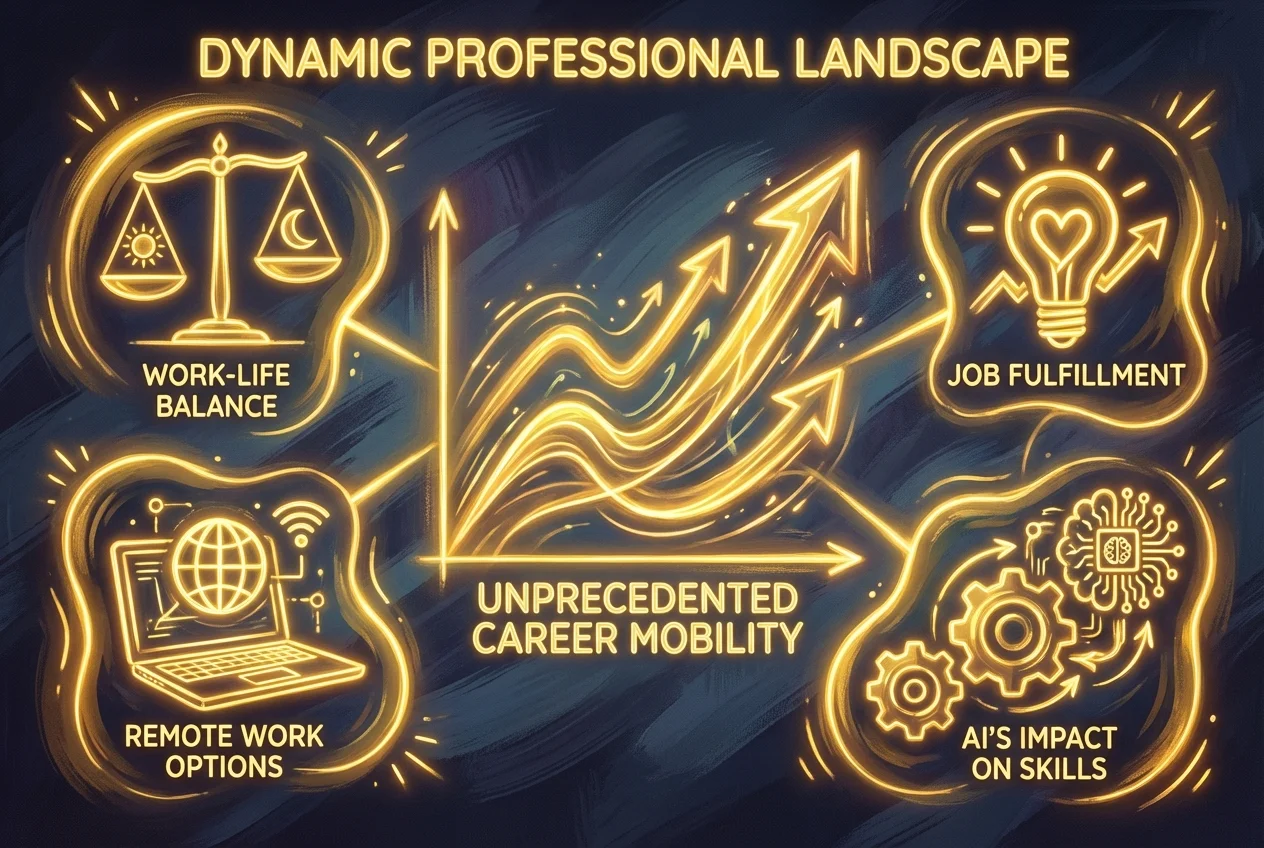
The humdrum of routine, the creeping sense of unfulfillment, the quiet whisper of "there has to be more than this" – if these feelings resonate, you're far from alone. In today's dynamic professional landscape, the idea of a "job for life" is largely a relic of the past. Recent statistics paint a vivid picture of a workforce in constant motion, with approximately 59% of U.S. professionals actively seeking new employment in 2024, an unprecedented level of career mobility. The average American worker changes jobs a remarkable 12 times over their career, demonstrating a clear trend toward embracing new opportunities and aligning work with evolving personal values.
This shift isn't just about chasing higher salaries; it's about a deeper quest for satisfaction. A significant 83% of workers now prioritize work-life balance over pay, a clear indication of changing priorities. The desire for remote work options (sought by 76% of U.S. workers eyeing a career change) and greater job fulfillment (48%) further underscore this evolution. Moreover, the rapid advancements in technology, particularly AI and automation, are projected to significantly change 70% of required skill sets by 2030, making continuous adaptation and the occasional career pivot not just desirable, but essential.
Yet, despite this widespread yearning for change and the clear benefits, the thought of a job transition can be paralyzing. The path to a new beginning often feels shrouded in uncertainty, making the leap seem daunting. This is where fear often takes hold, transforming a dream into an intimidating challenge.
This comprehensive career change guide is designed to dismantle those fears, providing you with a clear, actionable, 3-step blueprint to navigate your own fearless career change. Whether you're dreaming of a completely new industry with no prior experience or simply seeking a more fulfilling role within a familiar field, this guide will equip you with the strategies and confidence to make that bold move. To further streamline your journey, consider leveraging AI-powered platforms like CareerBoom.ai which can accelerate your job search with smart matching and automated applications. Your new beginning starts here.
The Call to Reinvention: Why a Career Change?
Before diving into the "how," it's crucial to understand the "why." Acknowledging the forces driving career changes and confronting the inherent fears are the first steps toward a truly fearless job transition.
Understanding the Modern Workforce
The world of work is no longer linear. It's a dynamic, ever-evolving ecosystem where adaptability and a growth mindset are paramount.
- Unprecedented Career Mobility: The days of staying with one company for decades are largely over. The median tenure for wage and salary workers plunged to 3.9 years in January 2024, the lowest since 2002. This means employers are accustomed to and even expect movement.
- Shifting Priorities: Beyond financial gain, factors like work-life balance, flexible arrangements, and a sense of purpose are now top motivators for seeking new roles. Toxic company culture, feeling disrespected, poor work-life balance, low pay, and bad bosses are frequently cited as reasons for leaving jobs.
- Technological Disruption: The rise of Artificial Intelligence and automation is fundamentally reshaping industries. While this creates new opportunities (e.g., green energy jobs are projected to soar), it also means that existing skill sets may become obsolete. This necessitates continuous learning and a willingness to embrace a career pivot.
Confronting the Fears of a Career Change

The desire for a new career path is often met with a chorus of internal doubts and external pressures. These fears are natural, but they don't have to dictate your future. Understanding them is the first step to overcoming them.
- Fear of Failure: This is arguably the most widespread fear. The worry that the new career might be worse, less enjoyable, or that you might not succeed can be paralyzing. It often stems from a fear of shame or embarrassment.
- Fear of the Unknown/Uncertainty: Our brains are wired for safety, and change, by its very nature, involves risk and uncertainty. Not knowing what to do, where to start, or what the future holds can be deeply unsettling.
- Financial Concerns: "Can I afford to start over?" "Will I have to take a pay cut?" These are valid questions. The thought of potential income gaps, retraining costs, or a reduced salary can be a significant barrier. Indeed, 90% of Americans admit financial pressures have forced them to stay in a job longer than they'd prefer.
- Fear of What Others Think/Social or Family Pressure: Worrying about disapproval from friends, family, or partners, or being perceived as "giving up" on a successful career, can be a powerful deterrent.
- Fear of Losing Progress/Starting Over: After years of building experience, relationships, and climbing a ladder, the idea of "starting from the bottom" in a new field can feel like a waste.
- Feeling Too Old or Too Far Along: Many believe it's "too late" to change careers, especially if they've spent decades in one field. However, studies show that the majority of older career changers are successful. The average age for a major career change is 39.
- Overwhelm and Decision Paralysis: The sheer number of options and the complexity of the process can lead to feeling stuck and unable to take the first step. Fortunately, modern platforms like CareerBoom.ai are designed to combat this, offering AI-powered job matching, automated applications, and centralized tracking to simplify the entire process.
Embracing the Fearless Mindset
A fearless career change doesn't mean the absence of fear; it means acknowledging those fears and choosing to act anyway. As Susan Jeffers famously wrote, "Feel the Fear and Do It Anyway."
- Acknowledge, Don't Suppress: Give your fears a voice, but don't let them take the wheel. Understanding their root can help you devise strategies to mitigate them.
- Focus on What You Can Control: You can't control the job market, but you can control your preparation, your learning, and your networking efforts.
- Reframe Your Perspective: See a career pivot not as a retreat, but as an exciting opportunity for personal and professional growth, greater fulfillment, and a chance to align your work with your true self.
The 3-Step Blueprint for a Fearless Career Change
This blueprint is your practical roadmap to navigating a successful job transition, even if you're starting with no direct experience in your desired field. Each step builds upon the last, guiding you from introspection to confident execution. While this guide offers a 3-step blueprint, other resources provide 5 steps for making a successful career change.
Step 1: Discover Your True North – Self-Assessment & Exploration
This initial phase is about deep introspection and strategic investigation. Before you can fearlessly leap, you need to know where you're aiming and why.
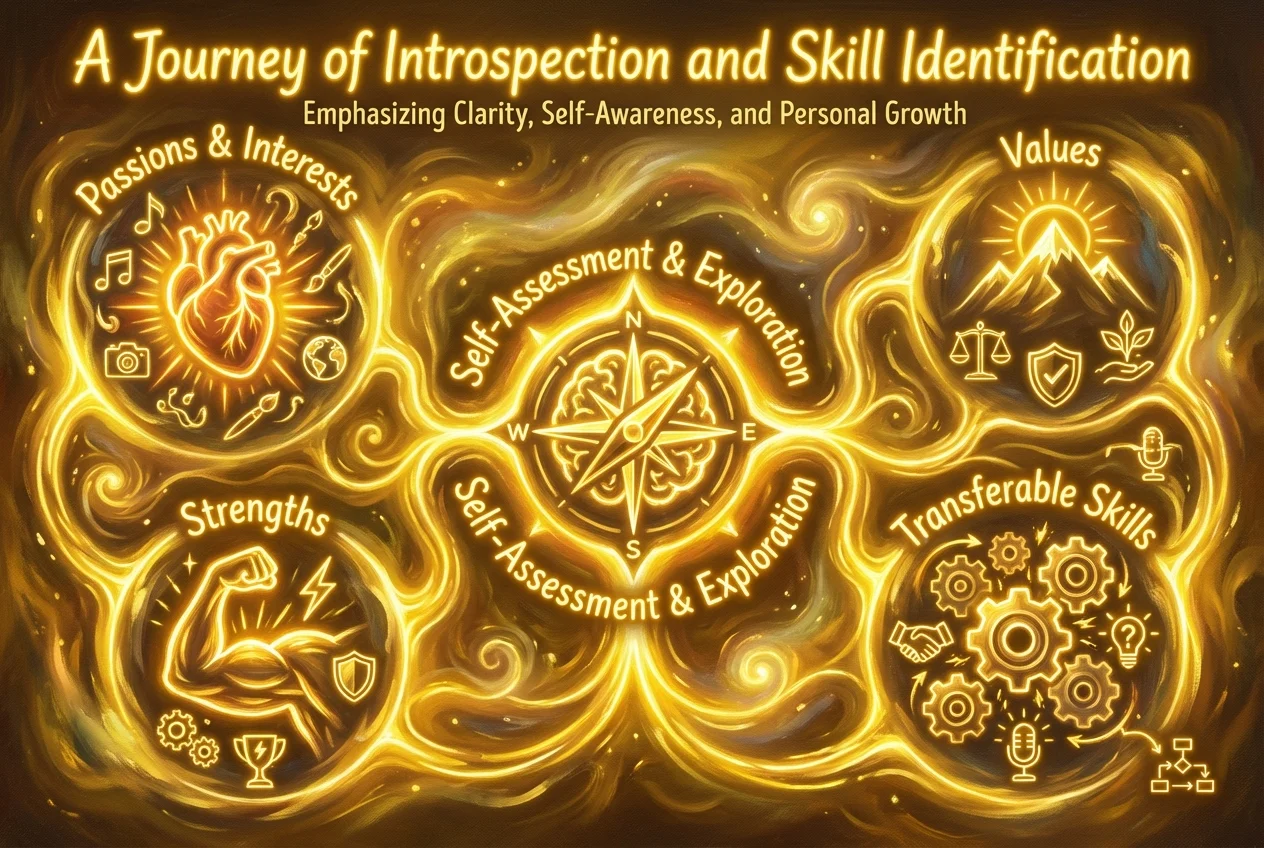
1.1 Pinpointing Your Passions, Values, and Strengths
The foundation of any successful career change guide is a thorough understanding of yourself. What truly drives you? What kind of work brings you joy and a sense of purpose?
-
Deep Dive into Self-Reflection:
- Passions & Interests: What activities do you genuinely enjoy, both inside and outside of work? What topics are you naturally curious about? What problems do you love to solve? Reflect on experiences where you felt energized and "in the flow."
- Values: What core principles are non-negotiable for you in a workplace? This could be work-life balance, impact, creativity, collaboration, autonomy, or stability. Misalignment between your work and your values is a strong indicator for a career pivot.
- Strengths: What are you naturally good at? What skills do you enjoy using? Don't just think about job-specific skills; consider your soft skills too.
-
Tools for Self-Assessment:
- Personality Assessments: Tools like the Myers-Briggs Type Indicator or Enneagram can offer insights into your natural preferences and how you interact with the world.
- Strengths-Based Assessments: CliftonStrengths (formerly StrengthsFinder 2.0) helps you identify your top talents, offering a framework to understand where you naturally excel.
- What Color Is Your Parachute? This classic career change guide offers extensive exercises to help uncover your skills, interests, and preferred work environments.
- Journaling: Dedicate time to write about your ideal day, your accomplishments, your frustrations, and your dreams.
-
Identifying Transferable Skills: This is perhaps the most critical component for a career change with no direct experience. You're not starting from scratch; you have a wealth of skills from your previous roles that can be reframed and applied to a new field.
- Hard Skills: These are teachable abilities or skill sets that are easily quantifiable. Examples include data analysis, coding, graphic design, foreign languages, project management software proficiency, or financial modeling.
- Soft Skills: These are interpersonal skills and personal attributes that are highly valued in any profession. They include communication, problem-solving, leadership, teamwork, adaptability, critical thinking, time management, and creativity. These are often highly transferable across industries.
Example Table: Transferable Skills Inventory
| Previous Role: Project Manager (Construction) | Potential New Role: Operations Manager (Tech Startup) | Transferable Skills | How They Apply |
|---|---|---|---|
| Managed project timelines and budgets | Oversee operational workflows and budgets | Budget management, scheduling, resource allocation | Directly applicable to managing startup operations, sprint planning, and financial oversight |
| Coordinated teams of contractors and subcontractors | Lead cross-functional teams of engineers and designers | Leadership, team coordination, conflict resolution | Leading diverse teams, facilitating collaboration, and managing stakeholder expectations |
| Ensured compliance with building codes and safety regulations | Ensure product compliance and quality standards | Regulatory knowledge, attention to detail, risk assessment | Translates to understanding compliance frameworks, QA processes, and risk mitigation |
| Communicated with clients and stakeholders | Interface with investors, partners, and customers | Communication, negotiation, relationship building | Essential for investor updates, partnership development, and customer success |
| Solved on-site problems under tight deadlines | Troubleshoot operational bottlenecks quickly | Problem-solving, adaptability, decision-making under pressure | Critical for the fast-paced, pivot-heavy environment of a startup |
1.2 Researching Potential Career Paths
Once you have a clearer picture of yourself, it's time to explore the landscape of possibilities.
-
Industry and Role Research:
- Online Exploration: Dive into job boards, industry publications, and company websites. Look at job descriptions for roles that interest you to understand required skills, qualifications, and typical career trajectories.
- Labor Market Trends: Investigate which industries are growing, which roles are in high demand, and what salaries look like. Government resources like the Bureau of Labor Statistics (BLS) Occupational Outlook Handbook are invaluable for this.
- Emerging Fields: Keep an eye on burgeoning sectors like AI/machine learning, cybersecurity, renewable energy, healthcare technology, and data science, which offer robust growth and new opportunities.
-
Informational Interviews: This is one of the most powerful and underutilized tools in the career changer's toolkit. Reach out to people currently working in the roles or industries that interest you.
- What to Ask: Inquire about their day-to-day responsibilities, the skills they find most valuable, how they got into the field, the challenges they face, and any advice they have for someone looking to transition. Ask what they wish they had known before starting.
- How to Find Them: LinkedIn is a goldmine. Join relevant professional groups, attend virtual or in-person industry events, and don't be afraid to send a polite, concise message requesting a brief conversation.
-
Job Shadowing and Volunteering: If possible, spend time observing someone in your desired role or volunteer for a related organization. This provides invaluable firsthand experience and helps you validate whether a career path is truly a good fit before making a full commitment.
1.3 Setting Clear, Achievable Goals
With self-knowledge and research in hand, it's time to define your destination.
- Define Your Ideal Role: Be as specific as possible. Instead of "I want to work in tech," aim for "I want to be a UX Designer at a mid-size SaaS company focused on healthcare solutions."
- Set SMART Goals: Ensure your career change goals are Specific, Measurable, Achievable, Relevant, and Time-bound. For example, "I will complete a UX Design certification within 6 months," or "I will conduct 5 informational interviews with UX professionals in the next 4 weeks."
- Create a Timeline: Map out your career pivot journey. Break the overall goal into smaller milestones to prevent overwhelm and maintain momentum. A realistic timeline might range from 6 months to 2 years, depending on the scale of the change.
Step 2: Build Your Bridge – Skill Development & Strategic Positioning
Now that you know where you want to go, this step is about closing the gap between where you are and where you want to be. It's about strategically building the credentials, skills, and professional presence that will make you a compelling candidate in your new field.
2.1 Upskilling and Reskilling
In an era where 70% of skill sets are projected to change by 2030, continuous learning isn't optional — it's your competitive advantage.
- Identify Your Skill Gaps: Compare the requirements of your target role (gathered during your research in Step 1) with your current skill set. What's missing? Prioritize the gaps that will have the most impact on your candidacy.
- Formal Education vs. Alternative Learning:
- Online Courses and Certifications: Platforms like Coursera, edX, Udemy, LinkedIn Learning, and Google Career Certificates offer affordable, flexible options for acquiring new skills. Many are recognized by employers and can be completed alongside your current job.
- Bootcamps: For more intensive, accelerated learning (especially in tech fields like coding, data science, or UX design), bootcamps can provide a structured path to job readiness in a matter of weeks or months.
- Degree Programs: For some career changes (e.g., into healthcare, law, or academia), a formal degree may be necessary. Weigh the time and financial investment against the long-term return.
- Self-Directed Learning: Books, podcasts, YouTube tutorials, open-source projects, and industry blogs are free or low-cost resources that can supplement formal training.
- Gaining Practical Experience:
- Freelancing and Side Projects: Start doing the work you want to be paid for, even on a small scale. Freelancing on platforms like Upwork or Fiverr, taking on pro bono projects for nonprofits, or building personal projects can help you build a portfolio and gain real-world experience.
- Internships (Yes, Even as an Adult): Some companies offer internships or apprenticeships for career changers. These can be a fast track to gaining relevant experience and industry connections.
- Volunteering: Offer your emerging skills to organizations that need them. This builds experience, expands your network, and demonstrates your commitment to the new field.
2.2 Crafting Your Career Change Narrative
How you tell your story is just as important as the skills you bring. Hiring managers want to understand why you're making this change and how your unique background is an asset, not a liability.
- The Power of Your Story: Your diverse experience gives you a unique perspective that career-long professionals in that field may lack. Frame your career pivot as a deliberate, strategic decision fueled by passion and purpose, not as running away from something.
- Developing Your Elevator Pitch: Create a concise, compelling 30-60 second summary of who you are, why you're transitioning, and what unique value you bring. Practice it until it feels natural.
- Example: "After 8 years managing complex construction projects, I discovered my real passion lies in optimizing processes and building scalable systems. I've since completed a Product Management certification and led two side projects that improved workflow efficiency by 30%. I'm now looking to bring my unique blend of operational rigor and creative problem-solving to a fast-growing tech company."
2.3 Strategic Positioning: Resume, LinkedIn, and Online Presence
Your professional materials are your marketing tools. They need to speak to your new career, not just your old one.
- Revamping Your Resume:
- Lead with a Compelling Summary/Objective: Clearly state your career transition goal and highlight your most relevant transferable skills and new qualifications right at the top.
- Focus on Transferable Skills and Achievements: Reframe your past experience using the language of your target industry. Quantify your achievements wherever possible (e.g., "Managed a $5M budget" or "Led a team of 15 to deliver projects 10% under budget").
- Create a Skills-Based or Hybrid Resume: Instead of a purely chronological format, consider a functional or combination resume that puts your relevant skills and projects front and center. AI-powered tools like CareerBoom.ai can help you tailor your resume to specific job descriptions, ensuring your transferable skills are highlighted effectively.
- Include New Certifications and Projects: Prominently feature any relevant courses, certifications, bootcamps, or portfolio projects you've completed.
- Optimizing Your LinkedIn Profile:
- Update Your Headline: Make it reflect your aspirations, not just your current title. For example, "Aspiring UX Designer | Former Project Manager | Passionate About User-Centered Solutions."
- Rewrite Your Summary: Tell your career change story compellingly. Explain your "why" and highlight what makes you a unique candidate.
- Showcase Relevant Skills and Projects: Add new skills, endorsements, and any projects or volunteer work that demonstrate your capabilities in your target field.
- Engage Actively: Share industry-relevant articles, comment on posts from thought leaders in your new field, and join relevant LinkedIn groups.
- Building a Portfolio (If Applicable): For creative, tech, or project-based roles, a portfolio is essential. Showcase your best work, including any freelance projects, bootcamp capstone projects, or personal endeavors that demonstrate your skills.
Step 3: Launch with Confidence – The Strategic Job Search & Beyond
You've done the inner work, built your skills, and crafted your narrative. Now it's time to put yourself out there and land that new role. This final step is about a targeted, proactive, and resilient job search.
3.1 Networking Your Way In
It's often said that "it's not what you know, but who you know." While skills and qualifications are essential, networking remains one of the most effective ways to land a job, especially during a career change.
- Leverage Your Existing Network: Let friends, family, former colleagues, and acquaintances know about your career transition. You'd be surprised how many opportunities arise through personal connections. People genuinely want to help.
- Expand Your Network Strategically:
- Industry Events and Conferences: Attend events (virtual or in-person) related to your target field. This is a fantastic way to meet professionals, learn about trends, and discover unadvertised job openings.
- Professional Associations: Join organizations relevant to your new career. They often offer networking events, mentorship programs, and job boards.
- Online Communities: Participate in relevant forums, Slack communities, Discord servers, or subreddit groups where professionals in your target field gather.
- The Art of the Follow-Up: After meeting someone, send a personalized thank-you note or LinkedIn connection request. Maintain relationships by periodically reaching out, sharing relevant articles, or offering your own help.
- Finding a Mentor: Seek out someone who has successfully navigated a similar career pivot or who is established in your target industry. A mentor can offer invaluable guidance, feedback, accountability, and introductions.
3.2 The Targeted Job Search
A scattershot approach to job hunting is rarely effective, especially for career changers. Be strategic and intentional.
- Targeted Applications Over Mass Submissions: Rather than applying to hundreds of jobs, focus on roles that genuinely align with your skills, interests, and career goals. Quality over quantity. Tailor each application — your resume, cover letter, and any supporting materials — to the specific job description.
- Look Beyond Traditional Job Boards: While sites like Indeed, LinkedIn, and Glassdoor are useful, don't limit yourself.
- Company Career Pages: Identify companies you admire and check their career pages directly.
- Niche Job Boards: Many industries have specialized job boards (e.g., AngelList for startups, Dribbble for designers, GitHub Jobs for developers).
- Recruiters and Staffing Agencies: Some specialize in helping career changers or placing candidates in specific industries.
- AI-Powered Job Search Platforms: Tools like CareerBoom.ai use intelligent matching algorithms to connect you with relevant opportunities, automate applications, and centralize your job search tracking — saving you significant time and effort and reducing the overwhelm of a manual search.
- Mastering the Cover Letter for Career Changers: Your cover letter is your opportunity to tell your story directly to a hiring manager. Address your career pivot head-on, explain your motivation, highlight your transferable skills, and convey your enthusiasm for the new role and industry. Don't be apologetic; be confident.
3.3 Acing the Interview
The interview is your chance to bring your career change narrative to life and demonstrate why your unique background makes you the ideal candidate.
- Prepare for the "Why Are You Changing Careers?" Question: This is inevitable. Have a clear, positive, and authentic answer ready. Focus on what you're moving toward, not what you're running from. Emphasize your passion for the new field, the research you've done, and the proactive steps you've taken.
- Showcase Your Transferable Skills with Stories: Use the STAR method (Situation, Task, Action, Result) to provide concrete examples of how you've used your transferable skills to achieve results in your previous roles. Connect these examples directly to the requirements of the new position.
- Demonstrate Your Knowledge and Enthusiasm: Show that you've done your homework on the company, the industry, and the role. Ask insightful questions that reflect your genuine interest and understanding.
- Address Potential Concerns Proactively: Be prepared to discuss any skill gaps or lack of direct experience and explain how you're actively addressing them (e.g., through courses, certifications, or practical projects). Frame your eagerness to learn as a strength.
- Negotiate with Confidence: Once you receive an offer, don't be afraid to negotiate. Research typical salaries for the role in your market. Even as a career changer, your years of professional experience, transferable skills, and unique perspective have significant value.
3.4 Thriving in Your New Career
Landing the job is a monumental achievement, but the journey doesn't end there. The first few months in a new career are critical.
- Embrace the Learning Curve: Be patient with yourself. It's normal to feel like a beginner again. Lean into the discomfort and approach everything with curiosity and humility.
- Seek Out a Mentor Within Your New Organization: Having someone to guide you, answer questions, and advocate for you internally can significantly accelerate your onboarding and integration.
- Build Relationships Early: Invest time in getting to know your new colleagues. Strong workplace relationships are essential for collaboration, support, and long-term career growth.
- Continue Learning and Growing: The commitment to development that fueled your career pivot should continue. Stay current with industry trends, seek out new challenges, and never stop investing in yourself.
- Celebrate Your Achievement: Recognize and celebrate how far you've come. Making a fearless career change is a significant accomplishment that took courage, planning, and persistence.
Key Takeaways for Your Fearless Career Change
Making a career pivot is one of the most empowering decisions you can make. Here are the essential points to remember as you embark on this journey:
- Self-awareness is the foundation. Understand your passions, values, strengths, and transferable skills before making any move.
- Research is your compass. Thoroughly investigate your target industry, roles, and the skills required to transition successfully.
- Continuous learning is non-negotiable. Invest in upskilling and reskilling to close gaps and demonstrate your commitment to your new path.
- Your story is your superpower. Craft a compelling career change narrative that positions your diverse experience as a unique asset.
- Networking opens doors. Build genuine relationships in your target industry — many of the best opportunities are never publicly advertised.
- Be strategic, not scattered. A targeted job search with tailored applications will always outperform mass submissions.
- Leverage technology. AI-powered platforms like CareerBoom.ai can dramatically simplify and accelerate your job search through smart matching, automated applications, and centralized tracking.
- Fear is normal — action is the antidote. Acknowledge your fears, but don't let them hold you back. Every step you take, no matter how small, brings you closer to a more fulfilling career.
Conclusion: Your New Chapter Awaits
The decision to change careers is not a sign of weakness or instability — it's a bold declaration that you refuse to settle for a life that doesn't align with who you truly are and who you aspire to become. In a world where the average worker changes jobs 12 times over their career and the skills landscape is shifting beneath our feet, the ability to reinvent yourself is not just a luxury; it's a vital professional skill.
This 3-step blueprint — from discovering your true north, to building your bridge, to launching with confidence — provides a proven framework for navigating the complexities of a career change with clarity and courage. You are not starting from zero; you are starting from experience. Every challenge you've overcome, every skill you've honed, and every relationship you've built is a stepping stone to your next great chapter.
So, take a deep breath. Feel the fear, and do it anyway. Your more fulfilling, more purposeful, more you career is waiting on the other side. The only question left is: when will you take the first step?
Frequently Asked Questions
Quick answers to common questions
1
Why are so many people changing careers today?
The modern workforce is highly dynamic, with an average worker changing jobs 12 times. This trend is driven by:
- Shifting Priorities: A greater emphasis on work-life balance and purpose over just pay.
- Technological Disruption: AI and automation are rapidly changing required skill sets, necessitating career pivots.
- Increased Mobility: Shorter job tenures make career movement more common and expected.
2
What are the main fears people face when considering a career change?
Common fears associated with a career change include:
- Fear of Failure: Worrying the new path might be worse or unsuccessful.
- Financial Concerns: Anxiety about potential income gaps or pay cuts.
- Fear of the Unknown: Uncertainty about where to start or what the future holds.
- Social Pressure: Concern about disapproval from friends, family, or partners.
3
How can I develop a 'fearless mindset' for a career change?
A fearless mindset means acknowledging your fears but choosing to act anyway. To cultivate it:
- Acknowledge, Don't Suppress: Understand the root of your fears.
- Focus on What You Can Control: Concentrate on your preparation, learning, and networking efforts.
- Reframe Your Perspective: See a career pivot as an opportunity for personal growth and greater fulfillment.
4
What is the first step in the 3-Step Blueprint for a fearless career change?
The first step is to 'Discover Your True North – Self-Assessment & Exploration.' This crucial phase involves deep introspection to pinpoint your passions, values, and strengths, and to strategically investigate potential new career paths. It's about understanding your motivations and desired direction before making a leap.
5
How do I identify my passions and strengths for a new career path?
Begin with deep self-reflection on activities that genuinely energize you. Utilize tools such as:
- Personality Assessments: Myers-Briggs Type Indicator or Enneagram.
- Strengths-Based Assessments: CliftonStrengths.
- Journaling: Dedicate time to write about your ideal day, accomplishments, and dreams. This helps align your work with your core values and natural talents.
6
What are transferable skills and why are they crucial for a career pivot?
Transferable skills are abilities and knowledge gained in one role or industry that can be successfully applied to another. They include both hard skills (e.g., project management, data analysis) and soft skills (e.g., communication, problem-solving, leadership). They are crucial for a career pivot because they demonstrate your existing value and potential for success, even when entering a new field with no direct experience.
7
Is it ever too late to make a major career change?
No, it's generally not too late to make a major career change. While 'feeling too old' is a common fear, studies show that the majority of older career changers are successful. The average age for a major career change is 39, demonstrating that many individuals successfully pivot later in their professional lives by leveraging their experience and transferable skills.
Was this article helpful?
Table of Contents
The Call to Reinvention: Why a Career Change?
The 3-Step Blueprint for a Fearless Career Change
Key Takeaways for Your Fearless Career Change
Conclusion: Your New Chapter Awaits
1Why are so many people changing careers today?
2What are the main fears people face when considering a career change?
3How can I develop a 'fearless mindset' for a career change?
4What is the first step in the 3-Step Blueprint for a fearless career change?
5How do I identify my passions and strengths for a new career path?
6What are transferable skills and why are they crucial for a career pivot?
7Is it ever too late to make a major career change?
Share this article
Other articles

Warning: Your 'Comfortable' Job Is Slowly Killing Your Career (Escape Plan Inside)
Identify subtle signs your secure but stagnant job hinders career growth and get a step-by-step blueprint to pivot towards a thriving future.

Career Change at 30, 40 or 50: A Practical 2026 Roadmap
A comprehensive guide to pivoting your career mid-life, with strategies for self-assessment, transferable skills, and overcoming age bias.
How to Explain Employment Gaps in Resumes: The 2026 Guide
Turn career breaks into strengths with our comprehensive guide for 2026