Why You're NOT Getting Promoted: 5 Critical Mistakes Silencing Your Career Growth
Stop sabotaging your career! Identify and eliminate the common pitfalls that are holding you back from leadership roles and significant pay raises.
1 month ago - Updated 2 days ago

The corporate ladder can often feel like a puzzle, with some professionals effortlessly ascending while others, despite their hard work and dedication, find themselves stuck on a seemingly endless rung. If you've been putting in the hours, delivering quality work, and yet promotions remain elusive, it's natural to feel frustrated, overlooked, and even disheartened. You might be asking yourself, "Why am I not getting promoted?" The answer often lies not in a lack of talent or effort, but in a series of common, yet critical, promotion mistakes that subtly sabotage career growth. To understand why you might not be getting promoted and what steps you can take, it's crucial to identify these pitfalls.
Many professionals inadvertently create career setbacks for themselves, silencing their potential for advancement without even realizing it. These aren't always glaring errors, but rather subtle behavioral patterns or missed opportunities that accumulate over time, forming career growth barriers. Identifying these pitfalls is the first crucial step toward avoiding promotion errors and unlocking the career advancement tips needed to propel you into leadership roles and secure those significant pay raises you deserve. For more insights on overcoming these promotion roadblocks, consider a holistic approach.
This article will delve into five of the most critical mistakes professionals make that prevent them from getting promoted. More importantly, we'll explore actionable strategies to overcome these challenges, transforming your approach to work and positioning you for the recognition and advancement you've earned.
Mistake 1: The Invisible Contributor – Failing to Demonstrate and Communicate Your Value
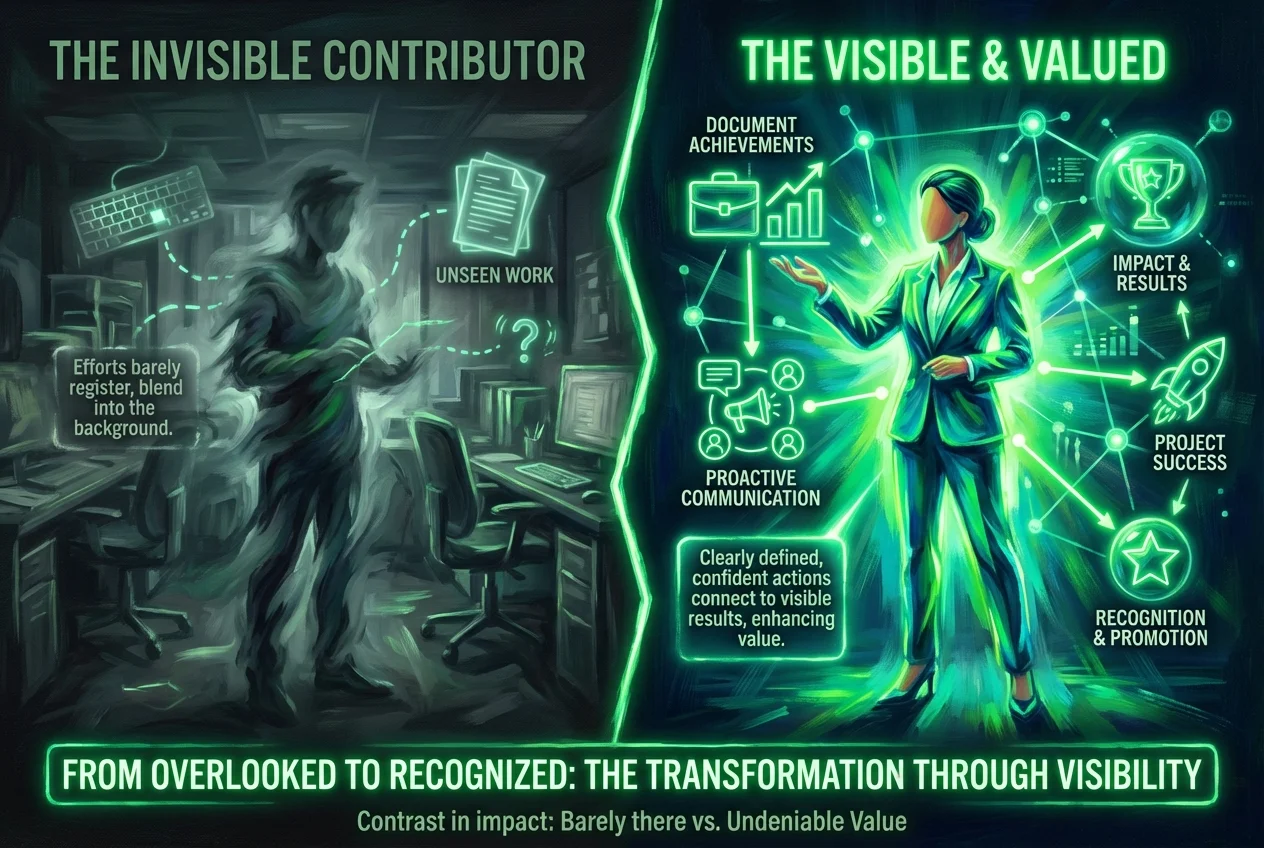
One of the most pervasive promotion mistakes is the belief that hard work alone will speak for itself. While diligence is undoubtedly essential, simply excelling in your current role isn't always enough to secure a promotion. Many high-performing individuals fall into the trap of becoming an "invisible contributor," delivering excellent results quietly, without effectively showcasing their impact to key decision-makers.
Why it's a Problem: Your leaders can only advocate for what they see. If your contributions and their impact aren't visible to them, they can't effectively champion your promotion. This lack of visibility can lead to you being overlooked for new opportunities, even if you are highly competent. In the absence of regular updates or clear communication about your progress, leadership might even lose confidence in your projects or your abilities. Many professionals assume that great job performance alone will get them recognized, but career progression is significantly about how you present yourself and how visible you are.
- Underestimation of "Soft Power": Often, individuals who are technically strong feel that "spending time on communication feels like politics or self-promotion." They believe their work should speak for itself, but in knowledge-based roles, if you can't articulate the value of what you've done, it might as well not exist.
- Waiting to Be Noticed: Relying on others to notice your efforts means you're handing over control of your professional growth. The people who advance aren't necessarily the most talented, but the ones who confidently communicate their value.
- Fear of Self-Promotion: Some professionals find the idea of self-promotion uncomfortable or "tacky." This fear can stem from negative past experiences or a misunderstanding of what effective self-advocacy truly entails. The number one reason behind a lack of workplace visibility is often fear—the stories we tell ourselves to stay safe.
Actionable Solutions for Enhanced Visibility:
- Document Your Achievements Rigorously: Don't wait for annual reviews. Keep an ongoing record of your accomplishments, quantifying results whenever possible. Did you save the company money? Streamline a process? Exceed a target? Note it down. This isn't just a mental list; it's a living document that serves as your evidence of impact.
- Proactive Communication with Your Manager: Schedule regular one-on-one meetings with your manager, not just to discuss tasks, but to proactively share your progress, challenges, and successes. Frame your updates around the impact your work has on team and company goals. For example, instead of saying, "I finished the report," try, "The X report is complete, and the data suggests we can improve process Y by 15%, which aligns with our Q3 efficiency goal."
- Seek Out Visible Projects: Volunteer for projects that have high visibility within the organization or are critical to the company's strategic objectives. These "stretch projects" allow you to demonstrate new skills and competencies to a broader audience.
- Speak Up in Meetings: Contribute thoughtfully to discussions. Share your insights, ask pertinent questions, and offer solutions. Speaking up shows you have something valuable to contribute and reinforces your presence in the team. Ensure you articulate your ideas clearly and confidently.
- Build a Personal Brand: Your personal brand is the story people tell about you when you're not in the room. Actively shape this narrative by consistently demonstrating your expertise, reliability, and leadership potential. This can involve sharing industry insights, mentoring colleagues, or even building visibility outside your company through professional groups or thought leadership. Tools like CareerBoom.ai can even assist with professional image generation to ensure your online presence reflects your ambition.
- Align Your Efforts with Business Goals: Ensure your contributions are not just high-quality but also directly tied to the company's strategic priorities, such as ROI or revenue generation. Clearly communicate how your work impacts the company's financial success.
By consciously working on your visibility and self-advocacy, you move beyond being just a hard worker to becoming a recognized, indispensable asset, effectively dismantling one of the most significant career growth barriers.
Mistake 2: The Communication Conundrum – Underestimating the Power of Effective Communication

In today's interconnected workplace, effective communication is no longer a soft skill; it's a critical competency that directly impacts your ability to advance. Poor communication skills can be a significant career setback, often costing professionals promotions even when they possess strong technical abilities.
Why it's a Problem: The impact of poor communication is profound and far-reaching.
- Misunderstandings and Errors: Unclear or incomplete communication leads to misunderstandings, errors, and missed deadlines, hindering overall team and organizational performance.
- Lack of Perceived Competence: Even if you're highly skilled, if you can't articulate your ideas, align others with your vision, or demonstrate your value effectively, your competence might be overlooked. As one expert notes, "in knowledge work, communication isn't separate from competence—it's how competence becomes visible."
- Exclusion from Key Discussions: Poor communicators often get excluded from strategic conversations, limiting their opportunities to practice and develop these crucial skills further. This can create a vicious cycle where they receive less feedback and have fewer chances to improve.
- Inability to Influence and Lead: Leadership roles inherently require strong communication to inspire, guide, and motivate teams. If you struggle to convey your vision or provide clear direction, it's difficult to be trusted with greater responsibility. A study revealed that almost 9 in 10 business leaders believe poor communication adversely impacts performance, leading to increased costs and missed deadlines.
Actionable Solutions for Improving Communication Skills:
- Be Clear, Concise, and Specific: Avoid jargon where possible and get straight to the point. When providing updates or instructions, ensure they are unambiguous. Practice summarizing complex information into easily digestible points. Poor communicators often try to say more, thinking thoroughness equals clarity, but this often backfires.
- Active Listening: Effective communication is a two-way street. Practice active listening by truly hearing what others are saying, asking clarifying questions, and reflecting back to confirm understanding. This shows respect and helps prevent misunderstandings. Bad listeners often interrupt and jump to conclusions, leading to exclusion from conversations.
- Tailor Your Message to Your Audience: Understand who you're speaking to and what information they need. A technical explanation for a peer will differ from a high-level summary for an executive. Adjust your language, detail, and focus accordingly.
- Develop Strong Written Communication: In a hybrid or remote work environment, written communication is more critical than ever. Practice writing clear, well-structured emails, reports, and presentations. Proofread carefully.
- Seek Feedback on Your Communication Style: Ask trusted colleagues, mentors, or your manager for constructive criticism on your communication. Are you clear? Are you confident? Do you listen well? This feedback is invaluable for identifying blind spots and accelerating growth.
- Practice Public Speaking and Presentation Skills: Volunteer to lead meetings, present project updates, or conduct training sessions. The more you practice, the more confident and articulate you'll become. Remember that effective communication also involves non-verbal cues, so be mindful of your body language. Consider joining organizations like Toastmasters or taking communication skills classes.
- Focus on the "Why" and the "Impact": When communicating your work, don't just state what you did, explain why it matters and what its impact is on the business. This aligns your efforts with broader goals and makes your contributions more meaningful.
By mastering the art of effective communication, you not only improve your daily interactions but also build the foundational skills necessary for career advancement, ensuring your ideas are heard and your value is recognized.
Mistake 3: The Stagnation Trap – Lacking Initiative and Staying in Your Comfort Zone

One of the most insidious career growth barriers is the tendency to become complacent, performing only assigned tasks and shying away from new challenges. This promotion mistake—a lack of initiative and a reluctance to step out of one's comfort zone—can severely limit your potential for advancement.
Why it's a Problem: Employers are increasingly looking for proactive individuals who are self-starters and take ownership of their work.
- Missed Opportunities for Growth: Staying within familiar roles and tasks prevents you from acquiring new skills, gaining diverse experiences, and demonstrating your adaptability. Growth happens when you step outside what's comfortable.
- Perceived Lack of Ambition: Consistently avoiding new responsibilities or challenges can give the impression of a lack of motivation, signaling to leadership that you might not be ready for a higher-level role that demands greater responsibility and problem-solving.
- Becoming Obsolete: In a rapidly evolving job market, roles and requirements change quickly. If you're not actively seeking new challenges, you risk falling behind your peers and becoming less marketable.
- Reduced Engagement and Productivity: When tasks become repetitive and there's no path forward, initiative dwindles, and productivity can decline. This stagnation can lead to burnout and a general dissatisfaction with your job, sometimes signaling a need for a fearless career change.
- "Waiting for Permission to Lead": Many employees wait for permission to lead, but true leadership is often taken through proactive action, solving problems, and acting as if you already hold the role you desire. A survey found that the number one regret among workers was not taking more initiative.
Actionable Solutions for Taking Initiative and Embracing Growth:
- Proactively Seek New Challenges: Don't wait to be asked. Look for gaps in your team's operations, offer support on projects outside your standard responsibilities, or propose new initiatives. This shows courage and a willingness to contribute beyond your job description.
- Identify and Solve Problems: Become a solution-oriented individual. Instead of just pointing out problems, actively think about and propose solutions. This demonstrates strategic thinking and problem-solving skills, which are highly valued in leadership.
- Volunteer for Leadership Opportunities (Even Small Ones): Start small. Offer to lead a team meeting, mentor a junior colleague, or take charge of a small project. These experiences gradually build your leadership qualities and prepare you for bigger roles.
- Embrace Calculated Risks: Taking calculated risks can push you out of your comfort zone, spark passion, and reignite your career journey. This doesn't mean being reckless, but identifying areas where you can make a positive impact and taking action to make it happen.
- Develop a Growth Mindset: View challenges as opportunities to learn and grow, rather than obstacles to avoid. Understand that continuous learning and adaptation are essential for long-term career success.
- "Act as if": Start embodying the behaviors and responsibilities of the role you aspire to. This means thinking strategically, collaborating effectively, and demonstrating the accountability expected at the next level. When you consistently perform at a higher level, promotions become a natural formality.
- Ask for More Responsibility: Clearly communicate your desire for new challenges to your manager. Share your aspirations and discuss how you can take on more responsibilities that align with your career goals.
By actively seeking out and embracing new challenges, you signal your readiness for career advancement and dismantle the career growth barriers that complacency can create, becoming an invaluable, proactive member of your organization.
Mistake 4: The Skill Stagnation – Neglecting Continuous Learning and Skill Development
In today's fast-evolving job market, the skills that got you where you are today might not be sufficient for where you want to go tomorrow. Neglecting continuous learning and skill development is a critical promotion mistake that can lead to significant career setbacks. Industries are experiencing rapid technological advancements, and those who fail to adapt risk being left behind.
Why it's a Problem: The pace of change in almost every industry means that skills can quickly become obsolete.
- Skill Gaps: If you're not actively learning new skills, you might develop skill gaps that prevent you from qualifying for higher-level positions. For instance, a data entry professional might need significant training to move into a data analyst role.
- Reduced Competitiveness: Employers highly value professionals who are committed to personal and professional development. Without updating your skills, you become less competitive for promotions internally and less marketable externally.
- Stagnant Performance and Innovation: A lack of new knowledge can lead to stagnant performance, reduced innovation, and a decreased ability to solve complex problems.
- Decreased Engagement and Morale: When employees don't see a path forward or opportunities to learn, engagement suffers. This can lead to disinterest and a search for opportunities elsewhere. Globally, a lack of career growth opportunities is the most cited barrier to career advancement.
- Impact on Future Employability: A significant percentage of professionals worry about their current skills becoming obsolete due to technological advancements. Investing in new skills is crucial for long-term employability.
Actionable Solutions for Continuous Learning and Skill Development:
- Identify Future-Oriented Skills: Research the skills required for the roles you aspire to. Look at industry trends, job descriptions for advanced positions, and talk to leaders in your field. Focus on both hard skills (e.g., new software, data analysis, project management) and soft skills (e.g., leadership, emotional intelligence, strategic thinking).
- Leverage Professional Development Opportunities: Take advantage of company-sponsored training programs, workshops, online courses, certifications, or tuition reimbursement. Many organizations offer internal training led by experts.
- Seek Mentorship: Connect with experienced professionals who can guide you on your career path and help you identify and develop necessary skills. Mentors can provide valuable insights and accelerate your growth.
- Cross-Functional Projects and Job Shadowing: Volunteer for projects that expose you to different departments or functions. Job shadowing can also provide insights into other roles and help you acquire new competencies.
- Read and Stay Informed: Regularly read industry publications, books, and articles to stay abreast of new trends, technologies, and best practices. Become a subject matter expert in your area.
- Set SMART Learning Goals: Define specific, measurable, achievable, relevant, and time-bound goals for your skill development. For example, "Complete an advanced Excel certification course by the end of Q2."
- Cultivate a Learning Environment: Encourage a culture of continuous learning within your team. Share what you learn with colleagues, attend conferences, and participate in industry challenges.
By actively investing in your professional development, you demonstrate a commitment to excellence and adaptability, effectively avoiding promotion errors related to outdated skills and positioning yourself as a valuable asset for future leadership roles.
Mistake 5: The Isolated Professional – Neglecting Your Professional Network
Your professional network is one of your most valuable assets, yet many professionals make the promotion mistake of neglecting it. Focusing solely on day-to-day tasks and failing to build and nurture genuine connections is a significant career growth barrier that can limit opportunities, mentorship, and crucial insights for career advancement.
Why it's a Problem: A strong professional network provides inspiration, information, contacts, informal mentors, support, and potential job opportunities. Ignoring this critical element can have dire consequences:
- Limited Opportunities: Many job opportunities and promotions come through referrals and internal connections, not just public postings. If your network is weak, you're less likely to hear about these opportunities. Internal hiring is six times more effective than other hiring sources.
- Lack of Mentorship and Guidance: A robust network connects you with experienced individuals who can offer guidance, advice, and sponsorship, helping you navigate your career path and avoid common pitfalls. Research shows that participation in mentorship programs is associated with higher job satisfaction.
- Reduced Visibility and Influence: A strong network extends your reach and influence. When others know and trust you, they are more likely to recommend you for projects or promotions.
- Isolation and Limited Perspective: Without a diverse network, you risk operating in a silo, missing out on new ideas, industry trends, and different perspectives that could inform your work and strategy.
- Career Plateaus: Networking is even more critical when facing a career plateau. Building relationships can lead to new opportunities and collaborations.
- "Networking Deficit": A recent poll found that nearly two-thirds of young professionals avoid in-person networking events, and many have a very limited professional network, which is a worrying sign for career growth.
Actionable Solutions for Building and Nurturing Your Network:
- Be Intentional and Strategic: Networking isn't just about collecting business cards; it's about creating genuine, valuable relationships. Identify key individuals who could be mentors, sponsors, or collaborators, both inside and outside your organization.
- Start Internally: Don't overlook colleagues in other departments, senior leaders, or even HR representatives. Building internal relationships can open doors to cross-departmental projects and internal job listings.
- Attend Industry Events and Conferences: These are prime opportunities to meet peers, leaders, and potential mentors in your field. Engage in conversations, exchange ideas, and follow up thoughtfully.
- Leverage Online Professional Platforms: Platforms like LinkedIn are powerful tools for connecting with professionals, joining industry groups, and staying informed. Actively engage by sharing insights, commenting on posts, and reaching out to make new connections.
- Focus on Value Exchange: Networking should be mutually beneficial. Think about how you can add value to others before asking for something. Offer assistance, share relevant information, or make introductions. This builds trust and reciprocity.
- Nurture Relationships Consistently: A network isn't built overnight. Regularly check in with your contacts, share updates, and maintain genuine interest in their work. A simple "how are you doing?" email can go a long way.
- Seek Mentors and Be a Mentor: Actively seek out mentors who have achieved the success you aspire to. Their experiences can inform your actions and minimize your
promotion mistakes. Conversely, mentoring others can also strengthen your leadership skills and expand your network.
By consciously investing time and effort into building and nurturing your professional network, you create a powerful support system, gain access to invaluable opportunities, and overcome one of the most significant career growth barriers, paving the way for sustained career advancement.
Overarching Strategies for Sustained Career Growth
Beyond addressing these five critical promotion mistakes, a successful career trajectory demands a proactive and holistic approach. Here are some overarching strategies to ensure you're not just avoiding promotion errors but actively building a path to leadership and fulfillment:
1. Define Clear Career Goals and a Roadmap
Many professionals drift without a clear destination, making career advancement feel arbitrary. One of the top career mistakes to avoid is failing to set clear, actionable career goals. Platforms like CareerBoom.ai can be invaluable here, offering AI job matching and resume/cover letter alignment to help you identify roles that fit your aspirations and present yourself effectively.
- SMART Goals: Set Specific, Measurable, Achievable, Relevant, and Time-bound (SMART) goals for your career. What position do you want in 3-5 years? What skills will you need? What experiences are critical?
- Create a Career Map: Sit down with your manager or a mentor to map out potential career paths within your organization. Understand the requirements for the roles you aspire to and identify the steps needed to get there.
- Regular Reviews: Periodically review your goals and progress. The professional landscape changes, so your goals might need adjustment.
2. Cultivate a Strong Professional Brand
Your personal brand is how others perceive your value and expertise. It's the narrative that shapes opportunities.
- Be the "Go-To" Expert: Strive to become the subject matter expert in your area. This makes you indispensable and a natural choice for leadership.
- Showcase Leadership Potential: Promotions often require demonstrating leadership potential. Actively seek opportunities to lead, mentor, and drive team success. Think strategically and showcase your ability to influence others.
- Build a Positive Reputation: Consistently deliver high-quality work, be reliable, and maintain professionalism. Your reputation precedes you.
3. Seek and Act on Feedback Gracefully
Feedback is a gift that helps you identify blind spots and accelerate growth. Avoiding constructive criticism or reacting defensively are common career setbacks.
- Proactively Request Feedback: Don't wait for performance reviews. Regularly ask your manager, peers, and mentors for honest input on your performance, behavior, and attitude.
- Listen Actively and Without Defensiveness: When receiving feedback, focus on understanding rather than defending. Ask clarifying questions to ensure you grasp the core message.
- Create an Action Plan: For every piece of feedback, identify concrete steps you can take to improve. Share this plan with the person who gave you the feedback to show your commitment to growth.
4. Embrace Adaptability and Resilience
The modern workplace is dynamic, and the ability to adapt to change is a crucial skill. Career growth barriers often appear in the form of unexpected challenges or shifts in organizational priorities.
- Be Open to New Roles or Environments: Sometimes,
career advancementmight involve lateral moves or even exploring opportunities outside your current organization to gain new experiences. - Develop Problem-Solving Skills: Cultivate a mindset that views obstacles as opportunities for innovative solutions.
- Learn from Setbacks: Not every attempt will succeed. Learn from your failures, adjust your approach, and move forward with resilience. It's vital to stay resilient after setbacks at work when seeking a promotion.
5. Prioritize Work-Life Balance
While dedication is important, neglecting your well-being can lead to burnout, which in turn impacts motivation and performance.
- Set Boundaries: Establish clear boundaries between work and personal life. This might involve setting limits on working hours and taking regular breaks.
- Prioritize Self-Care: Taking care of your physical and mental health is crucial for long-term career success.
- Maintain Enthusiasm: A healthy work-life balance helps you maintain enthusiasm and energy for your career, preventing
career setbackscaused by exhaustion.
By integrating these strategies into your professional life, you not only address the specific promotion mistakes outlined but also build a robust framework for continuous career growth and fulfillment.
Conclusion
The journey to career advancement is rarely a straight line, and encountering career setbacks is a normal part of professional life. However, by understanding and proactively addressing the promotion mistakes discussed – failing to demonstrate value, poor communication, lacking initiative, neglecting skill development, and a weak professional network – you can significantly improve your trajectory.
Stop sabotaging your career by making these invisible errors. Instead, take ownership of your professional development, embrace continuous learning, communicate your achievements effectively, and actively build meaningful connections. These career advancement tips are not mere suggestions; they are essential strategies for navigating the complexities of the modern workplace and breaking through the career growth barriers that hold many back.
The path to leadership roles and significant pay raises is within your reach. It requires self-awareness, intentional effort, and a commitment to continuous improvement. By eliminating these common pitfalls, you will not only unlock your full potential but also position yourself as an indispensable asset, ready to propel your career forward. Start today, and watch your career growth accelerate.
Frequently Asked Questions
Quick answers to common questions
1
Why am I not getting promoted despite working hard?
Hard work alone isn't always enough. You might be making critical promotion mistakes such as failing to demonstrate and communicate your value, having poor communication skills, lacking initiative, neglecting continuous skill development, or not nurturing your professional network. Identifying these career growth barriers is the first step to advancement.
2
How can I make my contributions more visible to management?
To avoid being an "invisible contributor," document your achievements rigorously, proactively communicate your progress and impact to your manager, seek out visible projects, speak up thoughtfully in meetings, and actively build your personal brand. Ensure your efforts align directly with key business goals like ROI or revenue generation.
3
What role does effective communication play in career advancement?
Effective communication is a critical competency for career advancement. Poor communication leads to misunderstandings, a lack of perceived competence, exclusion from key discussions, and an inability to influence or lead. Strong communication makes your competence visible and is essential for leadership roles.
4
How can I demonstrate more initiative at work to get promoted?
To combat the "stagnation trap," proactively seek new challenges, identify and propose solutions to problems, volunteer for leadership opportunities (even small ones), embrace calculated risks, and develop a growth mindset. Communicate your desire for more responsibility to your manager and "act as if" you already hold the role you aspire to.
5
What skills should I focus on developing for future promotions?
Focus on future-oriented skills by researching the requirements for your desired roles and industry trends. This includes both hard skills (e.g., new software, data analysis, project management) and soft skills (e.g., leadership, emotional intelligence, strategic thinking). Leverage company training, seek mentorship, and engage in cross-functional projects.
6
Is networking really important for career growth and promotions?
Yes, a strong professional network is one of your most valuable assets for career advancement. It provides access to limited opportunities (many promotions come via referrals), offers mentorship and guidance, increases your visibility and influence, and broadens your perspective. Neglecting it can create significant career growth barriers.
7
How can I improve my communication skills for professional growth?
Improve by being clear, concise, and specific in all interactions. Practice active listening, tailor your message to your audience, develop strong written communication, and seek feedback on your communication style. Volunteer for public speaking or presentation opportunities to build confidence and articulation.
Was this article helpful?
Table of Contents
Mistake 1: The Invisible Contributor – Failing to Demonstrate and Communicate Your Value
Mistake 2: The Communication Conundrum – Underestimating the Power of Effective Communication
Mistake 3: The Stagnation Trap – Lacking Initiative and Staying in Your Comfort Zone
Mistake 4: The Skill Stagnation – Neglecting Continuous Learning and Skill Development
Mistake 5: The Isolated Professional – Neglecting Your Professional Network
Overarching Strategies for Sustained Career Growth
Conclusion
1Why am I not getting promoted despite working hard?
2How can I make my contributions more visible to management?
3What role does effective communication play in career advancement?
4How can I demonstrate more initiative at work to get promoted?
5What skills should I focus on developing for future promotions?
6Is networking really important for career growth and promotions?
7How can I improve my communication skills for professional growth?
Share this article
Other articles

How to Skyrocket Your Career: 5 Secrets Nobody Tells You
Uncover the hidden strategies to accelerate your professional growth and unlock rapid promotions in any industry, even if you feel stuck.

Skip the Line: 5 Shocking Career Hacks for Rapid Advancement You Need Now
Discover counter-intuitive strategies and powerful shortcuts that can propel your career forward faster than you ever imagined possible.

Warning: Your 'Comfortable' Job Is Slowly Killing Your Career (Escape Plan Inside)
Identify subtle signs your secure but stagnant job hinders career growth and get a step-by-step blueprint to pivot towards a thriving future.