Skip the Line: 5 Shocking Career Hacks for Rapid Advancement You Need Now
Discover counter-intuitive strategies and powerful shortcuts that can propel your career forward faster than you ever imagined possible.
1 month ago - Updated 4 days ago

The traditional career path often feels like a slow, deliberate climb up a well-worn ladder. You put in the years, gain the experience, and eventually a promotion comes your way. But what if there were a faster route? What if you could bypass some of the conventional waiting periods and accelerate your professional journey with strategic, even counter-intuitive, moves? This article isn't about cutting corners unethically; it's about uncovering powerful career hacks and promotion secrets that can lead to rapid advancement and career acceleration in today's dynamic professional landscape, much like other career hacks designed to fast-track your promotion.
Many professionals feel stuck, with a third of the workforce reporting no promotion in over five years, or ever at all, often leading them to seek new opportunities due to a lack of growth. Tools like CareerBoom.ai, which offers AI-powered resume builders, smart job matching, and interview preparation, can significantly accelerate this search process. This highlights a critical need for proactive strategies and understanding what actually gets people promoted quickly. While 63% of the U.S. workforce has received a promotion in the past two years, indicating that companies are still investing in employee growth, understanding how to position yourself for those opportunities is key.
Forget the idea that you must passively wait for recognition. The most successful individuals actively shape their trajectories. They understand that career shortcuts aren't about avoiding hard work, but about working smarter, leveraging opportunities, and adopting a mindset that challenges the status quo. In this comprehensive guide, we'll reveal 5 shocking career hacks designed to propel you forward faster than you ever imagined, offering insights similar to other 5 tips for quick promotions.
1. Embrace "Unsexy" Projects and Strategic Volunteering

The first career hack might seem counter-intuitive: instead of always vying for the high-profile, glamorous projects, actively seek out the "unsexy" ones. These are often the projects that others avoid, the ones that are critical to the business but lack immediate glory or direct visibility to senior leadership. However, this is precisely where their power lies.
Why "Unsexy" Projects are Goldmines for Rapid Advancement
- Visibility to Key Stakeholders: Projects that nobody else wants often have direct pain points for senior leadership or departments. By successfully tackling these, you solve real problems that matter, gaining direct exposure and demonstrating your value to decision-makers who might not otherwise notice your daily contributions.
- Unique Skill Development: "Unsexy" projects often require you to step outside your comfort zone and develop new skills that are crucial for the business but might not be part of your immediate job description. This could involve problem-solving, process improvement, data analysis, or cross-functional collaboration. These experiences diversify your skill set, making you more versatile and indispensable.
- Demonstrating Initiative and Problem-Solving: Taking on these challenges shows immense initiative, a proactive mindset, and a willingness to go above and beyond. Employers highly value individuals who can identify issues before they escalate and propose effective solutions, which often leads to quicker promotions. You become known as the person who gets things done, regardless of the task's perceived glamour.
- Building Internal Networks: These projects frequently require collaboration across different departments or with individuals you wouldn't normally interact with. This is an excellent way to expand your internal network, building relationships that can open doors to future opportunities and support your
career acceleration.
How to Implement This Hack:
- Identify Pain Points: Pay attention to what frustrates your colleagues or management. What are the recurring issues that no one seems to have time for? What processes are clunky or inefficient?
- Propose Solutions: Don't just identify problems; offer to be part of the solution. Frame your offer in terms of business impact. For example, "I've noticed X problem is causing Y delay; I believe I could dedicate Z hours a week to explore a solution and report back."
- Document and Communicate Impact: Once you take on an "unsexy" project, meticulously track your progress and, more importantly, the positive impact you've made. Quantify your results whenever possible (e.g., "reduced processing time by 15%", "saved the team X hours per week"). Share these successes with your manager and relevant stakeholders.
- Volunteer Strategically: Look for opportunities to volunteer for tasks or committees that, while not central to your role, address a critical organizational need. This could be streamlining an internal tool, organizing a cross-departmental knowledge-sharing session, or even leading an initiative to improve team morale.
Example:
Imagine a marketing associate who volunteers to overhaul the company's outdated internal reporting system. It's tedious, involves learning new software, and isn't directly related to creating campaigns. However, by successfully automating the system, they save dozens of hours for multiple departments, including senior management who relied on the reports. This associate not only gains new technical skills but also demonstrates a deep understanding of operational efficiency and a commitment to the company's overall success, leading to significant rapid advancement.
2. Master the Art of Strategic Self-Promotion (Without Being Arrogant)
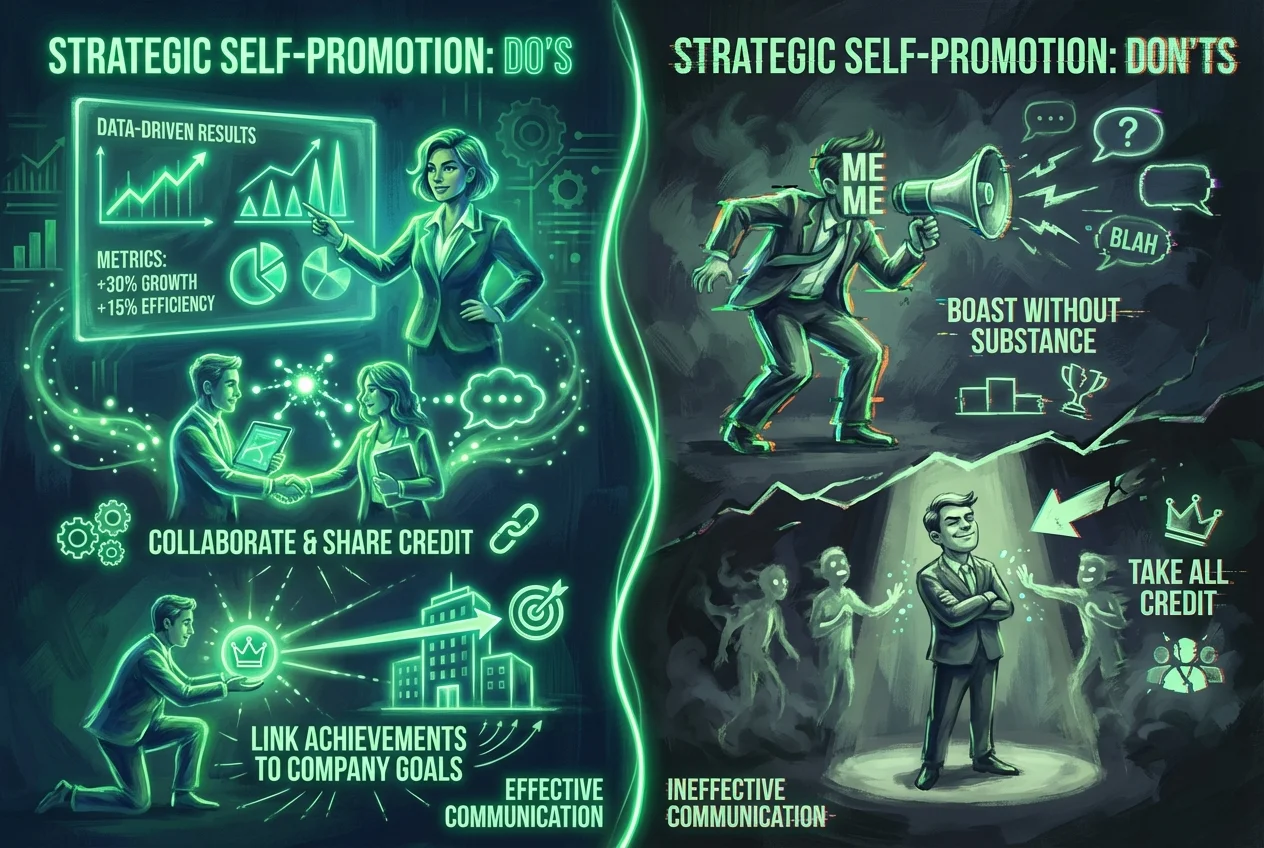
Many professionals, especially those taught to be humble, struggle with self-promotion. The idea of "tooting your own horn" can feel uncomfortable or even boastful. However, in a busy corporate environment, if you don't communicate your achievements, they might go unnoticed. Strategic self-promotion is not about arrogance; it's about effectively communicating your value, contributions, and potential in a way that is authentic and impactful. Leveraging modern tools, such as the AI-powered resume and cover letter builders from CareerBoom.ai, can ensure your accomplishments are presented professionally and aligned perfectly with target roles, making your self-promotion efforts even more effective. This is one of the most vital promotion secrets you can unlock.
Why Strategic Self-Promotion is Essential for Career Acceleration
- Ensuring Visibility: Your manager and senior leaders are busy. They can't always see every piece of excellent work you do. You need to help them connect the dots between your efforts and the positive outcomes for the business.
- Shaping Perception: How you present your work influences how others perceive your capabilities and potential. By strategically highlighting your successes, you build a reputation as a competent, results-oriented individual.
- Advocacy for Opportunities: When promotion opportunities arise, those who have effectively communicated their achievements are more likely to be considered. Your proactive communication ensures you're top-of-mind.
- Building a Personal Brand: Consistent and strategic self-promotion contributes to your professional brand, positioning you as an expert or a valuable asset in your field.
How to Implement This Hack:
- Keep a "Win Log": Regularly document your accomplishments, big or small. Include the challenge, your action, and the quantifiable result. This isn't just for performance reviews; it's a living record of your value.
- Tip: Include specific metrics (e.g., "increased sales by 10%", "reduced project time by 2 days", "improved customer satisfaction scores by 5 points").
- Communicate Up and Across:
- To your manager: In your one-on-one meetings, don't just report on tasks; highlight achievements and their impact. Frame them as contributions to team or company goals.
- To peers and stakeholders: Share successes in team meetings or through internal communication channels. Give credit where it's due to others, but also clearly articulate your role.
- Seek Feedback and Showcase Growth: Frame your self-promotion around continuous improvement. When you implement feedback and achieve better results, highlight that progression. This shows a growth mindset, which is highly valued.
- Leverage "Kitchenette Power Moves": As one expert suggests, don't just say "All good" when a higher-up asks "What's up." Instead, talk about work, expressing excitement about a project and its potential impact.
- Let Others Sing Your Praises: While direct self-promotion is crucial, strategically encourage others to speak about your good work. If a colleague compliments you one-on-one, suggest they share that feedback with your manager.
Table: Do's and Don'ts of Strategic Self-Promotion
| Do's | Don'ts |
|---|---|
| Focus on impact and results | Brag without substance |
| Give credit to collaborators | Take all the credit |
| Communicate regularly and consistently | Only speak up during performance reviews |
| Link your achievements to company goals | Focus solely on personal effort without business context |
| Be authentic and confident | Be arrogant or dismissive |
| Seek opportunities for visibility (e.g., presentations) | Wait to be discovered |
By mastering this career hack, you transform from an invisible contributor to a recognized high-performer, paving the way for rapid advancement.
3. Cultivate a "Mini-CEO" Mindset

This career hack involves thinking and acting beyond your job description, adopting the perspective of a CEO for your specific area of responsibility. It's about taking ownership, identifying business problems, and proactively seeking solutions that benefit the entire organization, not just your immediate team or tasks. This mindset is a powerful career accelerator.
Why Adopting a "Mini-CEO" Mindset Drives Rapid Advancement
- Strategic Thinking: A "Mini-CEO" doesn't just execute tasks; they understand the "why" behind them. They connect their work to the broader company strategy, market trends, and customer needs. This strategic perspective is a hallmark of leadership.
- Proactive Problem-Solving: Instead of waiting for problems to be assigned, you actively seek them out and propose solutions. This demonstrates initiative and a valuable ability to anticipate challenges.
- Ownership and Accountability: You take full responsibility for outcomes, treating your projects or department as if they were your own business. This level of dedication is highly noticeable and valued by senior management.
- Cross-Functional Impact: By understanding the bigger picture, you identify opportunities for collaboration and efficiency across different departments, leading to broader organizational improvements.
- Leadership Development: This mindset naturally cultivates leadership skills such as decision-making, resource management, risk assessment, and effective communication, preparing you for higher-level roles.
How to Implement This Hack:
- Understand the Business Holistically:
- Read company reports, financial statements, and strategic plans.
- Talk to colleagues in other departments (sales, finance, operations, HR) to understand their challenges and goals.
- Stay updated on industry trends and competitive landscapes.
- "Become a Business Junkie."
- Identify Opportunities for Improvement: Look for inefficiencies, untapped markets, cost-saving potentials, or areas where customer experience could be enhanced. Think like an entrepreneur looking for gaps in the market, but within your organization.
- Propose Data-Driven Solutions: When you identify an opportunity or problem, don't just point it out. Research potential solutions, analyze their feasibility, and present a well-reasoned proposal, complete with potential benefits and risks.
- Example: If you notice a particular customer segment is underserved, propose a small pilot project to address their needs, outlining the potential ROI.
- Take Initiative Beyond Your Role: Volunteer to lead projects that span departments, mentor junior colleagues, or take on tasks that directly impact the company's strategic objectives, even if they're outside your immediate remit.
- Measure and Communicate Your Impact: Just like with "unsexy" projects, quantify the results of your "Mini-CEO" initiatives. Did you save money, increase revenue, improve a process, or boost morale? Share these outcomes with relevant stakeholders, emphasizing the business value.
Case Study Snippet: Sarah, a product manager, noticed a recurring issue with customer churn related to a specific feature. Instead of just reporting the metrics, she took it upon herself to conduct in-depth user interviews, analyze competitor offerings, and present a comprehensive plan to redesign the feature, including a budget, timeline, and projected impact on retention. She acted like a CEO owning that product line, leading to significant praise and a fast-track to a more senior role in product strategy.
4. Build a "Personal Board of Directors"
Forget traditional one-on-one mentorship. To achieve rapid advancement, you need a diverse, multi-faceted support system that acts like a board of directors for your career. This "Personal Board of Directors" comprises carefully selected individuals who offer different perspectives, expertise, and levels of influence, guiding you through pivotal career decisions and challenges.
Why a Personal Board of Directors is a Game-Changer for Career Shortcuts
- Diverse Perspectives: A single mentor offers one viewpoint. A board provides a range of insights – from industry veterans, financial experts, peers, and even those with different cultural backgrounds – ensuring well-rounded advice.
- Strategic Guidance: Just like a corporate board guides a company, your personal board can help you navigate complex career decisions, identify new opportunities, and avoid pitfalls you might not recognize on your own.
- Accountability and Goal Setting: Board members can hold you accountable for your goals, push you to step outside your comfort zone, and help you stay on track with your professional development.
- Sponsorship and Advocacy: Beyond mentorship, some members can act as sponsors – individuals in positions of power who advocate for you behind closed doors, recommend you for promotions, and open doors to opportunities.
- Expanded Network: Each board member brings their own network, significantly expanding your reach and connecting you with influential people in your industry and beyond.
How to Implement This Hack:
- Identify Key Roles for Your Board: Think about the different types of guidance and support you need. Consider these archetypes:
- The Industry Veteran/Sage: Someone with extensive experience who can offer long-term strategic advice and insights into industry trends.
- The Peer/Confidante: A trusted colleague at a similar career stage who understands your day-to-day challenges and can offer emotional support and shared experiences.
- The Sponsor/Advocate: Someone in a position of power who believes in your potential and is willing to champion you for opportunities when you're not in the room.
- The Skill-Specific Expert: An individual who excels in an area you want to develop (e.g., public speaking, negotiation, data analytics).
- The "Outside Perspective": Someone from a completely different industry or background who can offer fresh, unbiased insights.
- The Former Manager/Mentor: A past supervisor who knows your work ethic and can provide specific feedback on your performance and growth.
- Make Strategic Asks: When approaching potential board members, be clear about what you're asking for. It's not a formal "board meeting" every month, but rather a series of intentional, focused conversations.
- Example: "I greatly admire your career path in X. I'm looking to grow in Y area and would value your insights on [specific challenge] over a coffee chat once a quarter."
- Nurture the Relationships: This is a two-way street. Offer to help your board members where you can, share relevant articles, and keep them updated on your progress. Express gratitude for their time and advice.
- Regularly Engage and Adapt: Your board should evolve with your career. As your goals change, some members might rotate out, and new ones might join. Schedule regular check-ins (e.g., quarterly, bi-annually) to discuss your objectives, challenges, and progress.
Table: Distinguishing Your Personal Board from Other Relationships
| Relationship Type | Primary Function | Key Benefit |
|---|---|---|
| Mentor | Guidance, advice, sharing experiences (often senior to you) | Learning from experience, specific skill development |
| Sponsor | Advocacy, championing your name, opening doors (in a position of power) | Increased visibility, access to opportunities, direct promotion secrets |
| Personal Board | Diverse perspectives, strategic counsel, accountability, holistic support | Well-rounded guidance, accelerated decision-making, broad network leverage |
By proactively building and leveraging a Personal Board of Directors, you gain an unparalleled advantage in navigating your career path and ensuring career acceleration.
5. The Strategic Detour: Lateral Moves for Vertical Growth
The fifth career hack challenges the traditional notion that career growth is always a linear climb upwards. Sometimes, the fastest route to the top involves a strategic detour – a lateral move or even a perceived step "sideways" or "backward" in title or immediate compensation. This career shortcut can unlock significant future rapid advancement.
Why Lateral Moves Can Be Powerful Career Acceleration Tools
- Diversified Skill Set: A lateral move to a different department or role allows you to acquire new skills and experiences that broaden your professional versatility. In today's dynamic job market, a wide range of transferable skills is invaluable.
- Deeper Business Understanding: Moving to another area of the business provides insights into different functions (e.g., moving from marketing to product development, or from sales to operations). This holistic understanding is crucial for leadership roles.
- Increased Visibility and Network Expansion: A new role often means interacting with new colleagues, managers, and stakeholders. This expands your internal network and increases your visibility to different parts of the organization, potentially uncovering new
promotion secrets. - Unblocking Stagnation: If you're in a department with limited growth opportunities, a lateral move can open up new pathways where upward mobility is more readily available. A study found that workers who made lateral moves were more likely to be subsequently promoted and experience larger wage growth.
- Identifying True Passions: A detour might help you discover a new area of work that aligns more closely with your interests and strengths, leading to greater job satisfaction and long-term engagement.
How to Implement This Hack:
- Assess Your Long-Term Goals: Before considering a lateral move, clearly define where you want your career to be in 3-5 years. What skills, experiences, and networks do you need to get there? A lateral move should strategically fill gaps in your profile.
- Research Internal Opportunities: Look at internal job postings or talk to managers in other departments. Understand the responsibilities, challenges, and skill requirements of roles that interest you.
- Frame the Move Strategically: When discussing a potential lateral move with your current manager or HR, emphasize how this new experience will make you a more well-rounded, valuable asset to the company in the long run. Highlight how it aligns with your
career accelerationgoals and ultimately benefits the organization.- Example: "I believe gaining experience in X department would significantly enhance my ability to understand our customer lifecycle holistically, making me a stronger candidate for future leadership roles in Y."
- Be Prepared for a Learning Curve: A lateral move often means starting somewhat fresh in a new domain. Be ready to learn new systems, processes, and conventions. Embrace the discomfort as a sign of growth.
- Leverage Your Existing Strengths: While learning new skills, don't forget to apply your existing strengths to your new role. This demonstrates your foundational capabilities and helps you contribute quickly.
Example Scenario:
A senior software engineer felt pigeonholed in a highly specialized technical role. While excellent at their job, they saw limited management opportunities. They strategically took a lateral move to a "less senior" role in a newly formed R&D division, focusing on emerging technologies. This move, initially a step sideways in title, exposed them to product strategy, business development, and cross-functional team leadership. Within two years, they were promoted to Director of Innovation, a role that would have been inaccessible on their previous linear path. This truly exemplifies how a career shortcut can lead to significant rapid advancement.
Beyond the Hacks: Sustaining Your Momentum
While these 5 career hacks offer powerful promotion secrets and career shortcuts for rapid advancement, their effectiveness is amplified by a foundational commitment to continuous growth and a strategic mindset. These aren't one-time actions but ongoing practices.
Continuous Learning and Skill Development
The professional landscape is constantly evolving, driven by technological advancements and shifting market demands. To sustain career acceleration, you must commit to lifelong learning.
- Upskilling and Reskilling: Identify critical skills for your desired future roles and actively pursue training, certifications, or self-study. A significant majority of Gen Z workers, for instance, value learning for career progress. Many organizations prioritize upskilling and reskilling.
- Stay Curious: Read industry publications, attend webinars, and engage in professional communities. Learning what's happening inside and outside your field can help you understand and prioritize what truly matters.
- Apply New Knowledge: Don't just accumulate knowledge; actively seek opportunities to apply what you learn in your daily work. This demonstrates initiative and reinforces your new skills.
Cultivating a Growth Mindset
Embracing challenges, learning from feedback, and viewing setbacks as opportunities for growth are hallmarks of a growth mindset. This resilience is crucial when navigating unconventional career paths.
- Embrace Discomfort: Stepping outside your comfort zone is essential for growth. The first steps on an unconventional path can be challenging; accept that there will be moments of discomfort.
- Seek and Act on Feedback: Regularly ask for constructive criticism from your managers, peers, and personal board of directors. Use this feedback to refine your approach and improve your performance.
- Maintain a Positive Attitude: A positive attitude can help you tackle new challenges and overcome obstacles with an open mind, attracting others to you.
Strategic Networking and Relationship Building
Your network is your net worth, especially when pursuing rapid advancement. Build strong relationships within your organization and connect with professionals in your industry outside your company. These relationships can provide mentorship, sponsorship, and lead to new opportunities.
- Be a Courageous Advocate: Invest in professional relationships by advocating for your peers' work and, equally important, advocating for yourself.
- Be a Connector: Introduce people in your network who could benefit from knowing each other. Being a valuable connector enhances your reputation and influence.
The Power of Transparency and Communication
Clear and consistent communication about your ambitions and contributions is not a promotion secret but a foundational element of success.
- Express Your Ambitions: Discuss your career goals and action plans with your mentor and managers. Make sure they understand your aspirations for
career acceleration. - Communicate Your Value: Regularly articulate the impact of your work, linking your achievements to broader organizational objectives. This ensures your contributions are recognized.
- Be Transparent About Your Path: If you're considering a lateral move or an unconventional path, communicate your reasoning clearly to relevant stakeholders.
By integrating these overarching principles with the 5 shocking career hacks, you create a robust strategy for not just advancing, but for truly accelerating your professional journey. The path to the top doesn't have to be a slow, predictable march. With intention, strategic choices, and a willingness to challenge conventional wisdom, you can achieve rapid advancement and unlock the promotion secrets that propel you to new heights.
Conclusion
The pursuit of rapid advancement in your career doesn't have to be a decade-long grind. By adopting these 5 shocking career hacks, you can strategically navigate your professional journey, bypass traditional bottlenecks, and unlock promotion secrets that were once reserved for a select few. From embracing "unsexy" projects to cultivate unique skills and visibility, to mastering the art of strategic self-promotion, cultivating a "Mini-CEO" mindset, building a powerful "Personal Board of Directors," and strategically leveraging lateral moves, each of these career shortcuts offers a distinct advantage.
Remember, career acceleration isn't about skipping the work; it's about optimizing your efforts, maximizing your impact, and positioning yourself for success in ways that many overlook. In a competitive landscape where 60% of employees feel they are not reaching their career potential, being proactive and unconventional is no longer an option, but a necessity.
It's time to take ownership of your career trajectory. Stop waiting for opportunities to come to you; create them. Challenge the conventional wisdom, embrace calculated risks, and continuously invest in your growth. By integrating these actionable strategies into your professional life, you'll not only achieve your career goals faster but also build a more fulfilling, impactful, and dynamic career path than you ever thought possible. Start implementing these career hacks today and watch your professional journey transform. The fast lane to success is open – are you ready to take it?
Frequently Asked Questions
Quick answers to common questions
1
What are 'career hacks' for rapid advancement?
Career hacks are strategic, often counter-intuitive moves designed to accelerate your professional journey beyond the traditional path. They involve working smarter, leveraging opportunities, and adopting a proactive mindset to achieve rapid promotion and career acceleration, focusing on smart strategies rather than unethical shortcuts.
2
Why should I take on 'unsexy' projects for career growth?
Embracing 'unsexy' projects is a powerful hack because it offers:
- Visibility to key stakeholders by solving critical business pain points.
- Unique skill development outside your comfort zone.
- Demonstrated initiative and problem-solving abilities.
- Expanded internal networks. They position you as a proactive, indispensable problem-solver.
3
How can I promote myself effectively without seeming arrogant?
Master strategic self-promotion by:
- Keeping a 'Win Log' of your quantifiable achievements.
- Communicating impact to your manager and peers, linking your work to company goals.
- Seeking feedback and showcasing growth.
- Focusing on business value and giving credit to collaborators. It's about effectively communicating your value, not boasting.
4
What does it mean to cultivate a 'Mini-CEO' mindset in my role?
A 'Mini-CEO' mindset means thinking and acting beyond your job description, taking ownership of your area as if it were your own business. It involves:
- Understanding the business holistically.
- Proactively identifying problems and proposing data-driven solutions.
- Taking initiative that impacts the wider organization. This cultivates leadership skills and drives rapid advancement.
5
What is a 'Personal Board of Directors' and how does it help my career?
A 'Personal Board of Directors' is a diverse group of individuals (mentors, sponsors, peers, experts) who offer strategic guidance, accountability, and advocacy for your career. It provides:
- Diverse perspectives and strategic counsel.
- Accountability for your goals.
- Sponsorship for opportunities.
- An expanded professional network. This multi-faceted support system significantly accelerates your career.
6
Can a lateral move actually accelerate my career?
Yes, a strategic detour through a lateral move can be a powerful career acceleration tool. It allows you to:
- Acquire a diversified skill set.
- Gain deeper business understanding.
- Increase visibility and network expansion across departments.
- Unblock stagnation in your current path. This broadens your profile, making you a more versatile and valuable asset for future leadership roles.
7
What are the overall benefits of using these career hacks for advancement?
These career hacks offer several benefits for rapid advancement:
- Increased visibility to key decision-makers.
- Development of diverse and valuable skills.
- Enhanced reputation as a proactive, results-oriented leader.
- Expanded professional network and access to sponsors.
- Ultimately, faster promotions and greater job satisfaction by actively shaping your trajectory.
Was this article helpful?
Table of Contents
1. Embrace "Unsexy" Projects and Strategic Volunteering
2. Master the Art of Strategic Self-Promotion (Without Being Arrogant)
3. Cultivate a "Mini-CEO" Mindset
4. Build a "Personal Board of Directors"
5. The Strategic Detour: Lateral Moves for Vertical Growth
Beyond the Hacks: Sustaining Your Momentum
Conclusion
1What are 'career hacks' for rapid advancement?
2Why should I take on 'unsexy' projects for career growth?
3How can I promote myself effectively without seeming arrogant?
4What does it mean to cultivate a 'Mini-CEO' mindset in my role?
5What is a 'Personal Board of Directors' and how does it help my career?
6Can a lateral move actually accelerate my career?
7What are the overall benefits of using these career hacks for advancement?
Share this article
Other articles

Top 30 Common Job Interview Questions and Best Answers
Master your next interview with this comprehensive guide to the most common questions and how to answer them effectively.

20 Killer Questions to Ask at the End of an Interview
Turn the tables and impress hiring managers with strategic questions that demonstrate your value and close strong.
40 LinkedIn Tips and Tricks You Should Use in 2026
Master LinkedIn's algorithm, optimize your profile, and accelerate your career with these proven strategies