7 Body Language Mistakes That SCREAM "Don't Hire Me" (And How to Fix Them Instantly)
Discover the subtle non-verbal cues that are sabotaging your job interviews and how to project confidence and professionalism effortlessly.
8 months ago
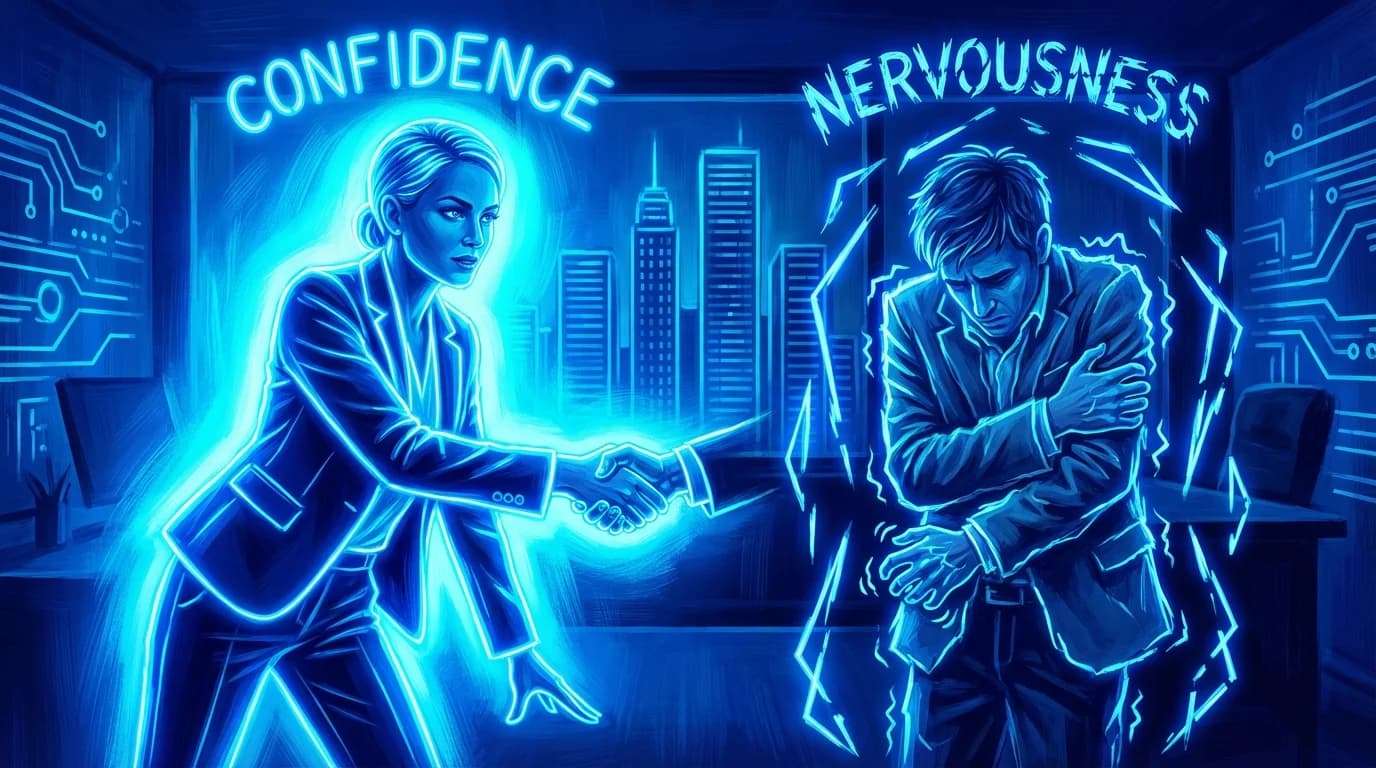
The Silent Language of Success: Why Body Language Matters More Than You Think
In the high-stakes environment of a job interview, every detail counts. While you meticulously prepare your answers, polish your resume, research the company, and even strategize killer questions to ask at the end of an interview, there’s a powerful, often overlooked aspect that can make or break your chances: your body language. Before you even utter a single word, your non-verbal cues are speaking volumes, influencing the interviewer's perception of your confidence, professionalism, and enthusiasm. Mastering these silent signals can significantly enhance your chances of making a powerful impression, building rapport, and ultimately landing your dream job. For a holistic approach to job search success, including AI-powered interview preparation and resume optimization, consider exploring platforms like CareerBoom.ai. For more comprehensive interview body language tips, further research can be invaluable.
Research consistently highlights the profound impact of non-verbal communication. Some studies suggest that nonverbal cues can account for a significant portion of communication effectiveness—as much as 55% to 93%. This means that your gestures, posture, eye contact, and facial expressions often convey more about you than your carefully chosen words. In fact, a CareerBuilder survey revealed that 49% of employers know if a candidate is a good or bad fit within the first five minutes of an interview, largely influenced by non-verbal signals. Another survey indicated that 67% of employers admitted to rejecting a candidate based on their lack of eye contact, poor posture, and weak handshake.
Ignoring your body language in a job interview is akin to going into battle with one hand tied behind your back. It can send unintended signals that scream "don't hire me," even if your verbal responses are stellar. Mastering these silent signals can significantly enhance your chances of making a powerful impression, building rapport, and ultimately landing your dream job.
This article will delve into seven common body language mistakes that can sabotage your job interview and, more importantly, provide actionable strategies to fix them instantly. By understanding and correcting these blunders, you can project the confidence and professionalism that employers are actively seeking.
7 Body Language Mistakes That SCREAM "Don't Hire Me" (And How to Fix Them Instantly)
Let's break down the most common non-verbal missteps and empower you with the tools to overcome them.
Mistake 1: The Weak Handshake
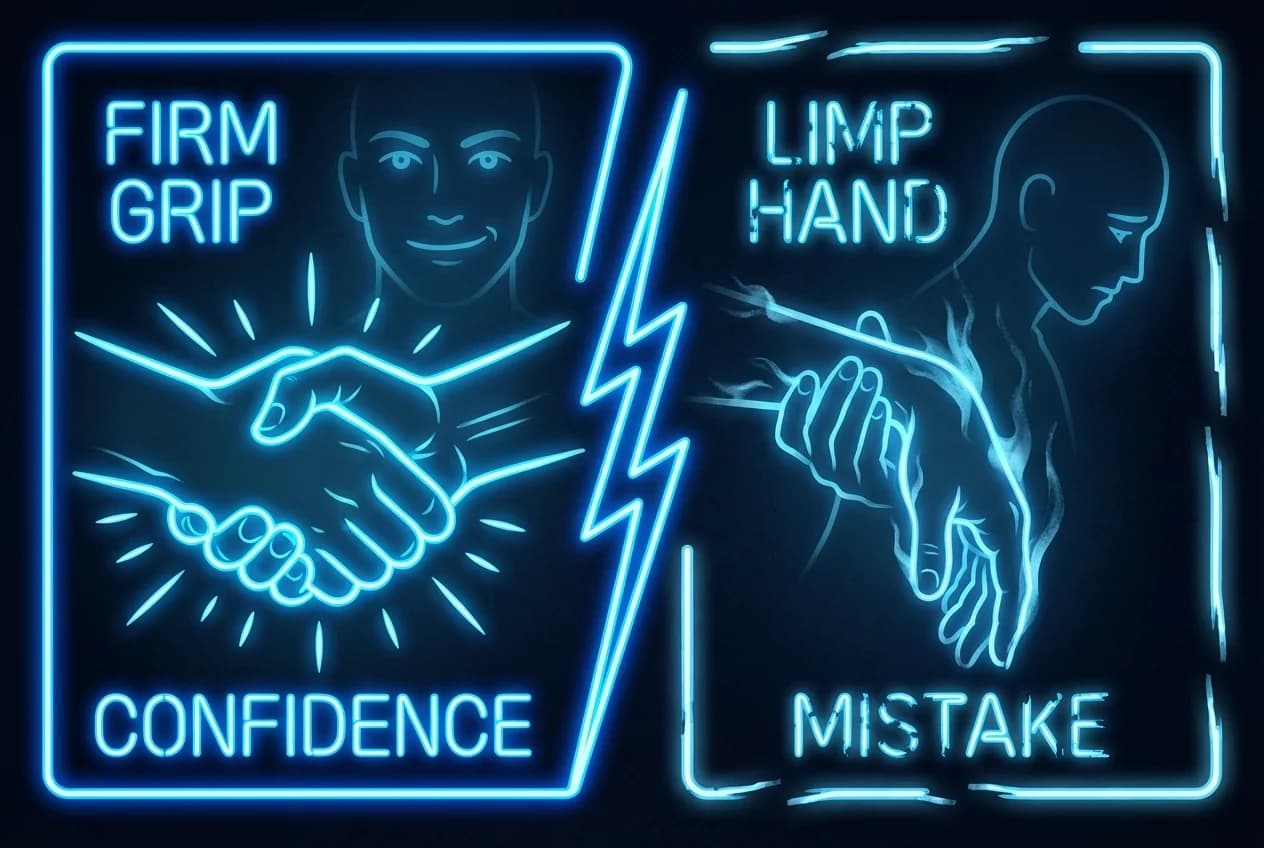
The handshake is often your very first physical interaction with an interviewer, and it sets the tone for the entire meeting. A weak, limp, or "dead fish" handshake can convey a lack of confidence, disinterest, or even submissiveness. Conversely, a handshake that is too strong can come across as aggressive or overbearing.
Why it's a problem: A weak handshake can instantly diminish your perceived confidence and professionalism. It suggests you might be timid, unsure of yourself, or not fully engaged. In a CareerBuilder survey, 22% of hiring managers cited a handshake that was too weak as a body language mistake.
How to Fix It Instantly: The ideal handshake is firm, warm, and dry, lasting for two to three seconds.
- Stand Up: Always stand up to greet your interviewer. This shows respect and confidence.
- Make Eye Contact and Smile: As you extend your hand, make direct eye contact and offer a genuine smile. This establishes an immediate connection and conveys warmth.
- Firm Grip: Aim for a firm, but not bone-crushing, grip. Your hand should interlink with the interviewer's at the web between the thumb and index finger. The pressure should be enough to show confidence and enthusiasm without causing discomfort.
- Dry Hands: If you're prone to sweaty palms, discreetly wipe your hands on your clothing before entering the interview room or in the waiting area.
- Practice: Practice with friends or family until it feels natural. Get feedback on the firmness and duration.
Table: Handshake Dos and Don'ts
| Do | Don't |
|---|---|
| Stand up to greet | Remain seated |
| Make eye contact and smile | Look away or down |
| Offer a firm, confident grip | Offer a limp ("dead fish") handshake |
| Keep it brief (2-3 seconds) | Hold on too long |
| Ensure hands are dry | Offer sweaty palms |
Cultural Nuance: While a firm handshake is generally preferred in Western cultures like Canada and the U.S., it's important to be aware of cultural differences. In some cultures, like Turkey, a firm handshake might be considered rude, while in Japan, China, and the Philippines, a weaker, longer handshake is preferred. Always be observant and adapt if necessary, but when in doubt in a Western professional setting, opt for firm and confident.
Mistake 2: Lack of Eye Contact
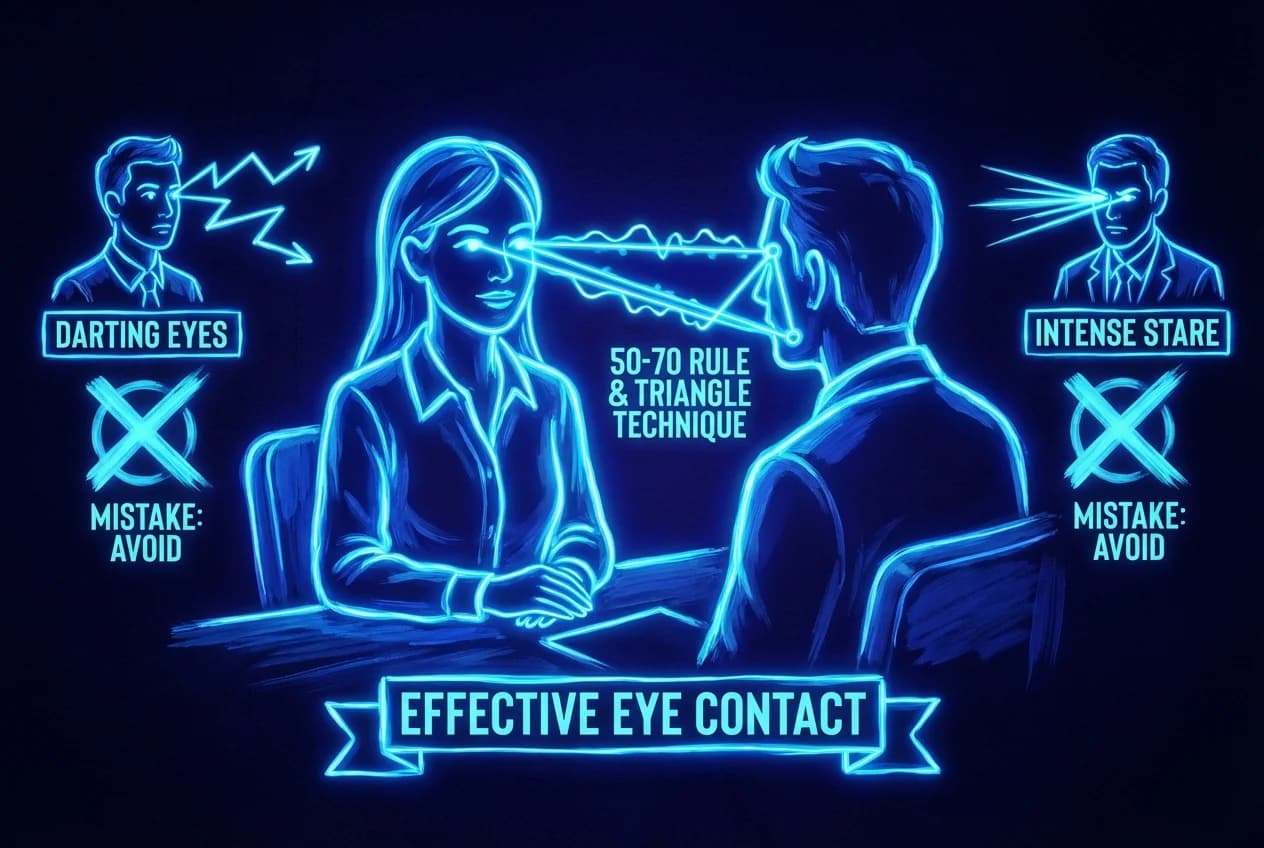
Avoiding eye contact is one of the most common and detrimental body language mistakes in a job interview. It can make you appear nervous, insecure, dishonest, or disinterested. According to a CareerBuilder survey, 68% of hiring managers identified failure to make eye contact as a significant body language mistake. Another study found that 67% of employers rejected a candidate due to lack of eye contact.
Why it's a problem: Consistent, appropriate eye contact demonstrates confidence, attentiveness, and genuine interest in the conversation. A lack thereof breaks rapport and can lead the interviewer to question your sincerity and engagement.
How to Fix It Instantly: The key is to maintain natural, engaging eye contact without staring.
- The 50-70 Rule: Aim to maintain eye contact for about 50-70% of the conversation. This allows for natural breaks without appearing disengaged.
- Look Away Naturally: It's perfectly normal and even advisable to look away occasionally when thinking, processing information, or referencing notes. The trick is to avoid darting your eyes around erratically or staring at objects on the desk.
- The Triangle Technique: If direct eye contact feels overwhelming, try the "triangle technique." Subtly shift your gaze between the interviewer's eyes and mouth, forming an inverted triangle. To the interviewer, this will still appear as direct eye contact but can feel less intense for you. Another similar technique is to focus on the bridge of their nose.
- Group Interviews (Lighthouse Technique): If there are multiple interviewers, use the "lighthouse technique." Distribute your eye contact among all present, ensuring you engage with each person. When answering a question, focus primarily on the person who asked it, then briefly sweep your gaze to others.
- Practice in Conversations: Make a conscious effort to practice good eye contact in everyday conversations to make it feel more natural.
Table: Eye Contact Best Practices
| Action | Impact |
|---|---|
| Consistent, natural eye contact (50-70%) | Confidence, engagement, trustworthiness, sincerity |
| Brief, natural breaks when thinking | Allows processing, avoids staring |
| Triangle technique (eyes to mouth/nose) | Appears as eye contact, reduces anxiety |
| Sweeping gaze in group interviews | Engages all participants, shows respect |
| Avoiding eye contact | Nervousness, disinterest, dishonesty, insecurity |
| Staring without blinking | Intense, uncomfortable, potentially aggressive |
| Darting eyes around | Restlessness, anxiety, distraction |
Mistake 3: Fidgeting and Restlessness
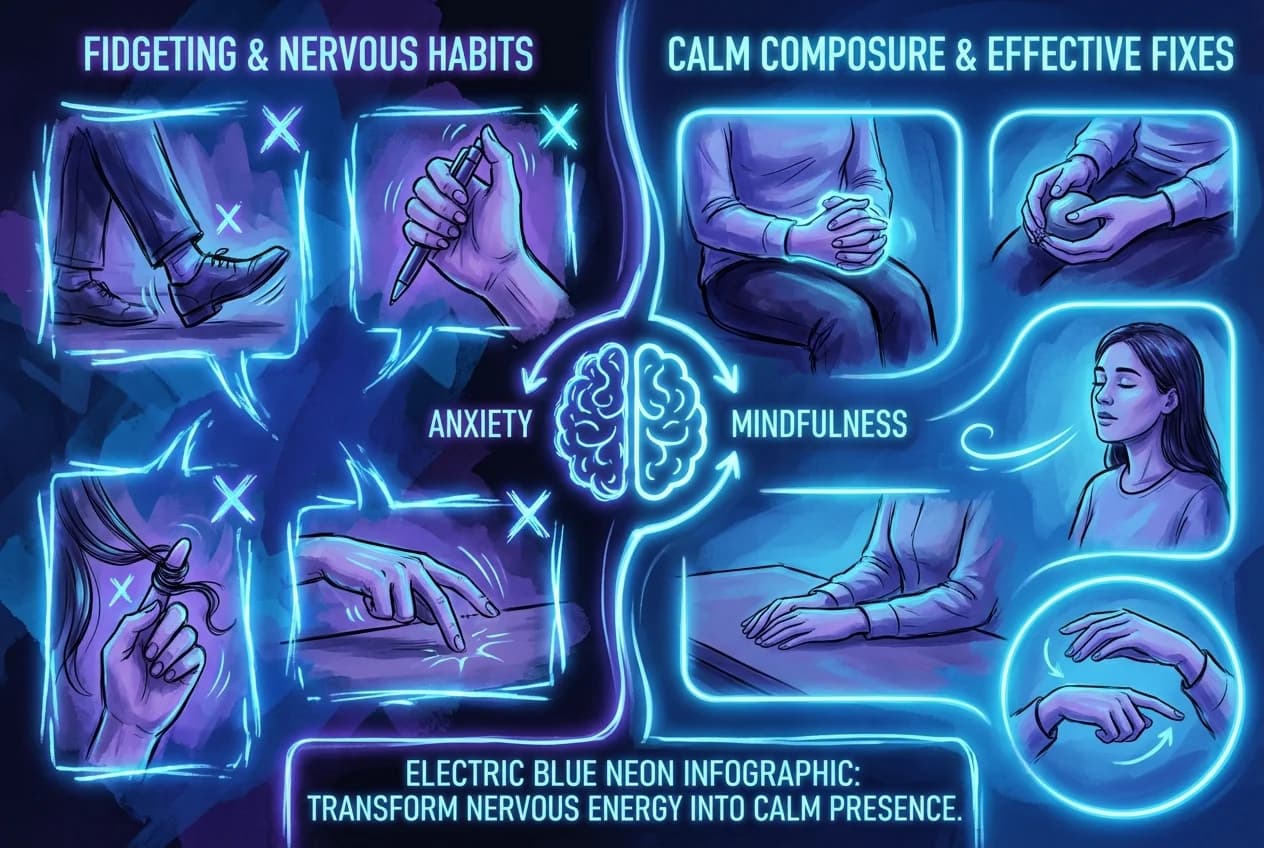
Nervous energy often manifests as fidgeting – tapping your foot, clicking a pen, playing with your hair, biting your nails, or constantly shifting in your seat. These actions are highly distracting and can convey anxiety, lack of confidence, or even disinterest, regardless of what you're saying. A CareerBuilder survey found that 36% of hiring managers were put off by candidates playing with something on the table, and 32% by fidgeting too much in their seat.
Why it's a problem: Fidgeting draws the interviewer's attention away from your answers and towards your distracting movements. It signals nervousness and a lack of composure, which can lead employers to doubt your ability to handle pressure or represent the company professionally.
How to Fix It Instantly:
- Self-Awareness: The first step is recognizing your fidgeting habits. Ask a friend to conduct a mock interview and point out any nervous tics, or better yet, video record yourself.
- Channel Nervous Energy: Instead of suppressing the energy, try to channel it constructively.
- Subtle Hand Gestures: Use your hands to emphasize points when speaking. This makes you appear more animated and confident, and keeps your hands occupied. Ensure gestures are subtle and not wild or frantic.
- Clasp Hands: When not speaking, gently clasp your hands together and rest them on your lap or the table. This provides a stable position and prevents fiddling with objects.
- Deep Breathing: Practice deep breathing exercises before and even during the interview. Focusing on your breath can calm your body and mind, reducing anxious energy.
- Foot Placement: Keep both feet flat on the floor or crossed at the ankles to prevent foot tapping or leg bouncing. Apply slight pressure to your legs with your hands if you tend to bounce them.
- Avoid Stimulants: Reduce caffeine and sugar intake before the interview, as they can exacerbate jitteriness.
- Pre-Interview Movement: Engage in some light physical activity before the interview to release pent-up energy, such as a brisk walk.
Table: Managing Fidgeting
| Fidgeting Habit | What it Communicates | Instant Fix |
|---|---|---|
| Foot tapping/leg bouncing | Nervousness, impatience | Feet flat on floor, hands on lap with slight pressure |
| Playing with hair/face | Anxiety, discomfort, deception | Keep hands clasped, subtle gestures |
| Pen clicking/object fiddling | Distraction, lack of focus | Avoid bringing distracting objects, clasp hands |
| Shifting in seat | Restlessness, discomfort | Consciously maintain good posture, deep breaths |
| Nail biting | Anxiety, insecurity | Clasp hands, mindfulness |
Mistake 4: Poor Posture (Slouching or Rigidity)
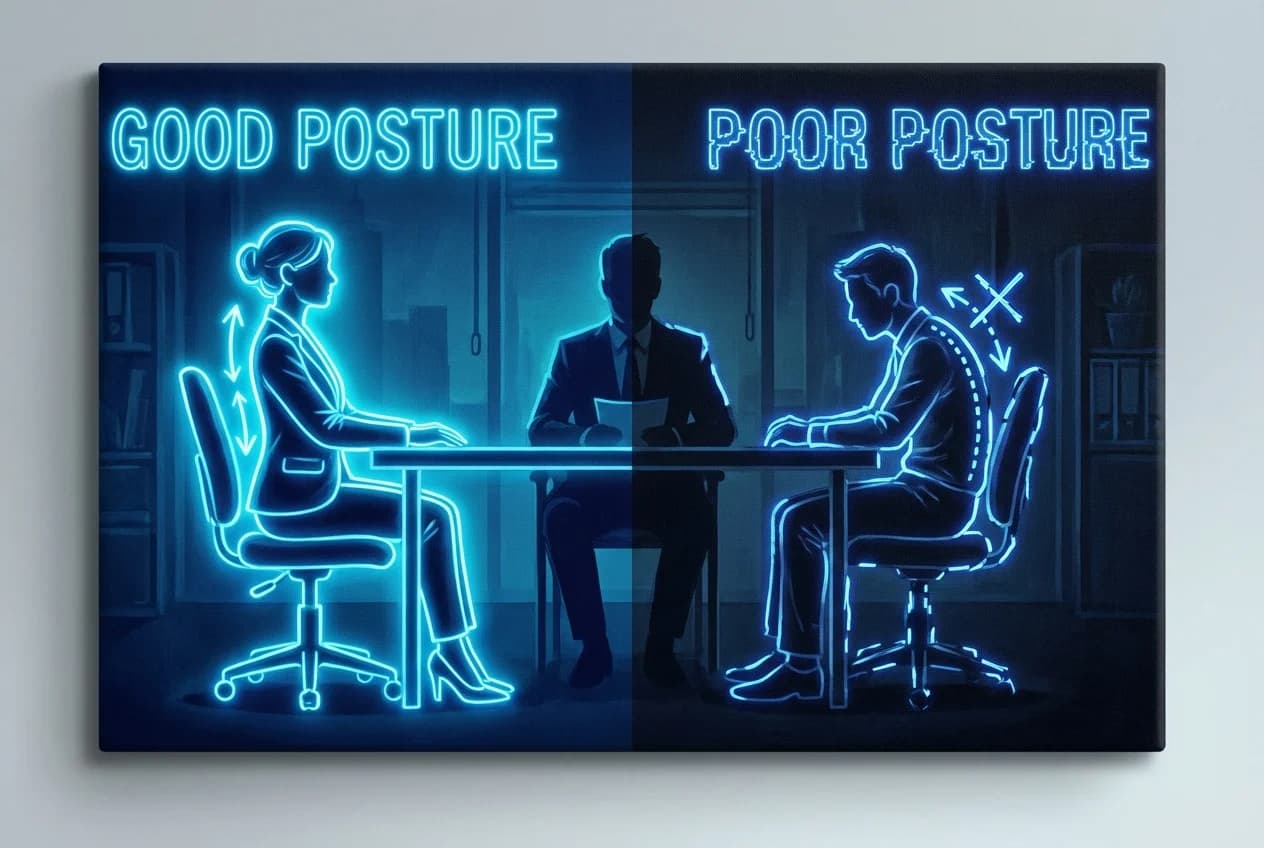
Your posture communicates a great deal about your attitude, energy levels, and self-esteem. Slouching in your chair can signal disinterest, boredom, or a lack of confidence and enthusiasm. Conversely, being overly rigid can make you appear tense, uncomfortable, or even aggressive. A CareerBuilder survey found that 31% of hiring managers were negatively impacted by bad posture.
Why it's a problem: Good posture projects confidence, professionalism, and reliability, making a positive first impression. Poor posture, on the other hand, can undermine your verbal message and make you seem less capable or engaged, even if you are.
How to Fix It Instantly:
- Sit Up Straight: Aim for a straight back, sitting comfortably against the back of the chair if possible, with your shoulders down and pulled back. Your head and neck should form a straight line.
- Avoid Slouching: Consciously correct any tendency to slump. Sitting upright has been linked to a more positive mood and higher self-esteem.
- Avoid Rigidity: While sitting straight is good, avoid being overly stiff. Your posture should be erect but relaxed.
- Lean Slightly Forward: To show engagement and active listening, lean slightly forward when the interviewer is speaking. This conveys interest without invading personal space. However, avoid leaning so far forward that you hunch.
- Feet Flat on the Floor: Keep both feet flat on the floor. This provides a stable base and contributes to a grounded, confident appearance. Avoid crossing your legs excessively if it causes you to slouch or appear closed off.
- Practice: Practice sitting with good posture at home or during mock interviews to make it feel natural.
Table: Posture Pointers
| Posture Mistake | What it Communicates | Instant Fix |
|---|---|---|
| Slouching | Disinterest, lack of confidence, boredom | Sit up straight, back against chair, shoulders back |
| Overly rigid | Tension, discomfort, aggression | Relax shoulders, maintain natural upright position |
| Leaning back | Disengagement, casualness | Lean slightly forward to show interest |
| Perching on edge | Anxiety, nervousness | Sit fully in the chair, back supported |
Mistake 5: Crossing Arms or Legs
Crossing your arms over your chest or crossing your legs tightly can be interpreted as a defensive, closed-off, or uncomfortable posture. It creates a physical barrier between you and the interviewer, which can hinder rapport and make you seem unapproachable or resistant. A CareerBuilder survey indicated that 31% of hiring managers reacted negatively to candidates crossing their arms.
Why it's a problem: Open body language fosters trust and connection. When you cross your arms or legs, you signal a lack of openness, potentially making the interviewer feel less comfortable and less likely to connect with you.
How to Fix It Instantly:
- Open Arms: Keep your arms uncrossed and relaxed. Rest your hands gently on your lap, on the armrests of the chair, or on the table in front of you.
- Show Your Hands: Throughout history, open palms have conveyed trust and honesty. Keeping your hands visible indicates sincerity and receptiveness. You can gently clasp them, interlace your fingers loosely, or steeple your fingertips to show thoughtfulness.
- Relaxed Legs: Keep both feet flat on the floor or, if you prefer to cross your legs, do so at the ankles rather than the knees, ensuring it doesn't lead to slouching or a closed-off appearance.
- Mirroring (Subtly): If the interviewer has an open posture, subtly mirroring their body language can help build rapport and create a sense of connection. However, be careful not to mimic them excessively, as this can appear insincere.
- Conscious Awareness: Pay attention to how your body feels. If you catch yourself crossing your arms or legs, consciously relax and open up your posture.
Table: Open vs. Closed Body Language
| Closed Body Language (Avoid) | Open Body Language (Adopt) |
|---|---|
| Crossed arms | Arms uncrossed, hands visible |
| Tightly crossed legs | Feet flat or ankles crossed |
| Hands hidden in pockets | Hands resting on lap/table |
| Slumped shoulders | Shoulders back and relaxed |
Mistake 6: Ignoring Facial Expressions (The Poker Face or Over-Expressiveness)
Your face is a window to your emotions, and your facial expressions can convey a wealth of information about your personality, enthusiasm, and engagement. A blank "poker face" can make you seem disengaged, unenthusiastic, or even cold. Conversely, overly exaggerated or inappropriate expressions can be distracting or perceived as insincere. A CareerBuilder survey noted that 38% of hiring managers were put off by a candidate's failure to smile.
Why it's a problem: Appropriate facial expressions, especially a genuine smile, can make you appear friendly, approachable, confident, and excited about the opportunity. A lack of positive expression can make you seem indifferent, while negative expressions (frowning, pursed lips, yawning) can signal frustration, anger, or boredom.
How to Fix It Instantly:
- Smile Genuinely: A warm, genuine smile is incredibly powerful. Smile when you first meet the interviewer, when they make a light-hearted comment, and at appropriate moments throughout the conversation. It conveys friendliness, confidence, and enthusiasm.
- Express Engagement: Show interest with subtle nods (without overdoing it) and an attentive expression. Your eyebrows can also be used to express surprise or enthusiasm appropriately.
- Avoid Extremes:
- The Poker Face: Consciously try to relax your facial muscles and allow natural expressions to emerge. Think of something positive or engaging to help.
- Over-Expressiveness: Be mindful not to make exaggerated or overly dramatic expressions. Aim for natural and authentic.
- Practice in a Mirror: Observe your facial expressions as you practice answering interview questions in front of a mirror. This helps you become aware of any unintended expressions and allows you to refine them.
- Avoid Negative Expressions: Steer clear of frowning, pursing your lips, yawning, or constantly licking your lips, as these can signal disapproval, boredom, anger, or anxiety.
Table: Facial Expression Guide
| Expression (or lack thereof) | What it Communicates | Instant Fix |
|---|---|---|
| Poker face (no expression) | Disinterest, lack of enthusiasm, coldness | Gentle smile, attentive expression, subtle nods |
| Constant grinning | Insincere, unnerving | Natural, appropriate smiles |
| Frowning/pursed lips | Frustration, anger, disapproval | Relax facial muscles, conscious positive expression |
| Yawning | Boredom, fatigue | Ensure adequate rest, deep breaths |
| Licking lips | Anxiety, nervousness | Mindfulness, hydrate before interview |
Mistake 7: Invading Personal Space or Leaning Too Far Away
Proxemics, the study of personal space, plays a subtle yet significant role in non-verbal communication. Sitting too close to an interviewer can be perceived as aggressive, intrusive, or lacking in boundaries. Conversely, leaning too far away can signal disinterest, discomfort, or a desire to disengage.
Why it's a problem: Maintaining appropriate personal space is crucial for creating a comfortable and professional atmosphere. Invading personal space can make the interviewer feel uneasy, while excessive distance can make the interaction feel cold and detached, hindering the development of rapport.
How to Fix It Instantly:
- Observe and Adapt: When you enter the interview room, quickly assess the seating arrangement. Choose a seat that allows for comfortable, professional distance. If the interviewer is already seated, take cues from their positioning.
- Maintain Arm's Length: A general guideline is to maintain an arm's length (about 2-4 feet) distance from the interviewer. This is typically considered a comfortable "social distance" in professional settings in many Western cultures.
- Subtle Lean-In: As mentioned in the posture section, a slight lean forward (without hunching) when listening or making a key point shows engagement. This is different from physically moving your chair closer.
- Mirroring (Cautiously): If the interviewer naturally leans in slightly, you can subtly mirror this to build rapport. However, be cautious and do not overdo it or initiate the invasion of space.
- Be Mindful of Movement: Avoid fidgeting that causes you to shift your chair or body significantly closer or further away from the interviewer. Stay grounded in your chosen position.
Table: Personal Space Guidelines
| Action | What it Communicates | Instant Fix |
|---|---|---|
| Sitting too close | Aggressive, intrusive, lack of boundaries | Maintain arm's length distance, observe interviewer |
| Leaning too far away | Disinterest, discomfort, disengagement | Engage with a slight lean forward, maintain posture |
| Constant shifting/moving chair | Restlessness, discomfort | Stay grounded, maintain chosen position |
Beyond the 7 Mistakes: Cultivating Overall Confidence in Your Interview
Mastering these specific body language mistakes is a fantastic start, but true non-verbal excellence comes from cultivating an overall sense of confidence and poise. Here are additional strategies to help you project unwavering assurance in your job interview, whether in-person or virtual.
Pre-Interview Preparation for Body Language
Just as you prepare your verbal answers, dedicate time to preparing your non-verbal communication.
- Mock Interviews with Feedback: Conduct mock interviews with friends, family, or career coaches. Ask them to specifically observe your body language and provide honest feedback. Record yourself on video if possible; it's often surprising to see how you appear to others. For advanced practice, AI-powered platforms like CareerBoom.ai offer interview simulations and feedback, allowing you to refine both your verbal answers and non-verbal cues in a realistic environment.
- Practice Your Entrance: Your walk into the interview room can make a significant first impression. Practice walking with your head high and shoulders back, projecting confidence.
- Visualize Success: Before the interview, take a few minutes to visualize yourself performing confidently. Imagine yourself maintaining eye contact, speaking clearly, and using appropriate gestures. Positive visualization can boost self-confidence.
Mindfulness and Breathing Techniques
Nerves are natural, but they don't have to control your body language.
- Deep Breathing: Simple deep breathing exercises can significantly reduce anxiety. Before entering the interview, take several slow, deep breaths, inhaling through your nose and exhaling slowly through your mouth. This calms your nervous system and helps you appear more relaxed.
- Grounding Techniques: If you feel overwhelmed by nervousness, focus on your senses. Notice five things you can see, four things you can feel, three things you can hear, two things you can smell, and one thing you can taste. This can bring you back to the present moment and reduce internal jitters.
The Power of Power Posing
Social psychologist Amy Cuddy's research on "power posing" suggests that adopting expansive, open postures for a few minutes before a stressful situation can actually change your body chemistry, increasing testosterone (associated with dominance) and decreasing cortisol (the stress hormone).
- Before the Interview: In a private space (like a restroom stall or your car), strike a "power pose" for two minutes. Examples include:
- The "Wonder Woman" Pose: Stand tall with your feet hip-width apart, hands on your hips, chest expanded, and chin tilted slightly up.
- The "Victory" Pose: Stand with your feet wide apart and raise your arms above your head in a "V" shape.
- The "CEO" Pose: Sit comfortably, lean back slightly, and place your hands behind your head with fingers interlocked.
- How it Helps: While the scientific debate around hormonal changes continues, many find that power posing helps them feel more confident and less stressed, which translates into more confident body language during the interview.
The Role of Non-Verbal Cues in Building Rapport
Beyond simply avoiding mistakes, positive body language is a powerful tool for building rapport with your interviewer. Rapport is the foundation of a good connection, and it makes you more memorable and likable. Understanding the nuances of interview body language is key to fostering this connection.
- Mirroring (Subtle and Authentic): As mentioned earlier, subtly mirroring the interviewer's non-verbal cues (e.g., if they lean in, you slightly lean in; if they gesture with their hands, you use gentle hand gestures) can create a sense of connection and trust. The key is subtlety and authenticity – you're not mimicking, but rather unconsciously aligning.
- Active Listening Cues: Show you're engaged by nodding occasionally, maintaining appropriate eye contact, and orienting your body towards the interviewer. These signals convey that you are truly listening and processing what they say.
- Enthusiasm: Let your enthusiasm show through your expressions and gestures. A genuine smile, an engaged posture, and appropriate hand movements can convey your excitement for the role and the company.
Cultural Nuances in Body Language
It's crucial to acknowledge that body language interpretations can vary significantly across cultures. What is considered confident and professional in one culture might be misinterpreted in another.
- Handshakes: As noted, the ideal handshake varies globally.
- Eye Contact: While strong eye contact is valued in Western cultures as a sign of honesty and engagement, in some Asian cultures (e.g., Japan), prolonged direct eye contact can be considered rude or aggressive.
- Gestures: A gesture that is positive in one culture might be offensive in another.
- Personal Space: The comfortable distance between individuals can also differ.
Recommendation: If you are interviewing with individuals from a culture different from your own, it is advisable to do a quick cultural sensitivity check. Observe the interviewer's cues and subtly adapt your own where appropriate. When in doubt, err on the side of respectful formality and openness, and focus on genuine engagement.
Conclusion
Your body language is a powerful, silent communicator in the job interview process. It can convey confidence, professionalism, and enthusiasm, or inadvertently scream "don't hire me" through subtle missteps. By understanding and consciously addressing the seven common body language mistakes – the weak handshake, lack of eye contact, fidgeting, poor posture, crossed arms or legs, inappropriate facial expressions, and mismanaging personal space – you gain a significant advantage.
Remember that non-verbal communication is not about putting on an act, but about presenting the most confident and authentic version of yourself. Integrate these interview tips into your preparation: practice your handshake, refine your eye contact, manage your nervous habits, cultivate an open and confident posture, express genuine interest with your face, and be mindful of personal space.
By mastering these elements of non-verbal communication, you'll not only avoid common pitfalls but also actively project the confidence and professionalism that will help you stand out from the competition. For even more detailed body language tips for your job interview, consider exploring additional expert advice. Take control of your body language, and let your silent confidence speak volumes in your next job interview. Your dream job might just be a confident nod and a firm handshake away.
Frequently Asked Questions
Quick answers to common questions
Your body language speaks volumes before you even utter a word, influencing the interviewer's perception of your confidence, professionalism, and enthusiasm. Non-verbal cues can account for a significant portion of communication effectiveness, with many employers making hiring decisions within the first five minutes based on these signals.
A weak, limp, or "dead fish" handshake can instantly convey a lack of confidence, disinterest, or even submissiveness. It suggests you might be timid or unsure of yourself, potentially diminishing your perceived professionalism. The ideal handshake is firm, warm, and dry, lasting 2-3 seconds.
Aim for the 50-70 rule: maintain eye contact for about 50-70% of the conversation. This demonstrates confidence, attentiveness, and genuine interest without staring. In group interviews, use the "lighthouse technique" to distribute your gaze among all present.
To stop fidgeting:
- Channel nervous energy into subtle hand gestures.
- Gently clasp your hands on your lap.
- Practice deep breathing to calm yourself.
- Keep both feet flat on the floor.
- Reduce caffeine/sugar intake and engage in light pre-interview movement.
Good posture involves sitting up straight with your back comfortably against the chair, shoulders down and pulled back. Your head and neck should form a straight line. Lean slightly forward to show engagement, but avoid rigidity. Keep both feet flat on the floor for a stable, confident appearance.
Avoid crossing your arms over your chest, as it can be interpreted as defensive, closed-off, or uncomfortable, creating a barrier. Keep your arms uncrossed and hands visible. If you cross your legs, do so at the ankles rather than the knees to maintain an open posture.
A warm, genuine smile is incredibly powerful, conveying friendliness, confidence, and enthusiasm. Show interest with subtle nods and an attentive expression. Avoid a blank "poker face" or negative expressions like frowning or yawning, which can signal disinterest or anxiety.
Was this article helpful?
Table of Contents
The Silent Language of Success: Why Body Language Matters More Than You Think
7 Body Language Mistakes That SCREAM "Don't Hire Me" (And How to Fix Them Instantly)
Beyond the 7 Mistakes: Cultivating Overall Confidence in Your Interview
Conclusion
1Why is body language so important in a job interview?
2What does a weak handshake communicate in an interview?
3How much eye contact should I make during an interview?
4How can I stop fidgeting during an interview?
5What is considered good posture for a job interview?
6Is it okay to cross my arms or legs in an interview?
7What facial expressions are best to use during an interview?
Share this article
Other articles

20 Smart Questions to Ask at the End of an Interview in 2026
Turn the tables and impress hiring managers with strategic questions that demonstrate your value and close strong.
How to Ace a Zoom Interview: Setup, Lighting, and Etiquette
Master the art of virtual interviews with expert tips on technical setup, lighting, background, and professional etiquette.
Top 30 Common Job Interview Questions and Best Answers
Master your next interview with this comprehensive guide to the most common questions and how to answer them effectively.