How to Handle Job Rejection Like a Pro (and Bounce Back Stronger)
Turn setbacks into comebacks with expert advice on processing rejection and refining your job search approach.
8 months ago

Job rejection is an inevitable part of almost every career journey. It can feel like a punch to the gut, leaving you disheartened, questioning your abilities, and even impacting your job search motivation. However, understanding how to handle job rejection can define your future success. Instead of letting career setbacks derail your progress, view them as opportunities to learn, grow, and bounce back stronger.
This article will guide you through processing rejection professionally, extracting valuable insights, and refining your job search approach to turn those initial disappointments into powerful comebacks.
Acknowledge and Process the Emotion
It's completely normal to feel a range of emotions after a job rejection – frustration, sadness, anger, or even self-doubt. Suppressing these feelings isn't healthy. Give yourself permission to feel them. For guidance on coping with job rejection and finding strength, it's important to acknowledge these feelings.
Healthy Rejection Coping Strategies
- Allow for a "Grieve" Period: Take a short break from your
job search. Watch a movie, go for a walk, or spend time with loved ones. Acknowledge the disappointment without dwelling on it excessively. - Don't Personalize It: Remember that a rejection is rarely a reflection of your inherent worth or capabilities. Often, it's about fit, timing, or an overwhelming number of highly qualified candidates. For instance, a recent study highlighted that for every job opening, there are typically 118 applicants, with only 20% landing an interview. This sheer volume means rejection is a common experience.
- Talk It Out: Share your feelings with a trusted friend, family member, or mentor. Sometimes, simply articulating your emotions can help in processing them.
- Practice Self-Compassion: Treat yourself with the same kindness and understanding you would offer a friend. Avoid negative self-talk.
Don't Take It Personally: Understanding the "Why"
While it's easy to internalize rejection, most hiring decisions are complex and multifactorial. Here are common reasons for rejection that have nothing to do with your talent:
- Internal Candidate: The company might have already had an internal candidate in mind.
- Budget Constraints: The role's budget might have changed, or they decided to freeze hiring.
- Company Restructuring: Organizational shifts can lead to positions being eliminated or redefined.
- Perfect Fit: Another candidate might have had a very specific, niche skill set that perfectly matched the role's immediate needs, even if your qualifications were excellent.
- Cultural Fit: Sometimes, it's a subjective judgment about how well you'd integrate into the existing team dynamics.
Understanding these possibilities can help you depersonalize the experience and maintain a positive outlook.
Seek Feedback (Professionally)
One of the most valuable ways to overcome job rejection and bounce back from rejection is to seek constructive rejection feedback. However, approach this carefully and professionally.
How to Request Feedback
- Wait a Few Days: Don't send an email immediately after receiving the rejection. Give yourself and the hiring manager some space.
- Send a Polite, Concise Email: Thank them for their time and consideration. Express your continued interest in the company (if genuine) and politely ask if they would be willing to offer any constructive feedback on your application or interview performance.
- Example: "Thank you again for the opportunity to interview for the [Job Title] position. While I'm disappointed, I truly appreciate your time and consideration. I am always looking for ways to improve my professional development and interview skills. If you have any brief feedback regarding my application or interview that you'd be willing to share, it would be greatly appreciated."
- Be Prepared for No Response: Not all companies offer feedback, often due to policy or time constraints. Don't take it personally if you don't receive a reply.
- If You Receive Feedback, Listen Actively: Don't get defensive. Thank them for their honesty and take notes.
Reflect and Learn: Turning Feedback into Growth
Once you have feedback (or even if you don't), it's crucial to reflect on your application process. This self-assessment is key to building job search resilience.
Key Areas for Reflection:
- Resume and Cover Letter: Did they clearly highlight your most relevant skills and experiences for that specific role? Were there any typos or grammatical errors? Leveraging AI-powered tools like CareerBoom.ai can help ensure your resume and cover letter are perfectly aligned with job descriptions, significantly improving your chances.
- Interview Performance:
- Did you answer questions clearly and concisely?
- Did you provide specific examples using the STAR method (Situation, Task, Action, Result)?
- Did you demonstrate enthusiasm and genuine interest?
- Were your questions insightful and thoughtful?
- Did you effectively articulate your value proposition?
- Skills Gap: Did the feedback suggest you lacked a particular skill or experience the company was seeking? This can inform your professional development goals.
Use this reflection period to identify areas for improvement, not to criticize yourself. This is about strategic adjustment.
Re-evaluate Your Approach: Refining Your Job Hunting Tips
With new insights, it's time to refine your job hunting tips and strategies. This proactive step helps you stay positive job search and regain momentum.
Practical Adjustments:
- Tailor, Tailor, Tailor: Ensure every resume and cover letter is specifically tailored to the job description. Generic applications rarely succeed.
- Practice Interview Skills:
- Mock Interviews: Ask a friend or mentor to conduct mock interviews and provide honest feedback.
- Record Yourself: Practice answering common interview questions while recording yourself. Watching it back can reveal habits you didn't know you had.
- Behavioral Questions: Prepare strong examples for behavioral questions (e.g., "Tell me about a time you faced a challenge"). For comprehensive support across your entire job search, including AI-powered interview simulations and a centralized application tracking dashboard, consider an all-in-one platform like CareerBoom.ai.
- Network Strategically: Many jobs are found through networking. Attend industry events, connect with professionals on LinkedIn, and inform your network that you're looking.
- Skill Development: If you identified a skill gap, consider online courses, certifications, or volunteer work to acquire those skills.
- Expand Your Search: Are you limiting yourself to a very narrow type of role or industry? Consider adjacent fields or roles where your skills are transferable.
Maintain Job Search Motivation
It's easy for job search motivation to wane after multiple rejections. However, consistency and a positive mindset are vital for success.
Strategies to Stay Positive Job Search:
- Set Small, Achievable Goals: Instead of "get a job," aim for "apply to 3 jobs today," "update my LinkedIn profile," or "network with one person."
- Celebrate Small Wins: Acknowledge every positive step – an interview invitation, a valuable networking conversation, or successfully updating your resume.
- Take Regular Breaks: Prevent burnout by scheduling time off from your
job search. Engage in hobbies, exercise, or spend time in nature. - Stay Connected: Surround yourself with supportive people who understand your journey. Avoid those who might inadvertently demotivate you.
- Visualize Success: Regularly imagine yourself in a new, fulfilling role. Positive visualization can boost confidence.
- Keep Learning: Read industry articles, listen to podcasts, or learn a new skill. This keeps your mind active and reinforces your professional growth.
Build Job Search Resilience
Job search resilience is the ability to adapt well in the face of adversity, trauma, tragedy, threats, or significant sources of stress. In the context of job hunting, it means bouncing back quickly from rejections and maintaining your drive.
Cultivating Resilience:
- Mindset Shift: View
career setbacksnot as failures, but as data points or detours on your path. Each rejection brings you closer to the right opportunity. - Focus on What You Can Control: You can control your effort, your application quality, your interview preparation, and your attitude. You cannot control the hiring manager's final decision.
- Develop a Support System: Having people who believe in you and can offer encouragement is invaluable.
- Practice Gratitude: Even amidst challenges, consciously acknowledge things you are grateful for. This can shift your perspective.
- Learn from Others: Many successful individuals faced numerous rejections before achieving their goals. Research their stories for inspiration.
Setbacks as Stepping Stones
Every "no" brings you closer to a "yes." Each rejection offers a chance to refine your approach, strengthen your skills, and clarify what you truly want in your next role. Think of it this way: you wouldn't want to work for a company where you weren't a good fit, or where they didn't recognize your value. A rejection can sometimes be a redirection to something better suited for you.
By embracing this perspective, you can learn how to turn a job rejection to your advantage and transform career setbacks into valuable stepping stones, paving the way for a more successful and fulfilling career path.
Practical Steps to Bounce Back Stronger
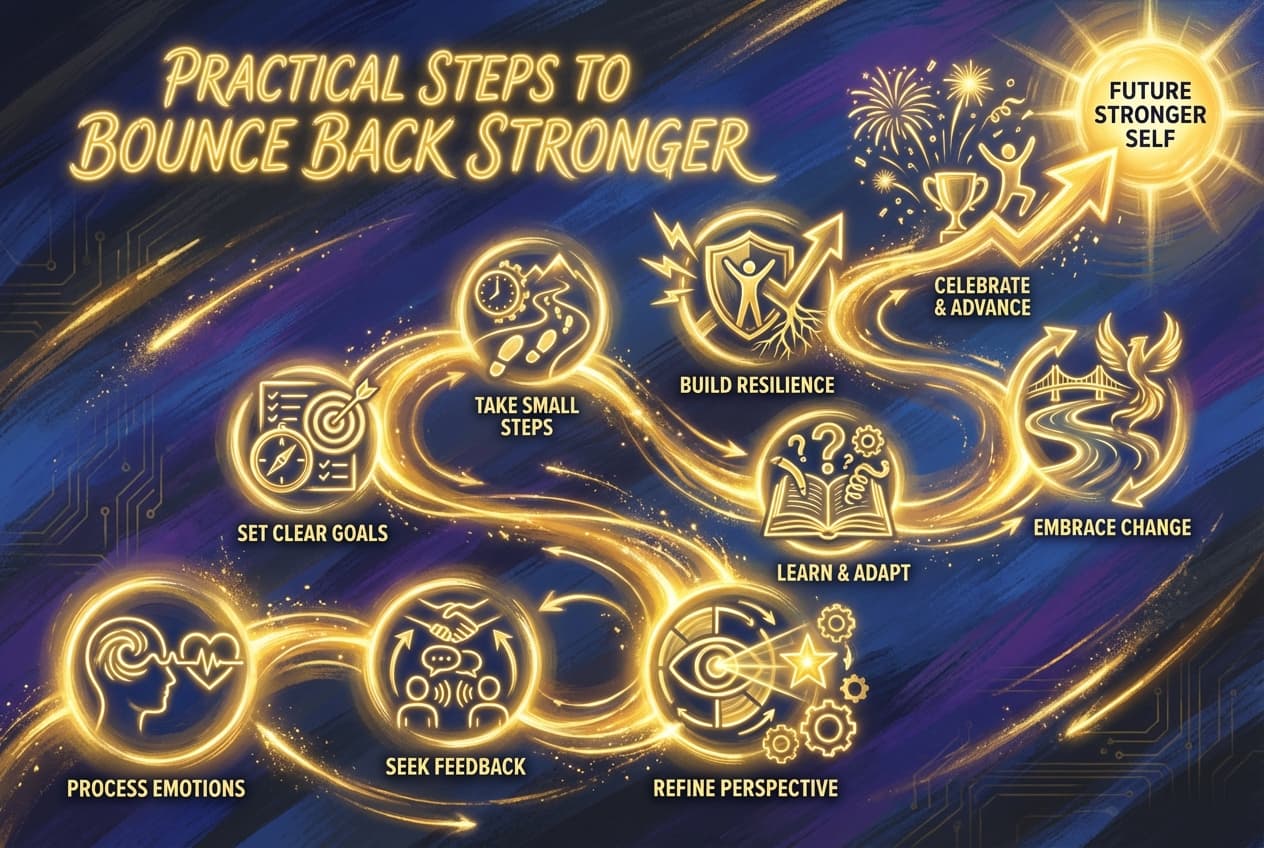
- Process the emotions healthily.
- Depersonalize the rejection – it's rarely about you.
- Politely seek feedback to gain insights.
- Reflect on your application and interview performance.
- Refine your resume, cover letter, and interview skills.
- Network actively and strategically.
- Set small, achievable goals to maintain
job search motivation. - Practice self-care to avoid burnout and
stay positive job search. - Cultivate a resilient mindset to
overcome job rejection.
Conclusion
Job rejection is an inevitable, albeit unpleasant, part of the job search process. However, by adopting a professional and proactive approach, you can transform these career setbacks into powerful opportunities for growth. Learning to handle job rejection effectively, seeking rejection feedback, and building job search resilience will not only help you bounce back stronger but also equip you with invaluable skills for your entire career. Remember, your dream job is out there, and every experience, even rejection, is a step closer to finding it.
Frequently Asked Questions
Quick answers to common questions
Acknowledge your emotions, but don't personalize the rejection. Take a short break from your job search, talk to a trusted friend, and practice self-compassion. Remember, it's a common part of the career journey and an opportunity to refine your approach for future applications on any job board, like the Indeed job site.
Yes, politely seeking feedback can be invaluable for your professional development. Wait a few days, then send a concise, professional email thanking them and asking for constructive insights. Be prepared that not all companies provide feedback, but it's a key step to improve your interview skills and application strategy for your next job opportunity on an Indeed job search site.
To stay positive, set small, achievable goals like applying to a few roles daily or updating your resume. Celebrate minor wins, take regular breaks to avoid burnout, and surround yourself with a supportive network. Platforms like the Indeed job board can help streamline your job finding process, keeping momentum going during your Indeed career search.
Rejection often isn't personal. Common reasons include internal candidates, budget changes, company restructuring, another candidate being a perfect fit, or cultural fit considerations. Understanding these helps depersonalize the experience and maintain a positive outlook on your job search journey, whether you're using an Indeed job search engine or other methods.
Use rejection as a chance to grow. Tailor your resume and cover letter for each specific role, practice interview skills with mock interviews, and network strategically. If you're looking for new opportunities, a robust platform like the Indeed job site can help you find relevant listings and apply effectively for your next job indeed near me.
To bounce back, explore reputable job boards. A popular choice is the Indeed job site, which functions as a robust Indeed job search engine. You can search for "Indeed jobs near me" or use the Indeed job portal to find a wide array of roles, helping you quickly get back into your job hunting and work search.
Cultivate a mindset that views setbacks as learning opportunities, not failures. Focus on what you can control, develop a strong support system, and practice gratitude. Each rejection on your career search journey, even when using an Indeed job search site, brings you closer to the right opportunity, building your job search resilience.
Absolutely, it's completely normal to feel frustrated, sad, or self-doubt after a job rejection. Give yourself permission to process these feelings. Suppressing them isn't healthy. Acknowledge the disappointment, then refocus on your next steps, perhaps on the Indeed job board, to find a better fit and continue your job search.
Was this article helpful?
Table of Contents
Acknowledge and Process the Emotion
Don't Take It Personally: Understanding the "Why"
Seek Feedback (Professionally)
Reflect and Learn: Turning Feedback into Growth
Re-evaluate Your Approach: Refining Your Job Hunting Tips
Maintain Job Search Motivation
Build Job Search Resilience
Setbacks as Stepping Stones
Practical Steps to Bounce Back Stronger
Conclusion
1How can I cope with job rejection effectively?
2Should I ask for feedback after being rejected for a job?
3How can I maintain job search motivation after multiple rejections?
4What are common reasons for job rejection that aren't personal?
5How can I refine my job search approach after a rejection?
6Where is the best place to find new job opportunities after a rejection?
7How do I build resilience to overcome job search setbacks?
8Is it normal to feel upset or discouraged after a job rejection?
Share this article
Other articles

10 Best Job Trackers to Organize Your Search in 2026
Streamline your job hunt with the top Chrome extensions and platforms designed to track applications effortlessly.

10 Best Chrome Extensions for Job Seekers to Autofill Applications
Save hours every week by automating repetitive form filling and tracking your applications effortlessly.

10 Best AI Resume Builders in 2026: Ranked and Reviewed
Navigate the future of job hunting with our definitive guide to the top-rated AI resume creation tools available this year.