How to Skyrocket Your Career: 5 Secrets Nobody Tells You
Uncover the hidden strategies to accelerate your professional growth and unlock rapid promotions in any industry, even if you feel stuck.
1 month ago - Updated 1 day ago

Feeling like your career has hit a plateau? You're not alone. Many professionals find themselves in a rut, wondering how to break free and achieve the career growth they envision. In today's dynamic job market, merely doing your job well isn't always enough to secure rapid promotions and unlock unparalleled job success. A 2022 survey by the U.S. Bureau of Labor Statistics indicated that stagnant wages can lead to increased turnover, especially among younger generations. Furthermore, a Pew Research survey revealed that 63% of people who left jobs in 2021 cited a lack of advancement opportunities as a key reason. To truly stand out and navigate these challenges, leveraging comprehensive tools for professional presentation and application management is becoming essential, with platforms like CareerBoom.ai offering AI-generated headshots and automated application support to ensure you always put your best foot forward.
It's time to stop waiting for opportunities to come to you and start proactively shaping your professional development. This article will unveil five unconventional career secrets that top performers leverage to accelerate their career path, secure promotions, and truly stand out from the crowd. These aren't your typical career tips; these are game-changing insights designed to help you get ahead, even if you feel stuck.
Secret 1: Master Strategic Networking – Beyond the Business Card Swap
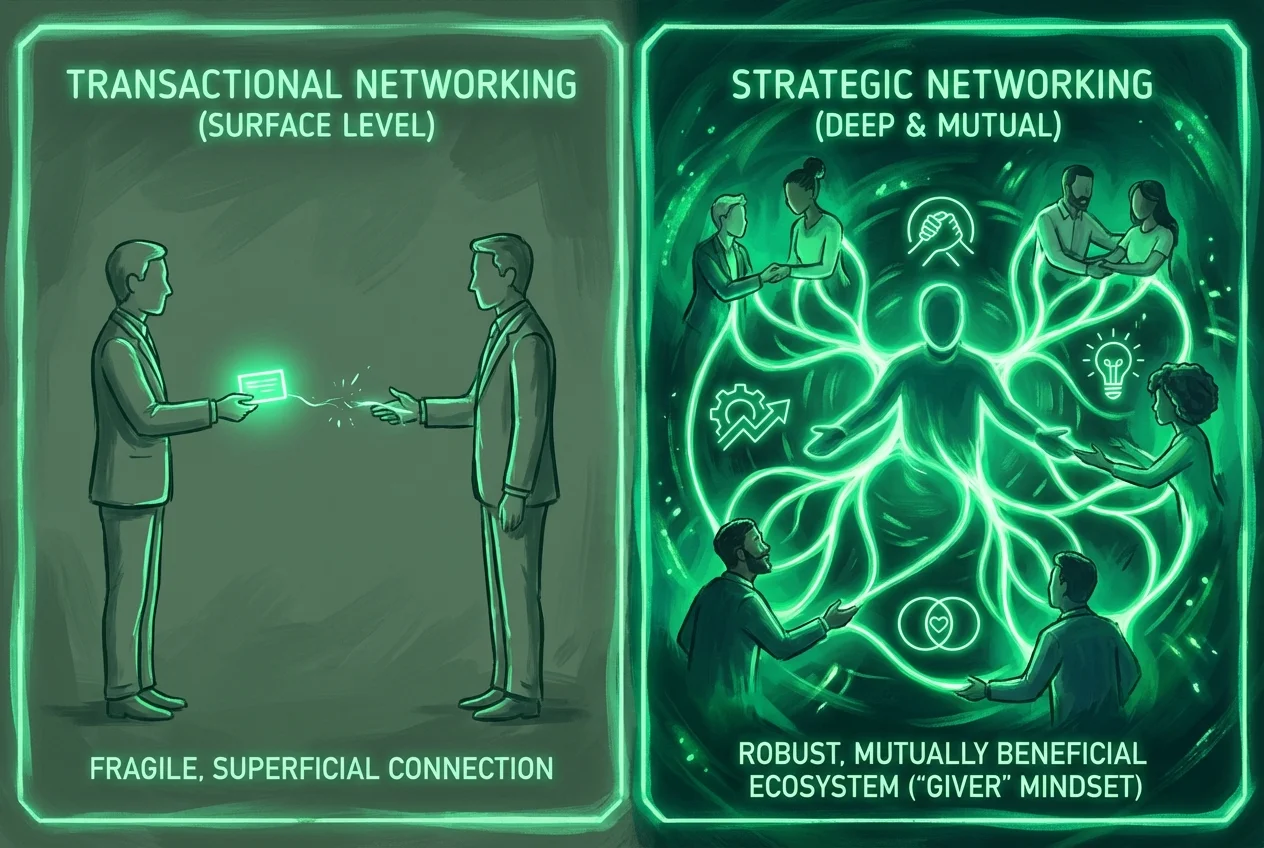
Networking is often misunderstood as simply collecting contact information. True strategic networking, however, is about building genuine, mutually beneficial relationships that can significantly impact your career advancement. It's about cultivating a strong network of advocates who can support you in reaching your goals.
According to a LinkedIn survey, a staggering 85% of all jobs are filled through networking, underscoring its critical role in career success. Professionals who prioritize networking are also 10 times more likely to land leadership positions within their organizations, and research suggests they are more likely to receive promotions and salary increases.
Why Traditional Networking Falls Short
Many people approach networking with a "what can I get?" mindset, which quickly leads to transactional and ultimately unfulfilling connections. This often results in a superficial network that doesn't provide real support or open doors for career acceleration.
The Power of Strategic Networking
Strategic networking involves identifying, building, and maintaining professional relationships that offer opportunities for professional growth, knowledge sharing, and access to new opportunities. It requires intentional effort and a proactive mindset.
How to Implement Strategic Networking:
- Identify Your "Why": Before you reach out, understand what you genuinely seek (mentorship, industry insights, collaboration, etc.) and what value you can offer in return.
- Quality Over Quantity: Focus on building deeper relationships with a smaller, more relevant group of people rather than amassing a huge, shallow contact list.
- Be a Giver, Not Just a Taker: Offer help, share valuable information, and connect others in your network. Reciprocity is key to strong relationships.
- Seek Out Mentors and Sponsors: A mentor can provide guidance and advice, while a sponsor actively champions your career behind closed doors.
- Leverage Online Platforms Strategically: LinkedIn is a powerful tool, but move beyond simply connecting. Engage with content, share insights, and initiate meaningful conversations.
- Attend Industry Events with Purpose: Don't just show up. Research attendees, set specific goals for who you want to meet, and follow up thoughtfully.
| Networking Activity | Traditional Approach | Strategic Approach |
|---|---|---|
| Connecting on LinkedIn | Send generic connection requests. | Personalize requests, engage with their content, offer relevant insights. |
| Attending Events | Collect as many business cards as possible. | Identify 2-3 key people to meet, focus on meaningful conversations, plan follow-up. |
| Follow-up | Send a boilerplate "nice to meet you" email. | Reference specific conversation points, offer value, suggest a next interaction. |
| Relationship Building | Only reach out when you need something. | Regularly check in, share relevant articles, offer support without expectation. |
By shifting your approach to networking, you can build a robust support system that provides invaluable insights, opens doors to hidden opportunities, and significantly boosts your career growth.
Secret 2: Proactive Skill Stacking & Future-Proofing Your Expertise
The world of work is evolving at an unprecedented pace. The World Economic Forum predicts that 44% of the core skills needed for work will change in the next five years. To ensure continuous career growth and job success, you can't rely solely on your current skill set. You need to be proactive in identifying and acquiring the skills of tomorrow.
The Risk of Skill Stagnation
Many professionals make the mistake of assuming their current expertise will carry them indefinitely. However, industries are changing fast, and failing to keep up can lead to career stagnation. The Bureau of Labor Statistics projects that the tech workforce, for example, will grow twice as fast as the overall U.S. workforce in the next ten years, highlighting the need for continuous learning in many fields.
Strategic Skill Acquisition for Career Acceleration
Proactive skill stacking involves strategically identifying high-demand skills and systematically acquiring them to enhance your marketability and prepare for future roles. This is about professional development that directly translates to career advancement. Once you've honed these skills, platforms like CareerBoom.ai can be invaluable, offering AI-powered resume and cover letter builders that align your new expertise with specific job descriptions, alongside smart job matching and application tracking to streamline your search for advanced roles.
How to Future-Proof Your Career:
- Conduct a Skill Gap Analysis: Identify the skills required for your desired future roles or the direction your industry is heading. Compare these with your current capabilities.
- Prioritize In-Demand Skills: Focus on skills that are broadly applicable and highly valued. These often include both technical and workplace strengths.
- Technical Skills: Generative AI, data analysis, cybersecurity, project management, software development, cloud computing, digital marketing, and machine learning are frequently cited as high-demand skills.
- Workplace Skills: Analytical thinking, active learning, complex problem-solving, communication, cognitive flexibility, creativity, critical thinking, digital literacy, emotional intelligence, initiative, innovation, interpersonal skills, leadership, reasoning, self-management, technology design, and technology monitoring are crucial for future success.
- Embrace Continuous Learning: Professional development is an ongoing journey. Seek out online courses, certifications, workshops, and seminars. Platforms like Coursera, LinkedIn Learning, and Udemy offer flexible, high-quality options.
- Seek New Opportunities Within Your Role: Talk to your manager about getting involved in projects outside your usual responsibilities or volunteering for assignments that challenge you. This is a practical way to gain new skills and experience.
- Master Your Craft and Beyond: While mastering your current role is important, also research your industry, stay current on publications, and join professional groups to learn even more about your field.
| Skill Category | Examples of High-Demand Skills |
|---|---|
| Technical | Generative AI, data analysis, cybersecurity, cloud computing, machine learning |
| Workplace/Soft Skills | Analytical thinking, emotional intelligence, leadership, creativity, complex problem-solving |
| Digital Literacy | Digital marketing, software development, technology design, technology monitoring |
The key is to be intentional and strategic: don't just learn whatever is trending — learn what aligns with your career goals and the direction your industry is heading.
Secret 3: Cultivate a Personal Brand That Commands Attention
In today's competitive landscape, your skills and experience alone are no longer sufficient differentiators. What sets top performers apart is a powerful, authentic personal brand — a clear and consistent narrative about who you are, what you stand for, and the unique value you bring to the table.
Why Personal Branding Matters
Your personal brand is working for you even when you're not in the room. It shapes how colleagues, managers, and industry peers perceive you. A strong personal brand can open doors to speaking engagements, leadership opportunities, and career pivots that would otherwise remain out of reach. Professionals with a well-defined personal brand are seen as thought leaders — and thought leaders get promoted, recruited, and celebrated.
How to Build a Compelling Personal Brand
- Define Your Unique Value Proposition: What combination of skills, experience, and perspective do you bring that no one else does? Articulate this clearly and use it as the foundation of your brand.
- Optimize Your Online Presence: Audit your LinkedIn profile, personal website, and any public-facing profiles. Ensure they reflect a cohesive, professional story. A polished, AI-generated professional headshot from a platform like CareerBoom.ai can make a significant first impression.
- Create and Share Valuable Content: Write articles, post insights, or share commentary in your area of expertise. Consistent, valuable content positions you as a go-to resource in your field.
- Speak Up in Meetings and at Events: Visibility is a critical component of personal branding. Make your ideas heard, contribute thoughtfully, and don't shy away from opportunities to present or lead discussions.
- Be Consistent Across All Channels: Your brand narrative should be the same whether someone encounters you on LinkedIn, at a conference, or through a mutual contact's referral.
Building a personal brand takes time, but the payoff is enormous. When decision-makers already know your name and what you stand for, you shift from being a candidate to being the obvious choice.
Secret 4: Become Indispensable by Solving the Right Problems
One of the most overlooked career acceleration strategies is learning how to identify and solve the problems that matter most to your organization. High performers don't just complete their tasks — they actively look for ways to create value that goes beyond their job description.
The Difference Between Busy and Valuable
Many professionals confuse being busy with being valuable. They fill their days with tasks and meetings, but rarely pause to ask: "Is what I'm doing actually moving the needle for my team or company?" This distinction is critical. The employees who get promoted aren't always the hardest workers — they're the ones who work on the right things.
How to Become the Go-To Problem Solver
- Understand Your Organization's Priorities: Study your company's strategic goals, key performance indicators, and the challenges your leadership team is focused on. Align your efforts with these priorities.
- Identify Gaps and Inefficiencies: Look for recurring friction points within your team or department. Proposing and implementing solutions to these issues demonstrates initiative and business acumen.
- Develop Cross-Functional Awareness: The more you understand how different parts of your organization work together, the better positioned you are to identify high-impact opportunities that others miss.
- Quantify Your Impact: Get in the habit of measuring and communicating the results of your work in concrete terms — time saved, revenue generated, costs reduced. Numbers speak louder than effort.
- Volunteer for High-Visibility Projects: Strategically seek out projects that are important to senior leadership. These opportunities put you in front of decision-makers and demonstrate your capabilities at scale.
When you consistently solve the right problems with measurable results, you naturally become someone your organization cannot afford to lose — and that's exactly the position from which promotions and raises are negotiated.
Secret 5: Master the Art of Advocating for Yourself
You could be the most talented, hardworking person in your organization, but if you don't advocate for yourself, your contributions may go unnoticed. Self-advocacy is not arrogance — it's the strategic communication of your value, your goals, and your needs in the workplace.
Why Self-Advocacy Is a Career Superpower
Research consistently shows that people who negotiate their salaries, ask for promotions, and clearly communicate their career goals earn significantly more over the course of their careers than those who wait to be recognized. Yet, many professionals — particularly those early in their careers or from underrepresented groups — hesitate to advocate for themselves out of fear of seeming pushy or presumptuous.
How to Advocate for Yourself Effectively
- Track Your Accomplishments Consistently: Keep a running record of your wins, contributions, and impact. This becomes invaluable ammunition during performance reviews and salary negotiations.
- Have Regular Career Conversations With Your Manager: Don't wait for annual reviews to discuss your goals and trajectory. Proactively schedule one-on-ones to talk about your development, the skills you're building, and the opportunities you're seeking.
- Ask for What You Want — Directly: Whether it's a promotion, a raise, a new project, or a flexible work arrangement, ask for it explicitly. Vague hints rarely get results.
- Prepare for Negotiations: Do your research before salary or promotion discussions. Know your market value, understand internal pay bands where possible, and come with data to support your ask.
- Build Allies Who Will Advocate for You: The relationships you've cultivated through strategic networking (Secret 1) can become powerful advocates. A sponsor who speaks your name in key meetings is worth more than almost any other career asset.
- Leverage Tools to Present Your Best Self: When applying for new roles internally or externally, use platforms like CareerBoom.ai to ensure your resume and cover letter clearly communicate your value proposition and are tailored to the specific opportunity.
Self-advocacy is a skill, and like any skill, it improves with practice. The discomfort of asking for what you deserve is temporary — the rewards are lasting.
Conclusion: Your Career Breakthrough Starts Now
Skyrocketing your career is not about luck or simply working harder. It's about working smarter — with strategy, intention, and the right tools. By mastering strategic networking, future-proofing your skills, cultivating a powerful personal brand, solving high-value problems, and advocating for yourself, you position yourself to achieve the career growth you've been working toward.
The professionals who rise fastest aren't necessarily the most talented — they're the most intentional. Start applying these five secrets today, and take full advantage of modern tools like CareerBoom.ai to streamline your job search, sharpen your professional presentation, and accelerate your path to the career you deserve.
The next chapter of your career starts with one decision: to stop waiting and start acting.
Frequently Asked Questions
Quick answers to common questions
1
Why do many professionals experience career stagnation?
Many professionals face career stagnation due to a lack of advancement opportunities, stagnant wages, and failing to adapt to the dynamic job market. Relying solely on current skills and not proactively seeking growth can lead to being left behind, as highlighted by increased turnover and a lack of advancement opportunities cited in recent surveys.
2
What is strategic networking and how does it differ from traditional networking?
Strategic networking focuses on building genuine, mutually beneficial relationships that provide support and open doors for career advancement. Unlike traditional networking, which often involves superficial business card swaps, it prioritizes quality connections, offering value, and seeking mentors or sponsors for long-term career impact.
3
How can I effectively build a strong professional network?
To build a strong network:
- Identify your "why" and the value you can offer.
- Focus on quality over quantity in your connections.
- Be a giver, not just a taker, offering help and insights.
- Seek out mentors and sponsors.
- Leverage platforms like LinkedIn strategically by engaging meaningfully with content and initiating conversations.
4
Why is proactive skill development essential for career acceleration?
Proactive skill development is crucial because the world of work is rapidly evolving, with 44% of core skills expected to change in five years. Continuously acquiring new, in-demand skills future-proofs your expertise, enhances marketability, and prevents career stagnation, ensuring continuous professional development.
5
What types of skills are currently in high demand for career advancement?
High-demand skills include:
- Technical Skills: Generative AI, data analysis, cybersecurity, project management, cloud computing, and digital marketing.
- Workplace Skills: Analytical thinking, complex problem-solving, communication, creativity, critical thinking, leadership, and emotional intelligence. Focusing on these ensures you stay relevant in a changing job market.
6
How can I identify the right skills to acquire for my career path?
Start by conducting a skill gap analysis to compare your current capabilities with those required for your desired future roles or industry direction. Prioritize broadly applicable, in-demand skills and embrace continuous learning through online courses, certifications, workshops, or by seeking new opportunities within your current role.
7
What is the role of mentors and sponsors in career growth?
Mentors provide invaluable guidance and advice, sharing their experience to help you navigate your career path. Sponsors, on the other hand, actively champion your career, advocating for you behind closed doors, and opening doors to new opportunities and promotions that can significantly accelerate your career growth.
Was this article helpful?
Table of Contents
Secret 1: Master Strategic Networking – Beyond the Business Card Swap
Secret 2: Proactive Skill Stacking & Future-Proofing Your Expertise
Secret 3: Cultivate a Personal Brand That Commands Attention
Secret 4: Become Indispensable by Solving the Right Problems
Secret 5: Master the Art of Advocating for Yourself
Conclusion: Your Career Breakthrough Starts Now
1Why do many professionals experience career stagnation?
2What is strategic networking and how does it differ from traditional networking?
3How can I effectively build a strong professional network?
4Why is proactive skill development essential for career acceleration?
5What types of skills are currently in high demand for career advancement?
6How can I identify the right skills to acquire for my career path?
7What is the role of mentors and sponsors in career growth?
Share this article
Other articles

Top 10 Job Search Platforms in China for 2026: The Ultimate Guide
Navigate the complex Chinese job market with our curated list of the most effective recruitment tools for the coming year.

Top 10 Job Platforms in France for 2026: Your Ultimate Guide
Navigate the evolving French job market with the most effective digital recruitment tools and platforms of the future.

10 Best Job Search Platforms in Romania for 2026: The Ultimate Guide
Navigate the Romanian job market with our curated list of the most effective hiring platforms for the year 2026.