Rage Applying: Why This Viral Trend Might ACTUALLY Land You Your Dream Job!
Explore the surprising benefits of 'rage applying' and how strategically embracing this unconventional job search method can lead to unexpected career wins.
3 months ago - Updated 3 days ago

The modern job market can feel like a relentless labyrinth, a place where professional aspirations often collide with frustrating realities. From unfulfilling roles to stagnant growth and a pervasive sense of being undervalued, it's no wonder that a new, fiery trend has captured the attention of millions: "rage applying." This viral phenomenon, fueled by frustration and a desire for change, isn't just a meme circulating on social media; it's an unconventional job hunt strategy that, when approached strategically, might actually be your secret weapon to land that dream job.
Forget quiet quitting; rage applying is its more assertive sibling, a direct response to workplace dissatisfaction that has taken the job search trends landscape by storm, especially among younger generations. But can impulsively blasting out dozens of applications truly lead to career wins? Let's dive deep into this viral job strategy and uncover its surprising benefits and how you can harness its power for your own success.
What Exactly is "Rage Applying"?

At its core, rage applying describes the act of impulsively applying to a multitude of job openings, often in a short period, as a direct emotional response to dissatisfaction, burnout, or feeling undervalued in one's current role. It's a spontaneous flurry of job applications, driven by a powerful cocktail of negative emotions – anger, frustration, annoyance, boredom, or a desperate desire to escape an unpalatable work situation.
The term gained significant traction, particularly among Gen Z and Millennials, through platforms like TikTok in late 2022. One viral video, for instance, featured a user claiming a $25,000 pay bump after rage applying to 15 jobs when fed up at work. This resonated deeply with a generation that prioritizes work-life balance, flexibility, and meaningful work, and is less likely to tolerate toxic workplace cultures or feel stuck in unfulfilling positions, often leading them to pursue a fearless career change.
Common triggers for rage applying include:
- Feeling underappreciated or undervalued.
- Being underpaid or experiencing stagnant wages.
- Burnout from heavy workloads or lack of work-life balance.
- Lack of growth opportunities or career stagnation.
- Toxic workplace environments, micromanagement, or unfair treatment.
- Experiencing a particularly bad day, week, or year at work.
- Unresolved emotional concerns or conflicts that lead to feeling psychologically unsafe.
Essentially, it's a fight-or-flight response to chronic workplace dissatisfaction, a proactive (albeit often emotionally charged) attempt to reclaim control over one's career trajectory. Instead of silently enduring, individuals are using their frustration as fuel to seek out better opportunities, better compensation, and a more respectful work environment.
The Psychological Underpinnings of Rage Applying
While the term implies an uncontrolled outburst, the psychology behind rage applying is more nuanced. It taps into fundamental human responses to stress and dissatisfaction, transforming potentially destructive emotions into a catalyst for action.
Frustration as a Catalyst
Frustration, often seen as a negative emotion, can be a powerful motivator. When employees feel consistently frustrated by their job – whether due to micromanagement, lack of recognition, or seeing managers take credit for their work – these feelings can build over time. This accumulated frustration eventually reaches a tipping point, pushing individuals to seek immediate change rather than enduring the status quo. Research on workplace stress and employee motivation often highlights how such emotional surges provide the impetus to overcome inertia. Job searching, particularly a strategic one, can be a daunting and time-consuming process. The emotional energy generated by rage applying can cut through that hesitation, propelling individuals into action. It's the "I've had enough!" moment that sparks the initial flurry of applications.
Reclaiming Agency
One of the most significant psychological benefits of rage applying is the sense of empowerment and control it offers. When employees feel trapped or powerless in a dissatisfying job, taking aggressive action like mass applying for new roles can be incredibly liberating. It reminds them that they have options and are not bound to their current situation.
This act of applying, even impulsively, creates a perception of actively working towards a solution. It's a way to soothe boiling blood and let off steam, providing a temporary sense of accomplishment and agency in the face of workplace stressors. This feeling of control can be a crucial antidote to the helplessness often associated with toxic work environments or stagnant careers.
Overcoming Job Search Burnout
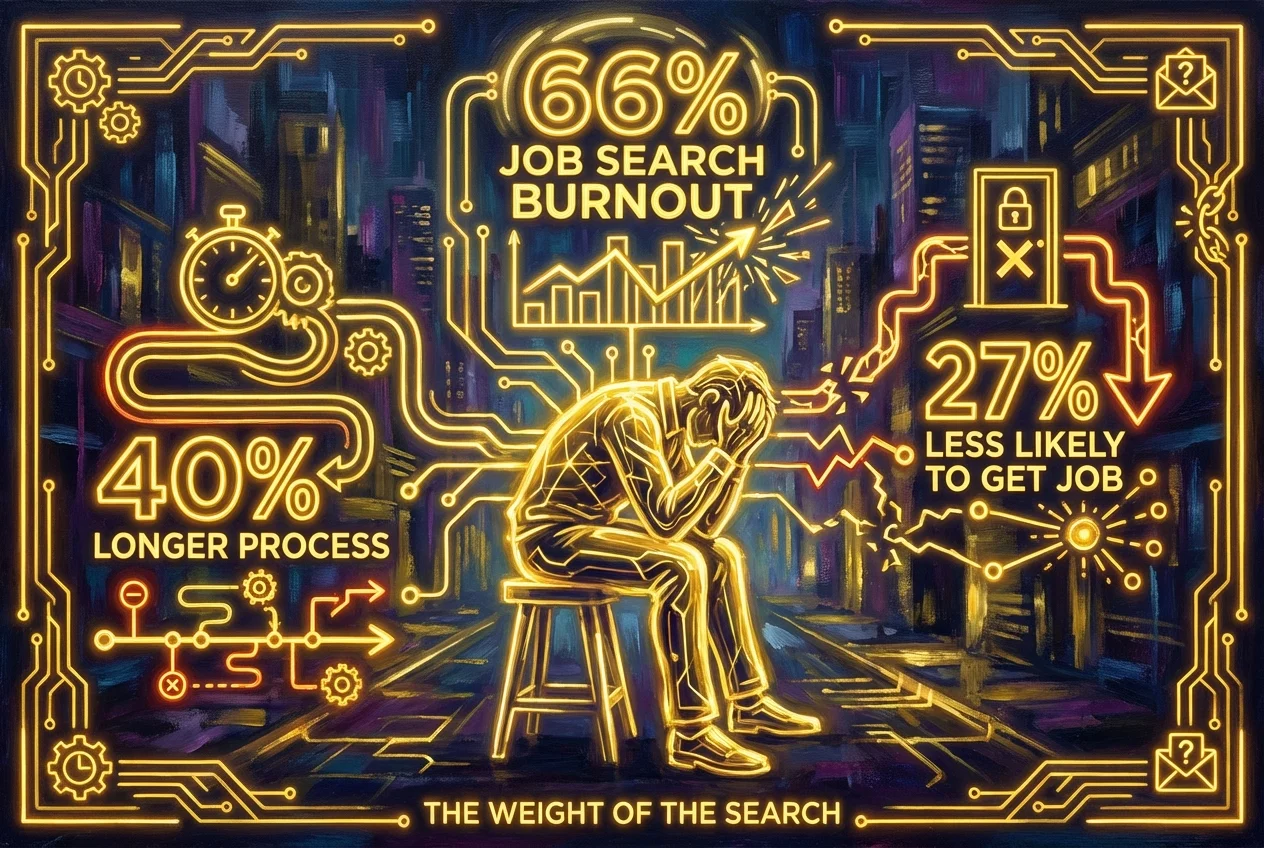
Ironically, while excessive rage applying can lead to burnout, the initial burst of activity can help counteract existing job search burnout, particularly for those who have been passively looking or feeling discouraged. Job searching is notoriously draining; about two-thirds (66%) of job seekers report experiencing burnout from their search, and this can significantly hinder their effectiveness. Burnout decreases the likelihood of securing a desired job by 27% and can make the process 40% longer.
The impulsive nature of rage applying can bypass the meticulous, often exhausting, aspects of traditional job searching. It provides a quick way to feel productive, generating momentum that can be difficult to achieve when feeling mentally and emotionally exhausted from a prolonged search. For many, it's a way to keep "multiple pots on the fire" and maintain a sense of forward motion, preventing self-doubt from paralyzing their efforts.
Beyond the Meme: Why Rage Applying is More Than Just a Trend

While rage applying might sound like a chaotic, unstrategic approach, it possesses several inherent advantages that can turn an emotional outburst into a highly effective unconventional job hunt. When viewed through a pragmatic lens, this viral job strategy offers more than just temporary catharsis.
Increased Application Volume
The most obvious benefit of rage applying is the sheer volume of applications it generates. In a competitive job market, this "numbers game" can be surprisingly effective. Consider these statistics:
- The average corporate job advert receives around 250 resumes, with only about 5 candidates selected for an interview – a mere 2% success rate.
- Only about 5 applicants out of hundreds actually earn a face-to-face interview.
- While 14.3% of job seekers submit over 100 applications before getting an offer, the largest group (20.8%) receives an offer after applying for just 10 to 20 jobs.
By rapidly submitting numerous applications, rage applying significantly increases your chances of getting noticed and securing interviews. It casts a wide net, potentially catching opportunities that a more conservative, targeted approach might miss. For those feeling desperate to leave their current job, this wide net can cover all bases, even leading to consideration for positions that weren't initially a perfect fit but could still offer a better career path.
Broadening Horizons (Companies & Roles)
When applying out of frustration, job seekers might be less constrained by preconceived notions of their "ideal" role or company. This openness can lead to exploring industries or positions they hadn't considered before, inadvertently uncovering hidden gems, even if it means a career change at 30, 40, or 50. A software engineer might apply for a digital marketing role, or a senior executive for an entry-level position, driven by the desperation to escape their current situation. While this can lead to unqualified applications, a more refined version of rage applying can encourage exploration.
This broadened perspective is a powerful advantage. Many jobs are never publicly advertised – up to 70% by some estimates. By applying widely, even to roles that seem "out of your league" or slightly outside your comfort zone, you increase exposure to this hidden job market. You might stumble upon a role or company that perfectly aligns with your values and offers the growth you desire, even if it wasn't on your initial radar.
Developing Resilience
The job search is inherently a process of facing rejection. For every interview, there are many more applications that go unanswered. Rage applying, by its very nature, prepares individuals for this reality. When you apply to dozens of jobs, you implicitly accept that many will not respond, or will send rejections. This high volume of applications can desensitize you to the inevitable rejections, building resilience that is crucial for any job seeker.
Each application, regardless of the outcome, is a small act of self-advocacy. Even if the immediate result is not an interview, the process of putting yourself out there strengthens your resolve and reduces the sting of individual setbacks. This resilience is vital in a job market where job search burnout is rampant, affecting two-thirds of job seekers.
Sharpening Your Interview Skills
More applications mean more potential interviews. Even if many of these initial interviews are for roles that aren't a perfect fit, they provide invaluable practice. Interviewing is a skill that improves with repetition. Each conversation helps you:
- Refine your elevator pitch.
- Articulate your experiences and achievements more clearly.
- Practice answering common and challenging questions.
- Become more comfortable under pressure.
- Identify areas for improvement in your communication and presentation.
This exposure to various interview styles and company cultures can significantly boost your confidence and performance when a truly desirable opportunity arises. The more you interview, the more polished and self-assured you become, increasing your chances of making a strong impression when it matters most, and you'll also learn the importance of asking 20 Killer Questions to Ask at the End of an Interview.
The "Dream Job" Paradox: How Unconventional Approaches Can Lead to Unexpected Opportunities

The ultimate goal for many job seekers is to land their "dream job." While rage applying might start from a place of anger, its unconventional nature can paradoxically lead to exactly that. The path to a dream job isn't always linear, and sometimes, it's the detours and unexpected turns that lead to the most fulfilling destinations.
Discovering Hidden Gems
When you're applying widely, you're not just hitting established targets; you're exploring the periphery. This expansive approach can lead you to companies, roles, or even entire industries you might have otherwise overlooked. A "dream job" isn't always with a household name; often, it's a smaller company with an exceptional culture, a unique mission, or a groundbreaking project that truly aligns with your passions and values. By casting a wide net, rage applying increases the probability of encountering these hidden gems.
Moreover, it can help you uncover opportunities in the "hidden job market" – positions that are never publicly advertised because companies fill them internally or through referrals. By interacting with more companies and recruiters, even through mass applications, you increase your visibility and the chances of being considered for these unadvertised roles.
Negotiation Power
Receiving multiple job offers, even if some aren't your top choice, significantly enhances your negotiation power. If you have several options on the table, you're in a much stronger position to negotiate salary, benefits, and other perks for the role you do want. This is where rage applying can truly pay off, potentially leading to a substantial pay increase or better working conditions.
One of the key motivators for rage applying is often stagnant wages or feeling underpaid. By generating multiple offers, you create a competitive environment for your skills and experience, forcing potential employers to meet your demands or risk losing you. This leverage can transform your career trajectory and significantly improve your financial well-being.
Defining Your "Dream" (Re-evaluation)
Sometimes, the concept of a "dream job" is an idealized notion, not fully grounded in reality. Rage applying can force a re-evaluation of what truly constitutes your ideal role. Through a higher volume of interviews and interactions, you gain exposure to diverse company cultures, management styles, and job responsibilities. This exposure can help you:
- Clarify your priorities (e.g., work-life balance over a prestigious title).
- Identify deal-breakers you hadn't considered (e.g., a specific type of corporate structure).
- Discover new interests or career paths you didn't know existed.
- Understand the market value of your skills more accurately.
This process of elimination and discovery, while seemingly chaotic, can lead to a more realistic and ultimately more fulfilling definition of your "dream job." You might realize that your dream isn't a specific role at a specific company, but rather a combination of factors – a supportive team, challenging work, fair compensation, and opportunities for growth – that could be found in many different places.
Strategic Rage Applying: Turning Impulse into Opportunity
While the initial impulse of rage applying is emotional, the key to its success lies in transforming that raw energy into a more strategic and purposeful unconventional job hunt. It's about channeling the "rage" into focused action, rather than a scattergun approach that leads to more frustration.
Here are practical steps to turn rage applying into a potent viral job strategy:
1. Reflect Before Acting
Before you start furiously clicking "apply," take a moment to understand the root cause of your frustration. Is it the company culture, a specific manager, lack of growth, compensation, or work-life balance?
- Identify specific pain points: Pinpointing what's making you unhappy will help you target jobs that address these issues, preventing you from jumping from one bad situation to another.
- Define your non-negotiables: What absolutely must a new job offer (e.g., remote work, a certain salary range, specific growth opportunities)? What are your deal-breakers?
This self-reflection is crucial for ensuring that your efforts are directed towards finding a better situation, not just any situation.
2. Tailor (Even When Raging)
One of the main pitfalls of pure rage applying is sending out generic resumes and cover letters. While the volume is high, the quality might be low, leading to a lower chance of success. It's also worth considering, do you really need a cover letter for every application?
- Leverage AI tools: Use AI to quickly customize your resume and cover letter for each role. Platforms like CareerBoom.ai offer AI-powered builders that align your documents with job descriptions, helping identify keywords and suggest ways to integrate them into your application materials.
- Create templates: Develop a few core resume and cover letter templates for different types of roles you're interested in. Then, make minor, targeted adjustments for each application, focusing on keywords and specific requirements. This is key to learning how to write a cover letter that actually gets read.
- Focus on quality over quantity: While
rage applyingimplies volume, strategicrage applyingmeans applying to more relevant jobs, not just any jobs. Tailored resumes double interview success rates (5.95% vs. 2.9%).
"When you apply to countless jobs out of frustration, you're not fully considering why you want each job or how your skills align, and you're probably not tailoring your resumé effectively either. To get better results, avoid bad resume examples and use more intentional approaches to showcase your unique skills and qualifications for a role — think quality over quantity." Recruiters can often spot generic applications. To truly stand out, focus on crafting cover letter opening lines that hook recruiters.
3. Broaden Your Search, But With Intent
Don't limit yourself to obvious job boards. Expand your search to include:
- Company websites directly: Many jobs are posted here first, or exclusively.
- LinkedIn: 77% of recruiters rely on LinkedIn. Optimize your profile to showcase your personal brand and skills.
- Niche job boards and professional organizations: These often list opportunities not found elsewhere and can be more aligned with your industry. For those seeking flexibility, consider exploring the best remote jobs websites.
- Networking: While
rage applyingis individualistic, remember that 60% of jobs are found through networking, not online applications. Even a quick message to a connection about an opening can make a difference.
The goal is to increase your exposure to a wider range of opportunities, including those in the "hidden job market" (up to 70% of jobs are never publicly advertised).
4. Track and Organize Your Applications
When applying to many jobs, organization is paramount.
- Use a spreadsheet or job tracker: Keep a record of every job you apply for, including the company name, role, date applied, platform used, and any follow-up actions. For a more streamlined approach, platforms like CareerBoom.ai offer a centralized application tracking dashboard and even automated application support for relevant roles, ensuring you stay organized and efficient.
- Save job descriptions: These are often removed once the position is filled, and you'll need them to prepare for interviews.
- Manage your documents: Keep different versions of your resume and cover letters organized, so you can quickly retrieve the tailored version for each application.
This systematic approach prevents confusion, ensures you follow up appropriately, and helps you learn from your application patterns.
5. Prepare for the "Unexpected" Interview
Since rage applying can lead to interviews for roles you didn't meticulously research, be prepared to quickly pivot.
- Quick company research: Before any interview, do a rapid dive into the company's mission, recent news, and the interviewer's background.
- Generic interview prep: Have a few key stories and examples ready that highlight your transferable skills and accomplishments, adaptable to various roles.
- Be honest about your motivations (carefully): If asked why you applied, you don't need to say "I was angry." Instead, frame it positively: "I'm looking for a role that offers more growth," or "I'm seeking a company culture that aligns with my values of X and Y."
6. Prioritize Your Well-being
An intense job hunt, especially one fueled by frustration, can be mentally and emotionally exhausting.
- Set limits: Decide on a specific number of applications per day or week to prevent burnout.
- Take breaks: Step away from the computer, engage in hobbies, or spend time with loved ones.
- Practice self-care: Ensure you're eating well, exercising, and getting enough sleep. Job search burnout can negatively impact mental health for 72% of job seekers, making self-care non-negotiable.
- Seek support: Talk to friends, family, or a career coach about your frustrations.
Strategic rage applying is about harnessing your anger as a temporary burst of energy, then channeling it into a more deliberate, organized, and self-aware job search. It's about turning a reactive impulse into a proactive strategy for career advancement.
Potential Pitfalls and How to Avoid Them
While rage applying can be a catalyst for positive change, it's not without its risks. An uncontrolled, purely emotional approach can lead to several pitfalls that might hinder, rather than help, your job search. Being aware of these downsides allows you to mitigate them and ensure your unconventional job hunt remains productive.
1. Burnout from Over-Application
The very act of mass applying, if done without strategy, can lead to its own form of burnout. Scrolling through countless job boards, filling out repetitive forms, and constantly tweaking resumes can be mentally and emotionally exhausting, especially when juggling current job responsibilities. This fatigue can manifest as:
- Decreased quality of applications: Leading to sloppy submissions and missed details.
- Loss of motivation: The initial "rage" can dissipate, leaving you more discouraged than before.
- Increased stress: The added pressure of waiting for responses can exacerbate negative feelings.
How to avoid: Set realistic limits for the number of applications per day or week. Integrate breaks and self-care into your routine. Remember, quality over quantity is key for long-term success.
2. Lack of Focus and Unqualified Applications
Purely emotional rage applying often results in applying for jobs that don't truly align with your career goals, skills, or values. This "spray-and-pray" method can lead to:
- Wasted time for both you and recruiters: Applying for roles you're not qualified for means your application will likely be quickly discarded, and recruiters will spend time screening unsuitable candidates.
- Damaged professional reputation: Consistently applying for irrelevant roles or sending generic applications can be seen as a lack of professionalism by hiring managers, especially in smaller or niche fields.
- Missing important details: Hasty applications can overlook critical requirements or company culture cues.
How to avoid: Before applying, take a quick moment to ensure the job aligns with at least some of your core skills and desired career trajectory. Leverage AI tools for quick customization, but always review for relevance. Focus on roles that address your frustrations, not just any role.
3. Risk of Impulsive Decisions and Accepting the Wrong Offer
Driven by the desire to escape a bad situation, rage applying can lead to hastily accepting an offer without thoroughly researching the company or role. This can result in:
- Swapping one bad situation for another: The "grass isn't always greener" syndrome is a real risk. You might find yourself in a new job that's equally, or even more, unsatisfying. In fact, 80% of people who changed jobs during the Great Resignation regretted leaving their employer.
- Misalignment of expectations: New employees who leave within 90 days often cite misalignment between interview promises and actual role requirements as a primary reason.
- Temporary relief, long-term issues: Escaping a bad job without self-reflection can mean carrying unresolved issues into your next role.
How to avoid: Even when frustrated, take a deep breath before accepting any offer. Conduct thorough due diligence: research company reviews (e.g., Glassdoor), speak to current employees if possible, and carefully review the offer details. Ensure the new role genuinely addresses the root causes of your dissatisfaction.
4. Damaging Current Employment (If Discovered)
While rage applying is typically done discreetly, there's always a slight risk that your current employer might find out you're actively looking. In some cases, this could lead to negative consequences, especially if you're in a smaller industry or if your online activity is easily traceable.
- Negative perception: Your current employer might view your job search unfavorably.
- Decreased productivity: If the job search consumes too much time and energy during work hours, it could impact your performance.
How to avoid: Be discreet. Avoid using company resources for your job search. Maintain your professional conduct and productivity in your current role until you have a new offer secured. The goal is to leave on your own terms, not to burn bridges.
By understanding these potential pitfalls, you can navigate your rage applying journey with greater awareness and transform it from a purely emotional reaction into a powerful, strategic tool for career advancement.
Real-Life Success Stories and Testimonials (Hypothetical Examples)
While the viral nature of rage applying often features dramatic anecdotes, the underlying principle of leveraging frustration for proactive job searching has led to countless real-world successes. Here are a few hypothetical examples illustrating how individuals turned their discontent into significant career advancements:
Case Study 1: The Underpaid Marketing Manager
- The Trigger: Sarah, a talented marketing manager, consistently exceeded her KPIs but was repeatedly denied a raise, despite taking on more responsibilities. She felt deeply undervalued and resentful.
- The Rage Apply: After a particularly frustrating performance review where her salary concerns were dismissed, Sarah spent an entire weekend
rage applying. She updated her LinkedIn profile, polished her resume with quantifiable achievements, and submitted applications to over 30 marketing roles across various companies, including some she previously thought were "out of her league." - The Outcome: Within two weeks, Sarah had three interview requests. One company, a competitor in her industry, was impressed by her proactive approach and robust portfolio. After two rounds of interviews, she received an offer for a Senior Marketing Manager position with a 35% salary increase and a clear path to directorship. The new role also offered a more flexible hybrid work model, addressing another unvoiced frustration. Sarah's frustration became the impetus for a significant career leap.
Case Study 2: The Burned-Out Software Developer
- The Trigger: David, a software developer, was constantly overworked, facing tight deadlines, and a toxic "crunch culture" at his startup. He was experiencing severe burnout, affecting his mental health and personal life.
- The Rage Apply: During a particularly stressful week, David decided he couldn't take it anymore. He used his lunch breaks and evenings to
rage applyto a mix of larger, more stable tech companies and smaller, mission-driven startups. He focused on roles emphasizing work-life balance and team collaboration, even if they initially seemed a lateral move. - The Outcome: David landed an interview with a mid-sized tech company known for its employee-first culture. During the interview, he candidly (but professionally) discussed his desire for a healthier work environment. He received an offer for a similar role but with a significantly better work-life balance, comprehensive mental health benefits, and a supportive team. The process helped him realize that his "dream job" wasn't about a specific title, but rather the overall quality of life and respect it afforded him.
Case Study 3: The Stagnant Creative Professional
- The Trigger: Emily, a graphic designer, felt creatively stifled in her role at a traditional agency. Her ideas were often dismissed, and she saw no opportunities for growth into leadership or more innovative projects. She felt stuck.
- The Rage Apply: Inspired by a viral TikTok about
rage applying, Emily decided to embrace theunconventional job hunt. She used her anger to fuel a burst of creativity, revamping her online portfolio and applying to design roles at cutting-edge tech companies and creative studios she admired. She also applied to a few roles in less conventional industries, like gaming and virtual reality, to explore new avenues. - The Outcome: One of her "wild card" applications, for a UI/UX Designer role at an augmented reality startup, caught their eye. They were impressed by her diverse portfolio and her proactive interest in a new field. She secured an interview, and while the role was challenging, it offered the creative freedom and innovative projects she craved. She accepted the position, not only gaining a new skill set but also a renewed passion for her craft, proving that sometimes, the best opportunities lie outside our perceived boundaries.
These examples, while hypothetical, illustrate the core message: rage applying, when channeled into strategic action, can be a powerful catalyst for change, leading to unexpected and truly fulfilling career opportunities.
Rage Applying vs. Traditional Job Searching: A Comparative Analysis
To truly understand the unique aspects and advantages of rage applying, it's helpful to compare it with more traditional job search methods. While both aim to secure new employment, their underlying motivations, strategies, and potential outcomes differ significantly.
| Feature | Rage Applying (Strategic) | Traditional Job Searching |
|---|---|---|
| Primary Motivation | Frustration, dissatisfaction, burnout, desire for immediate change, reclaiming agency. | Proactive career planning, desire for advancement, better fit, market exploration. |
| Emotional State | Initially driven by anger/frustration, but channeled into focused action. | Calm, measured, goal-oriented, potentially susceptible to burnout. |
| Application Volume | High volume, often rapid succession. | Targeted, selective, lower volume. |
| Application Tailoring | Quick customization, leveraging templates/AI for relevance, quality over sheer quantity. | Meticulous customization for each application, high effort per application. |
| Exploration of Roles | Broad, open to unexpected industries/positions, less constrained by "ideal". | Focused on predefined career paths and industries. |
| Networking Emphasis | May initially be less emphasized, but can be integrated strategically. | High emphasis on building relationships and leveraging connections. |
| Time to First Offer | Potentially quicker due to volume, but can vary. Largest group gets offer after 10-20 applications. | Can be lengthy (average 5 months), depends on market and strategy. |
| Risk of Burnout | High if purely impulsive; mitigated by strategic approach. | Significant, especially in prolonged searches (66% of job seekers). |
| Negotiation Power | Potentially high due to multiple offers. | Depends on market demand and individual circumstances. |
| "Dream Job" Outcome | Can lead to unexpected dream roles by broadening horizons. | Aims directly for a predefined dream role. |
As this table illustrates, rage applying isn't simply a reckless act. When approached with a strategic mindset, it can merge the speed and volume of an impulsive reaction with the intentionality of a traditional search. It takes the raw energy of frustration and directs it towards tangible outcomes, effectively turning a moment of anger into a proactive viral job strategy.
The Future of Job Searching: Is Rage Applying Here to Stay?
The rise of rage applying is more than a fleeting social media trend; it's a symptom of deeper shifts in the modern workforce and the evolving relationship between employees and employers. As workplace dynamics continue to change, it's worth considering whether this unconventional job hunt method will become a permanent fixture in the job search landscape.
Several factors suggest that elements of rage applying are likely to persist and even evolve:
-
Employee Empowerment: The past few years have seen a significant shift in employee expectations. Younger generations, in particular, prioritize work-life balance, flexibility, fair compensation, and meaningful work. They are less willing to tolerate toxic environments or stagnant careers.
Rage applyingis a direct manifestation of this empowerment, a way for individuals to reclaim agency when their current job fails to meet their needs. As this empowerment continues, so too will proactive, sometimes aggressive, job search behaviors. -
Digital Accessibility: The ease of applying for jobs online has dramatically lowered the barrier to entry for mass applications. With job boards, LinkedIn, and company career pages just a click away, the logistics of
rage applyingare simpler than ever before. The increasing adoption of AI tools in job searching (31% of job seekers use them, rising to 50% in tech-oriented fields) further streamlines the application process, making high-volume applications more feasible. -
Persistent Workplace Dissatisfaction: Despite some improvements in the job market, dissatisfaction, burnout, and feelings of being undervalued remain prevalent. As long as these issues persist, employees will seek avenues for escape and improvement.
Rage applyingoffers a tangible, immediate outlet for these frustrations. -
Evolving Definition of "Dream Job": The traditional linear career path is fading. Employees are increasingly open to exploring diverse roles and industries, and their definition of a "dream job" is becoming more fluid, prioritizing factors like culture and impact over rigid titles.
Rage applyingnaturally facilitates this exploration, allowing individuals to discover unexpected opportunities that align with their evolving aspirations.
However, the future of rage applying will likely see a maturation from pure impulse to more strategic execution. As the pitfalls become more widely understood, job seekers will learn to integrate the speed and volume of rage applying with the intentionality and research of a traditional search. The emphasis will shift from simply "applying in anger" to "applying with purpose, fueled by a desire for change."
Recruiters and employers are also becoming more aware of rage applying as a job search trend. This awareness might lead to more sophisticated screening methods to identify truly engaged candidates, but it also presents an opportunity for companies to address the underlying issues that drive employees to rage apply in the first place, such as improving recognition, workplace culture, and growth opportunities.
In conclusion, rage applying is more than just a passing fad. It's a powerful reflection of the modern employee's desire for fulfilling work and a testament to the effectiveness of proactive, albeit emotionally charged, job searching. When approached with strategy and self-awareness, this viral job strategy can indeed be a legitimate pathway to unlocking new opportunities and, surprisingly, even landing that dream job.
Conclusion
The phenomenon of rage applying has undeniably disrupted conventional wisdom in the job search trends landscape. What began as a viral sensation born from frustration and shared on social media, particularly among Gen Z and Millennials, has evolved into a recognized, albeit unconventional job hunt method. It's a powerful testament to the human spirit's ability to transform negative emotions into a catalyst for significant change.
We've explored how the raw energy of frustration can propel individuals to reclaim agency, overcome job search burnout, and cast a wider net in a competitive market. When applied strategically, rage applying can lead to an increased volume of applications, broaden horizons to unexpected roles and companies, build resilience against rejection, and sharpen crucial interview skills. Most compellingly, this viral job strategy holds the surprising potential to lead individuals to their true "dream job," not always through a direct path, but often by uncovering hidden gems and empowering them with stronger negotiation leverage.
However, the journey of rage applying is not without its caveats. Without a strategic approach, it risks leading to burnout, a lack of focus, and impulsive decisions that might swap one unsatisfactory situation for another. The key lies in channeling the initial burst of emotion into a disciplined, organized, and self-aware process. By reflecting on your motivations, tailoring applications (even if quickly), broadening your search with intent, tracking your progress, preparing for interviews, and prioritizing your well-being, you can harness the power of rage applying to your advantage.
In a job market that continues to be dynamic and challenging, rage applying offers a potent reminder: sometimes, the most unexpected paths lead to the most fulfilling destinations. So, the next time you feel that surge of frustration at work, consider it a signal. It might just be the spark you need to strategically embrace this viral trend and actually land you your dream job!
Frequently Asked Questions
Quick answers to common questions
1
What is rage applying?
Rage applying is impulsively applying to many job openings, often in a short period, driven by dissatisfaction, burnout, or feeling undervalued in your current role. It's a viral trend, especially among Gen Z and Millennials, used to reclaim control over one's career trajectory.
2
Why is rage applying an effective job search strategy?
It's effective due to:
- Increased application volume, boosting chances of interviews.
- Broadening horizons, uncovering unexpected opportunities.
- Developing resilience against rejection.
- Sharpening interview skills through practice.
- Potentially leading to multiple offers and stronger negotiation power.
3
How can I make my rage applying strategic and successful?
To succeed, reflect on your pain points and non-negotiables. Tailor your resume and cover letter (even with AI tools like CareerBoom.ai). Broaden your search beyond typical job boards, and track all applications. Remember to prioritize your well-being to avoid burnout.
4
What psychological benefits does rage applying offer?
It transforms frustration into a powerful catalyst for action. It helps individuals reclaim agency and control over their careers, combating feelings of powerlessness. This burst of activity can also overcome job search burnout, providing momentum when feeling discouraged.
5
Can rage applying actually help me land my dream job?
Yes, paradoxically. By applying widely, you might discover "hidden gems"—companies or roles you hadn't considered. Receiving multiple offers significantly enhances your negotiation power for salary and benefits, helping you secure better terms for a truly desirable role. It also helps re-evaluate and define what your "dream job" truly entails.
6
What typically triggers someone to rage apply for jobs?
Common triggers include:
- Feeling underappreciated or undervalued.
- Being underpaid or experiencing stagnant wages.
- Burnout from heavy workloads.
- Lack of growth opportunities.
- Toxic workplace environments or unfair treatment. It's often a "fight-or-flight" response to chronic dissatisfaction.
7
Does rage applying improve my interview skills?
Absolutely. The high volume of applications from rage applying often leads to more interview opportunities. Each interview provides invaluable practice to:
- Refine your pitch.
- Articulate experiences.
- Answer tough questions.
- Boost confidence, making you more polished for critical opportunities.
Was this article helpful?
Table of Contents
What Exactly is "Rage Applying"?
The Psychological Underpinnings of Rage Applying
Beyond the Meme: Why Rage Applying is More Than Just a Trend
The "Dream Job" Paradox: How Unconventional Approaches Can Lead to Unexpected Opportunities
Strategic Rage Applying: Turning Impulse into Opportunity
Potential Pitfalls and How to Avoid Them
Real-Life Success Stories and Testimonials (Hypothetical Examples)
Rage Applying vs. Traditional Job Searching: A Comparative Analysis
The Future of Job Searching: Is Rage Applying Here to Stay?
Conclusion
1What is rage applying?
2Why is rage applying an effective job search strategy?
3How can I make my rage applying strategic and successful?
4What psychological benefits does rage applying offer?
5Can rage applying actually help me land my dream job?
6What typically triggers someone to rage apply for jobs?
7Does rage applying improve my interview skills?
Share this article
Other articles

Quit Your Boring Job: The 3-Step Blueprint for a Fearless Career Change
Ready for a bold move? This blueprint outlines the exact steps to transition into a new career path with confidence and without fear.

Warning: Your 'Comfortable' Job Is Slowly Killing Your Career (Escape Plan Inside)
Identify subtle signs your secure but stagnant job hinders career growth and get a step-by-step blueprint to pivot towards a thriving future.

Skip the Line: 5 Shocking Career Hacks for Rapid Advancement You Need Now
Discover counter-intuitive strategies and powerful shortcuts that can propel your career forward faster than you ever imagined possible.