6 Empathy-Driven Jobs AI Can’t Replace in 2026
Explore the critical roles in healthcare, education, and social services that rely purely on human connection and compassion.
7 months ago - Updated 3 months ago
The rapid ascent of Artificial Intelligence (AI) has undeniably reshaped our professional landscape, sparking both excitement and apprehension. From automating routine tasks to powering complex analytics, AI's capabilities are expanding at an astonishing pace. This technological revolution often leads to a common question: "Will AI take my job?" While it's true that many roles involving repetitive or data-driven tasks are vulnerable to automation, a significant and increasingly vital category of professions remains firmly anchored in the irreplaceable bedrock of human connection, compassion, and understanding, making them jobs that AI can never replace. These are the empathy jobs – careers where the nuanced, intuitive, and deeply personal aspects of human interaction are not just beneficial, but absolutely indispensable.
This article delves into six such vital roles, primarily within healthcare, education, and social services, that rely purely on human connection and compassion. We will explore why, despite AI's impressive advancements, these care careers are inherently AI-resistant, offering a secure and profoundly fulfilling future for those drawn to making a genuine difference in people's lives.
The AI Revolution and the Human Imperative
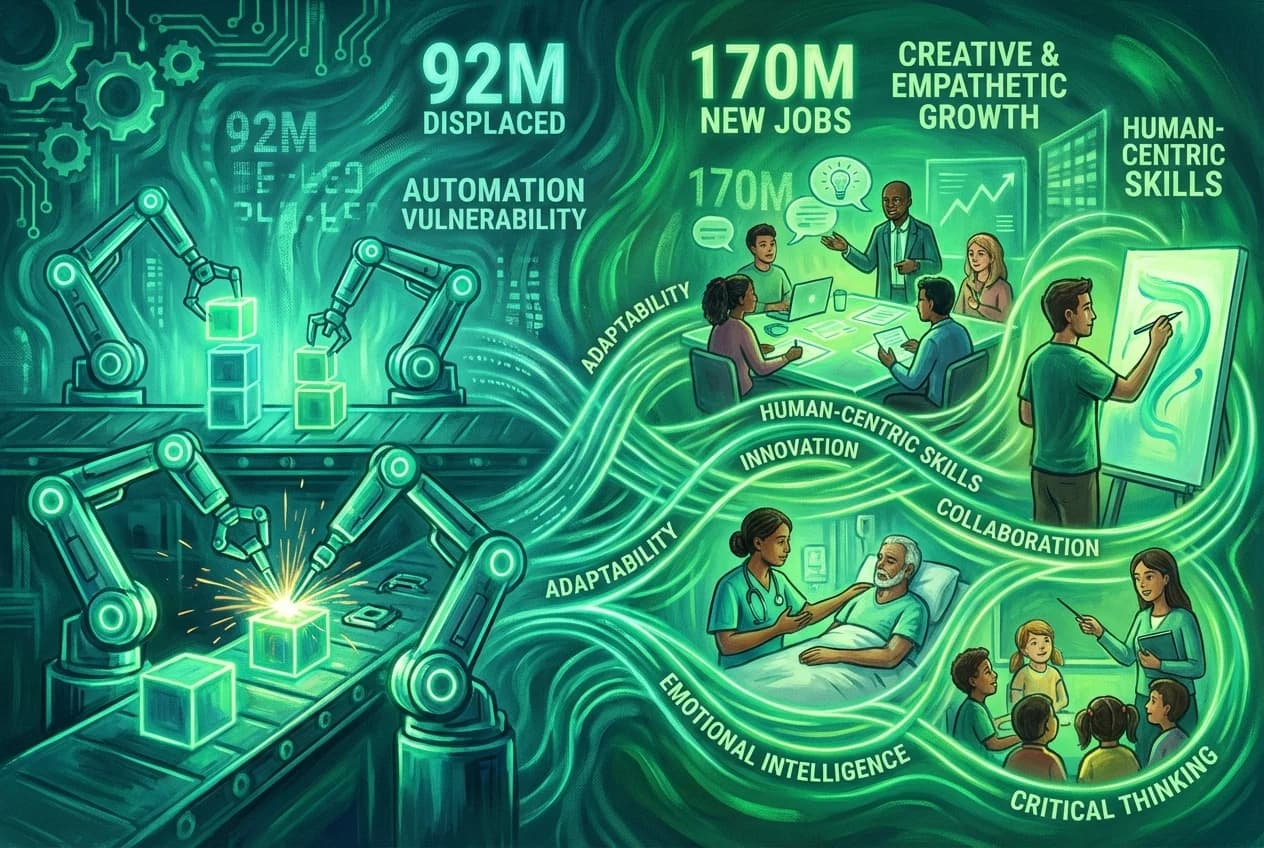
AI's impact on the job market is a dual-edged sword. On one hand, it automates routine tasks, enhancing operational efficiency and potentially displacing jobs in industries from manufacturing to customer service. The World Economic Forum projects that while 92 million existing jobs may be displaced by 2030 due to automation, an impressive 170 million new jobs are also expected to emerge, signaling a significant shift in required skills. This transformation highlights a growing demand for skills that AI currently cannot replicate. Navigating this evolving job market requires strategic preparation, and platforms like CareerBoom.ai can assist job seekers by providing AI-powered tools for smart job matching and application optimization, helping them identify and secure roles where human skills are paramount.
AI excels at processing vast amounts of data, recognizing patterns, and executing predefined algorithms with incredible speed and accuracy. It can summarize documents, analyze medical images, and even generate creative content based on existing data. However, its limitations become starkly apparent when confronted with the complexities of human emotion, ethical dilemmas, and the need for genuine, reciprocal relationships. AI operates based on programmed instructions and data; it does not possess consciousness, lived experience, or the capacity to truly "feel" or "understand" in the human sense.
This fundamental difference underscores the enduring value of human-centric skills. As machines handle the data and the routine, the demand for qualities like critical thinking, creativity, adaptability, and, most importantly, emotional intelligence and empathy, is soaring. These are the skills that enable individuals to navigate change, foster innovation, and solve complex problems in ways that algorithms cannot.
Defining Empathy in Professional Contexts
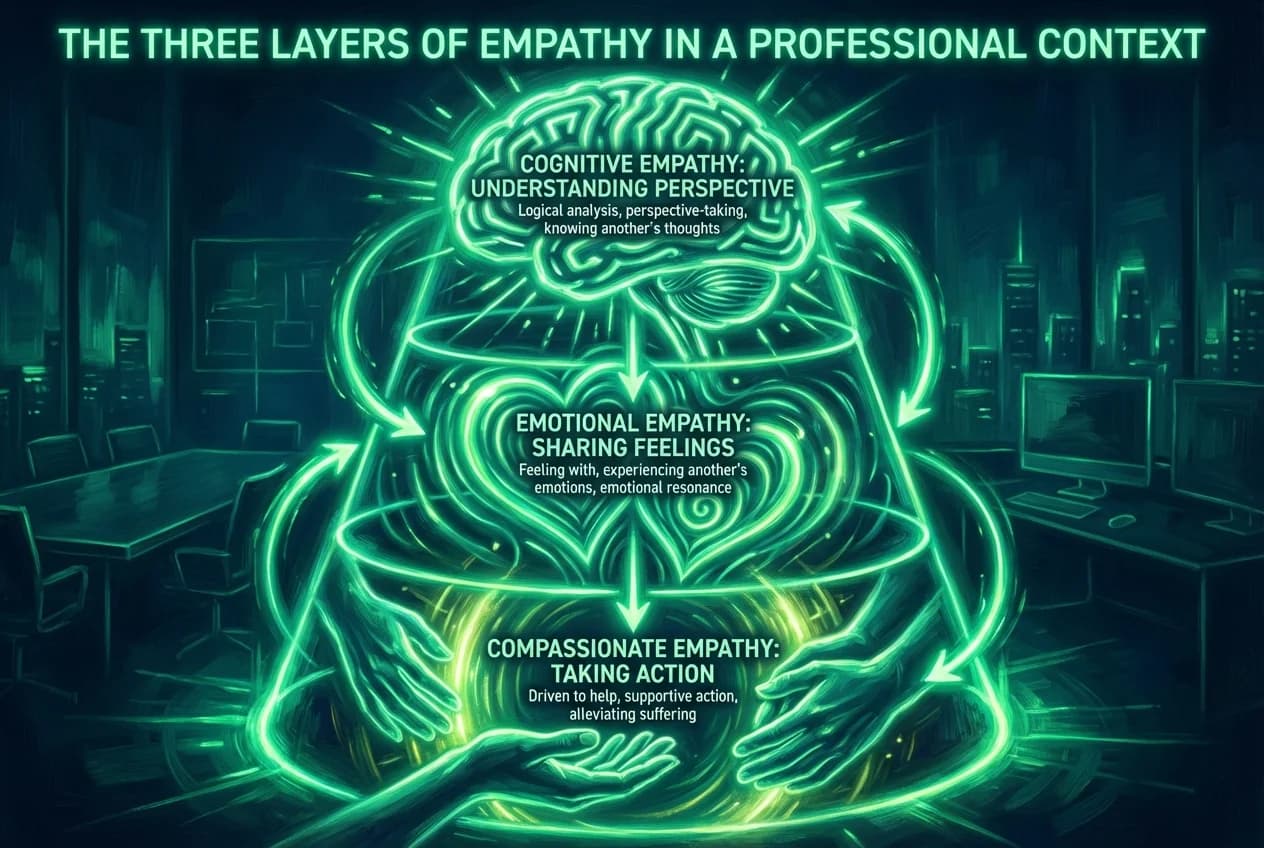
Before diving into specific roles, it's crucial to understand what empathy truly entails in a professional setting and why it remains beyond AI's grasp. Empathy is not merely recognizing an emotion; it's about deeply understanding and sharing the feelings of another, often leading to compassionate action. It involves several layers:
- Cognitive Empathy: The ability to understand another person's perspective or state of mind. AI can simulate this to a degree by analyzing language patterns and predicting responses.
- Emotional Empathy: The capacity to feel what another person is feeling, resonating with their emotional state. This is where AI fundamentally falls short. It can mimic compassionate language, but it doesn't feel or experience emotions.
- Compassionate Empathy: Beyond understanding and feeling, this involves a drive to help or alleviate suffering. It combines cognitive and emotional empathy with a desire for action, often requiring moral judgment and ethical responsibility. This is a uniquely human trait that guides decision-making in complex, sensitive situations.
In professional contexts, empathy is the cornerstone of building trust, rapport, and effective relationships. It allows professionals to tailor their approach, provide comfort, offer genuine support, and make nuanced judgments that consider a person's unique history, cultural background, and emotional complexity. Without this genuine emotional attunement, interactions can feel hollow, and true healing or progress is often unattainable.
The 6 Indispensable Empathy-Driven Jobs
The following professions highlight the indispensable nature of human empathy, making them truly AI-proof careers.
1. Licensed Therapists and Mental Health Counselors
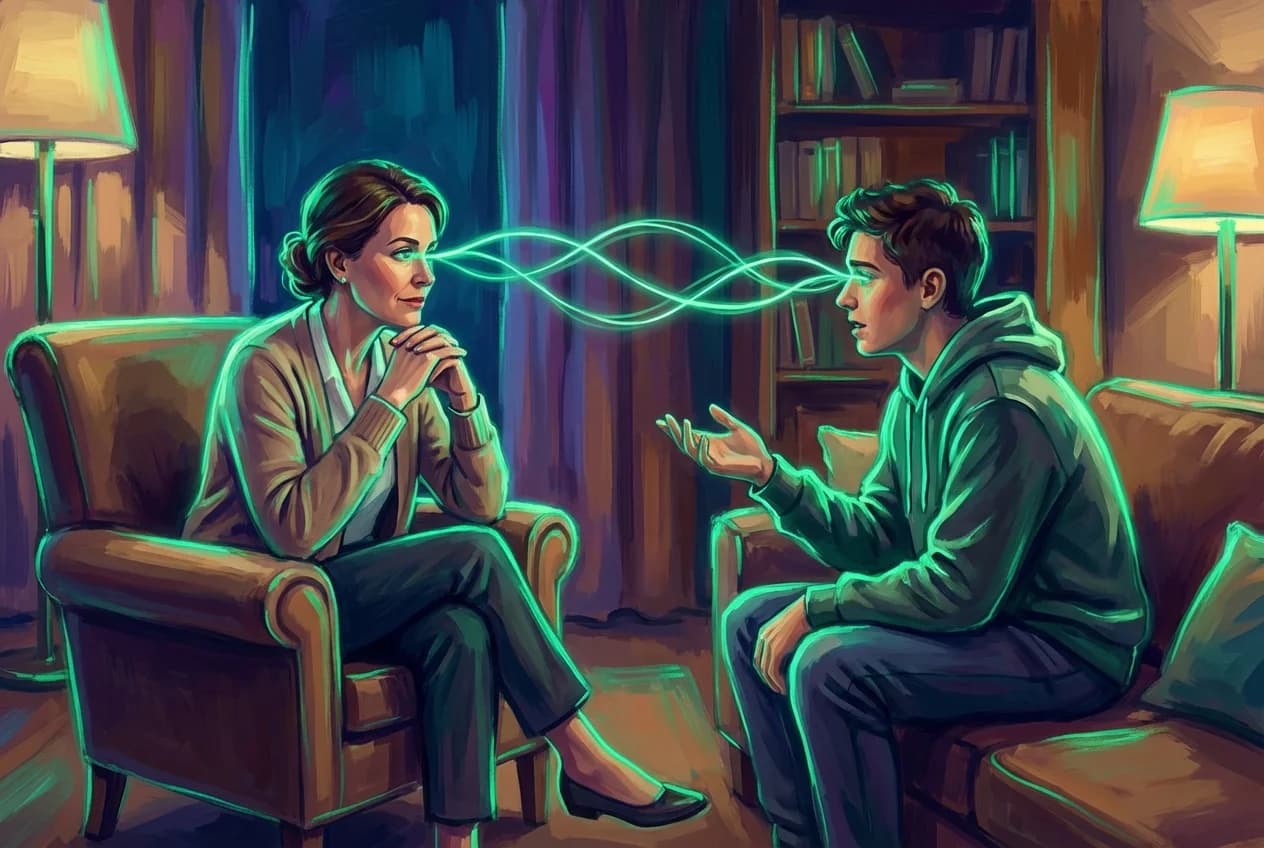
Why AI Can't Replace Them: The field of mental health is perhaps the most prominent example of a profession where human empathy is not just preferred, but absolutely essential. Therapy is fundamentally about building a trusting, consistent, and deeply personal relationship where individuals feel seen, heard, and genuinely understood.
While AI chatbots can provide helpful tools for mood tracking, guided exercises, or even basic cognitive-behavioral prompts, they lack the deeply human qualities that make therapy transformative. Here's why human therapists are irreplaceable:
- Genuine Emotional Intelligence: A therapist can sense shifts in mood, tone, body language, and even silence, responding in real-time with genuine care. AI can process text and detect emotional keywords, but it cannot authentically deliver this nuanced, attuned interaction because it does not experience emotion.
- Deep, Evolving Relationships and Trust: Healing in therapy isn't just about advice; it's about forming a meaningful human connection. Trust, compassion, and emotional safety come from ongoing interactions with a therapist who learns your patterns, celebrates your growth, and holds space for your vulnerability. AI cannot form these profound bonds.
- Context and Subtlety: Therapists bring lived experience, cultural awareness, and ethical judgment to every session, considering personal history, background, and emotional complexity. AI lacks this kind of insight; it doesn't know your life story and cannot interpret complex human emotions like grief, trauma, or identity conflict with the depth they deserve.
- Crisis Care and Ethical Responsibility: Licensed therapists are bound by strict ethical standards and legal responsibilities. They are trained to assess real-time risk, develop safety plans, and intervene in mental health crises, including suicidal thoughts or self-harm. AI, by contrast, does not bear responsibility, cannot assess real-time danger, or mobilize help. If an AI system offers inappropriate advice or fails to detect a mental health crisis, there is no recourse or accountability.
- Clinical Judgment and Challenging Unhelpful Patterns: Therapy often requires challenging unhelpful thought patterns and behaviors. While AI might offer validation, it struggles to provide the necessary "push and pull" or Socratic questioning that helps clients spot cognitive distortions and break free from unhelpful loops. True healing often requires vulnerability in the presence of another human who can gently confront inconsistencies and self-sabotaging beliefs.
In essence, AI can simulate language, but not human connection. The most important part of successful therapy is the relationship between the client and the therapist, a bond that AI cannot replicate.
2. Registered Nurses and Nurse Practitioners
Why AI Can't Replace Them: Nurses are often the frontline of healthcare, providing direct patient care that goes far beyond medical procedures. Their role is deeply humanistic, combining clinical expertise with profound empathy and interpersonal connection.
While AI can assist nurses with administrative tasks like documentation, scheduling, and even remote patient monitoring, it cannot replace the core aspects of nursing that necessitate human emotions and judgments. As Google DeepMind CEO Demis Hassabis noted, AI could eventually assist doctors with diagnostics, but nursing, with its inherent human empathy and care, is irreplaceable.
Here's why nurses are indispensable AI resistant healthcare professionals:
- Compassionate Care and Emotional Support: Nurses provide comfort, calm fears, advocate for patients, and navigate complex human emotions during moments of vulnerability. They are confidants and allies in a patient's healing journey, listening to concerns, addressing fears, and celebrating triumphs. This level of emotional support is beyond what any algorithm can provide.
- Human Touch and Physical Care: Nursing involves direct physical care, such as turning a patient safely in bed, finding the right vein, or noticing subtle changes in breathing. These are hands-on tasks that require judgment, physical dexterity, and human presence that robots cannot fully replicate.
- Critical Thinking and Adaptability: Nursing is a dynamic field that demands adaptability and critical thinking skills. While AI can assist in data analysis and decision-making, it lacks the capacity for creative problem-solving and nuanced judgment that comes from years of experience and human intuition in unexpected scenarios.
- Cultural Competence and Diversity: Effective nursing care requires an understanding of a patient's unique beliefs, values, and backgrounds. Nurses tailor their approach with cultural sensitivity, something AI, despite being programmed with vast medical knowledge, cannot truly understand or replicate.
- Ethical Decision-Making and Accountability: Nurses constantly make ethical decisions in complex clinical settings, balancing patient autonomy with safety and well-being. AI cannot be held accountable for its actions and lacks the capacity for ethical decision-making in the same way a human can.
The future of healthcare will see nurses working alongside AI, leveraging technology to streamline tasks, but their core role as the primary human connection in patient care will only become more recognized and essential.
3. Social Workers
Why AI Can't Replace Them: Social work is a profession built entirely on human connection, empathy, and ethical judgment. Social workers navigate diverse, unpredictable, and often sudden human situations that require a high degree of emotional intelligence, cultural humility, and moral reasoning.
While AI can function as a supportive tool for administrative tasks—like drafting case notes, writing referral letters, or even using predictive analytics to identify at-risk populations—it cannot replace the therapeutic relationships and empathy foundational to the profession.
Here's why social workers will remain indispensable:
- Building Trust Through Lived Human Connection: Clients, especially those who have faced trauma or hardship, often open up only when they trust the person helping them. This trust is built through authentic understanding, warmth, and emotional support that a caring human provides, allowing clients to feel seen and heard. AI cannot form these therapeutic relationships or provide genuine emotional presence.
- Navigating Ethical Gray Areas and Moral Judgment: Social workers daily navigate complex moral decisions and ethical dilemmas that involve weighing context, values, and individual circumstances. Algorithms, which rely on rules and data, cannot replicate this nuanced ethical reasoning. AI outputs are suggestions, not conclusions, always requiring professional human judgment.
- Cultural Sensitivity and Nuance: Effective social work is deeply culturally informed, requiring practitioners to navigate cultural nuances, traditions, and community dynamics with sensitivity. AI lacks true cultural understanding and could easily misstep without human guidance.
- Advocacy and Crisis Intervention: Social workers are crucial advocates for their clients, often intervening in crises. An AI system can alert to risk, but it cannot decide whether to file a report, start a safety plan, or engage in further conversation in a crisis situation. Only a trained professional can make these calls within ethical frameworks.
- Understanding Complex Human Behavior: Social workers understand the complexities of human behavior, including the underlying reasons for actions and emotions. AI, while capable of analyzing data patterns, lacks this nuanced human understanding.
The future of social work involves a collaborative model where technology enhances rather than replaces the human connection central to healing and support.
4. Teachers and Educators
Why AI Can't Replace Them: Education is far more than the transfer of information; it's a deeply human endeavor rooted in relationships, mentorship, and the cultivation of intellectual curiosity and emotional growth. While AI can generate lesson plans, offer data insights, and personalize some aspects of learning, it cannot replicate the human relationships that define real education.
Here's why education jobs remain firmly in human hands:
- Emotional Labor, Not Just Intellectual Transfer: Teachers don't just teach subjects; they teach students. They can look into a child's eyes and recognize the fear behind their silence, notice when a student is struggling at home, or adapt their approach based on emotional cues and body language. This emotional presence and real-time adaptation are beyond AI's current capabilities.
- Building Trust and Psychological Safety: Students learn best when they feel seen, safe, and supported. This psychological safety comes from trust, which takes time, nuance, and shared humanity to build. AI cannot earn trust, model empathy, or spark the kind of motivation that grows from a teacher's genuine belief in their students' potential. Ask any adult about a life-changing teacher, and they'll often point to the relationship, not just the curriculum.
- Cultivating Community and Belonging: Classrooms are communities. Teachers create norms and expectations, design opportunities for students to connect, foster inclusiveness, and address issues like harassment or exclusion. AI can design group activities, but it cannot foster true community and belonging.
- Coaching for Meaning-Making and Critical Thinking: Educators help students make meaning out of what they are learning, connecting concepts to their existing knowledge and life experiences. They witness and amplify "aha" moments, reinforcing a student's sense of pride and understanding. AI can invite connections, but it lacks the range and nuance of student learning and experience necessary for genuine sense-making.
- Ethical Decision-Making and Role Modeling: Teachers make nuanced decisions based on complex classroom dynamics and serve as intellectual role models, inspiring students to pursue truth and develop their own intellectual style. AI cannot model virtuous thought processes or intellectual motivation because it doesn't possess them.
While AI can be a powerful ally, saving teachers time and offering data insights, it cannot replace the human connection, mentorship, and interpersonal problem-solving that educators bring to the classroom. The future of education needs teachers more than ever, empowered to focus on the deeply relational aspects of learning.
5. Palliative Care Specialists
Why AI Can't Replace Them: Palliative care is a specialized area of healthcare that focuses on providing relief from the symptoms and stress of a serious illness, with the goal of improving quality of life for both the patient and their family. This field is inherently human-centric, requiring immense empathy, sensitive communication, and a profound understanding of human suffering and dignity.
While AI can assist in predicting patient outcomes and diagnoses by analyzing vast amounts of medical data, it cannot deliver the compassionate care and nuanced communication essential in palliative care.
Here's why palliative care specialists are indispensable:
- Navigating End-of-Life Discussions with Sensitivity: Palliative care often involves difficult conversations about prognosis, treatment options, and end-of-life wishes. These discussions require extraordinary sensitivity, active listening, and the ability to adapt communication based on a patient's emotional state, cultural background, and family dynamics. AI cannot grasp the emotional weight of these conversations or provide comfort through silence, glances, and body language in the way a human can.
- Holistic Patient Understanding: Palliative care specialists look beyond the disease to understand the whole person – their values, fears, hopes, and priorities. They interpret medical factors within the unique context of a patient's life, a process that cannot be automated. This holistic understanding is crucial for creating care plans that truly align with a patient's wishes for quality of life.
- Providing Emotional and Spiritual Support: Patients and families facing serious illness or end-of-life often require significant emotional and spiritual support. Palliative care providers offer a compassionate presence, helping individuals cope with grief, anxiety, and existential questions. AI cannot provide genuine emotional or spiritual solace because it lacks the capacity for true empathy and understanding of human suffering.
- Ethical Guidance and Advocacy: Palliative care involves navigating complex ethical decisions, such as pain management, withdrawal of treatment, and advance care planning. Specialists guide patients and families through these challenging choices, ensuring their autonomy and dignity are respected. AI cannot exercise this kind of moral agency or provide the ethical guidance needed in such deeply personal situations.
- Building Trust in Vulnerable Moments: In moments of extreme vulnerability, patients and their families need to trust their care providers implicitly. This trust is built on consistent, empathetic human interaction. A robot delivering difficult news or attempting to provide comfort can feel dehumanizing and inappropriate.
Palliative care highlights the critical need for human judgment, compassion, and the ability to connect on a deeply personal level when dealing with life's most profound challenges.
6. Grief Counselors
Why AI Can't Replace Them: Grief counseling is a specialized form of therapy focused on helping individuals cope with loss. It requires an extraordinary level of empathy, patience, and the ability to sit with profound human pain. While AI can process information about grief stages or coping mechanisms, it cannot truly understand or facilitate the complex, non-linear, and intensely personal journey of grieving.
Grief counseling draws heavily on the core arguments made for therapists and mental health counselors, but with an intensified focus on the unique emotional landscape of loss.
Here's why grief counselors are irreplaceable:
- Bearing Witness to Unspeakable Pain: Grief is a deeply personal and often isolating experience. A grief counselor provides a safe, non-judgemental space for individuals to express raw emotions – sadness, anger, guilt, confusion – that AI cannot truly comprehend or validate. The counselor's human presence, their ability to simply "be with" the grieving person in their pain, is a fundamental aspect of healing.
- Understanding the Nuances of Loss: Every grief journey is unique, influenced by the nature of the relationship, cultural background, individual coping styles, and previous experiences with loss. A human counselor can interpret the subtle cues, unspoken anxieties, and cultural implications of a person's grief in a way that AI, relying on data patterns, cannot.
- Facilitating Complex Emotional Processing: Grief is not a problem to be solved with logical steps; it's a process of emotional integration and adaptation. Counselors help individuals navigate confusing emotions, find meaning in their loss, and gradually reconstruct their lives. AI, limited to information processing, cannot facilitate this profound emotional work or adapt its approach to the unpredictable ebb and flow of grief.
- Providing Authentic Connection and Validation: Grieving individuals often feel misunderstood or isolated. A human counselor offers genuine validation, making the person feel less alone in their suffering. AI can mimic compassionate language, but it cannot provide the authentic connection that fosters trust and allows for true vulnerability and healing.
- Responding to Crisis and Complex Co-occurring Issues: Grief can trigger or exacerbate other mental health issues, such as depression, anxiety, or suicidal ideation. Grief counselors are trained to assess for these co-occurring conditions and provide crisis intervention when necessary, skills that AI lacks entirely. They can also discern when prolonged grief becomes complicated grief, requiring specialized, human-led intervention.
In the profound space of grief, the need for a compassionate, understanding human presence is absolute. AI cannot offer the solace, the profound connection, or the intuitive guidance that a skilled grief counselor provides.
Beyond the Six: The Broader Landscape of Human-Centric Work
While we've focused on six specific empathy jobs, the principle extends to a broader range of professions. Any role that requires high levels of emotional intelligence, creativity, critical thinking, and complex interpersonal problem-solving will likely remain highly resistant to AI automation, making them careers that will never lose their human touch.
These include roles in:
- Creative Arts: Musicians, writers, painters, and designers rely on human creativity, emotion, and subjective interpretation. While AI can generate art, it lacks genuine imagination and the ability to imbue work with human experience and emotional depth.
- Leadership and Management: Effective leaders require vision, the ability to inspire, motivate, and manage complex human dynamics, and make ethical judgments under pressure. These are fundamentally human skills that AI cannot replicate.
- Skilled Trades: Plumbers, electricians, carpenters, and other skilled tradespeople perform work that requires physical dexterity, problem-solving in unpredictable environments, and adaptability to unique situations. These hands-on roles are difficult for AI and robotics to fully automate.
- Human Resources: While AI can streamline HR processes, the core functions of managing employee relations, resolving conflicts, fostering company culture, and ensuring fair practices require human judgment, empathy, and communication skills.
The common thread uniting these diverse professions is the indispensable "human touch" – the capacity for genuine connection, understanding, and morally informed action.
Cultivating Your Empathy Advantage
For individuals looking to secure their career future in an AI-driven world, cultivating and leveraging empathy is a strategic imperative. The demand for human-centric skills is growing, and these abilities are becoming more valuable than ever.
Here are actionable steps to develop and showcase your empathy advantage:
- Practice Active Listening: Go beyond just hearing words. Pay attention to tone, body language, and unspoken cues. Strive to understand the underlying emotions and perspectives. This is a foundational skill for all care careers.
- Develop Emotional Intelligence: This involves recognizing and managing your own emotions, as well as understanding and influencing the emotions of others. Self-awareness and self-regulation are key components.
- Seek Diverse Experiences: Engage with people from different backgrounds, cultures, and life experiences. This broadens your perspective and enhances your ability to understand varied viewpoints. Cultural sensitivity is a critical aspect of empathy in many professions.
- Hone Communication Skills: Learn to communicate clearly, compassionately, and empathetically. This includes both verbal and non-verbal communication. Effective communication is essential for building rapport and trust.
- Volunteer and Engage in Community Service: Direct engagement with individuals facing challenges can be a powerful way to build empathy and gain practical experience in helping others.
- Focus on Ethical Reasoning: Practice thinking through ethical dilemmas. Understand the moral implications of decisions and strive to act with integrity and fairness. This is crucial in roles where human judgment is paramount.
- Embrace Lifelong Learning: Stay curious about human behavior, psychology, and social dynamics. Continuous learning in these areas will deepen your empathetic understanding.
- Leverage AI as a Tool, Not a Crutch: Understand how AI can automate routine tasks to free up your time for more human-centric interactions. For instance, platforms like CareerBoom.ai can streamline your job search by automating applications, aligning your resume with job descriptions, and providing interview preparation, allowing you to focus more deeply on cultivating the empathetic aspects of your role.
By actively cultivating these skills, you not only make yourself more resilient to technological shifts but also position yourself for a career that is inherently meaningful and impactful. The future workforce will value individuals who can bring the unique strengths of humanity to the table, especially in roles demanding genuine human interaction.
Conclusion
As AI continues to advance and reshape industries, the conversation around job security naturally intensifies. However, it's clear that not all jobs are created equal in the face of automation. Professions deeply rooted in human empathy, compassion, and nuanced interaction stand as bastions against full AI replacement. The empathy jobs we've explored – licensed therapists, nurses, social workers, teachers, palliative care specialists, and grief counselors – exemplify care careers where the human touch is simply irreplaceable.
These roles require more than data processing; they demand emotional intelligence, ethical judgment, cultural sensitivity, and the ability to build profound, trusting relationships. AI can augment tasks, provide data, and streamline operations, but it cannot replicate the complex tapestry of human experience, feeling, and connection.
For those seeking fulfilling and secure career paths, focusing on developing and leveraging these uniquely human attributes is paramount. The demand for professionals who can offer genuine human interaction and care is not diminishing; it is, in fact, growing. In an increasingly automated world, the capacity to understand, connect with, and care for another human being will remain our most valuable and indispensable asset. Your empathy is not just a soft skill; it's your superpower in the age of AI.
Frequently Asked Questions
Quick answers to common questions
Empathy-driven jobs are professions where human connection, compassion, and nuanced understanding are absolutely indispensable. These roles require professionals to deeply understand and share the feelings of others, leading to compassionate action, which AI cannot genuinely replicate. They are inherently AI-resistant due to their reliance on emotional intelligence and human interaction.
AI fundamentally lacks the capacity for genuine emotional empathy and lived experience. While it can simulate cognitive empathy by analyzing data, it cannot feel or experience emotions, nor does it possess moral judgment or ethical responsibility. This makes true compassionate action, which combines understanding and feeling with a drive to help, uniquely human.
The article highlights several AI-resistant healthcare roles:
- Licensed Therapists and Mental Health Counselors
- Registered Nurses and Nurse Practitioners
- Palliative Care Specialists
- Grief Counselors These professions require profound human connection, ethical judgment, and emotional support that AI cannot provide.
While AI cannot replace the core empathetic functions, it can serve as a powerful assistant. AI can automate administrative tasks like documentation, scheduling, and data analysis. In healthcare, it can aid in diagnostics or remote monitoring, allowing human professionals to focus more on direct patient care and emotional support, making them more efficient in their care careers.
Yes, education jobs are largely safe from full AI automation. Teachers and educators provide far more than information transfer; they build trust, foster psychological safety, cultivate community, and inspire critical thinking. These relational and emotional aspects of teaching are indispensable and cannot be replicated by AI, securing their future in human interaction.
As AI automates routine tasks, skills that machines cannot replicate are soaring in demand. These include:
- Critical thinking
- Creativity
- Adaptability
- Emotional intelligence
- Empathy These human-centric qualities are vital for navigating change and solving complex problems, especially in empathy jobs.
No, social workers are indispensable. Their role is built on human connection, empathy, and ethical judgment. They navigate complex, unpredictable situations, build trust, provide crisis intervention, and offer culturally sensitive support. AI can assist with administrative tasks but cannot replicate the therapeutic relationships or nuanced moral reasoning essential to social work.
Was this article helpful?
Table of Contents
The AI Revolution and the Human Imperative
Defining Empathy in Professional Contexts
The 6 Indispensable Empathy-Driven Jobs
Beyond the Six: The Broader Landscape of Human-Centric Work
Cultivating Your Empathy Advantage
Conclusion
1What defines an "empathy-driven job"?
2Why can't AI truly be empathetic like humans?
3What are some examples of healthcare jobs that AI will never replace?
4How does AI assist professionals in empathy-driven careers?
5Are education jobs safe from AI automation?
6What skills are becoming more important in the age of AI?
7Can social workers be replaced by AI?
Share this article
Other articles

10 Best Job Trackers to Organize Your Search in 2026
Streamline your job hunt with the top Chrome extensions and platforms designed to track applications effortlessly.
10 Best Chrome Extensions for Job Seekers to Autofill Applications
Save hours every week by automating repetitive form filling and tracking your applications effortlessly.
10 Best AI Resume Builders in 2026: Ranked and Reviewed
Navigate the future of job hunting with our definitive guide to the top-rated AI resume creation tools available this year.