Hur Långt Ska Ett Personligt Brev Vara 2026? (Den Definitiva Guiden)
Sluta skriva uppsatser. Upptäck det perfekta ordantalet för e-post och bifogade personliga brev för att få fler intervjuer.
8 months ago
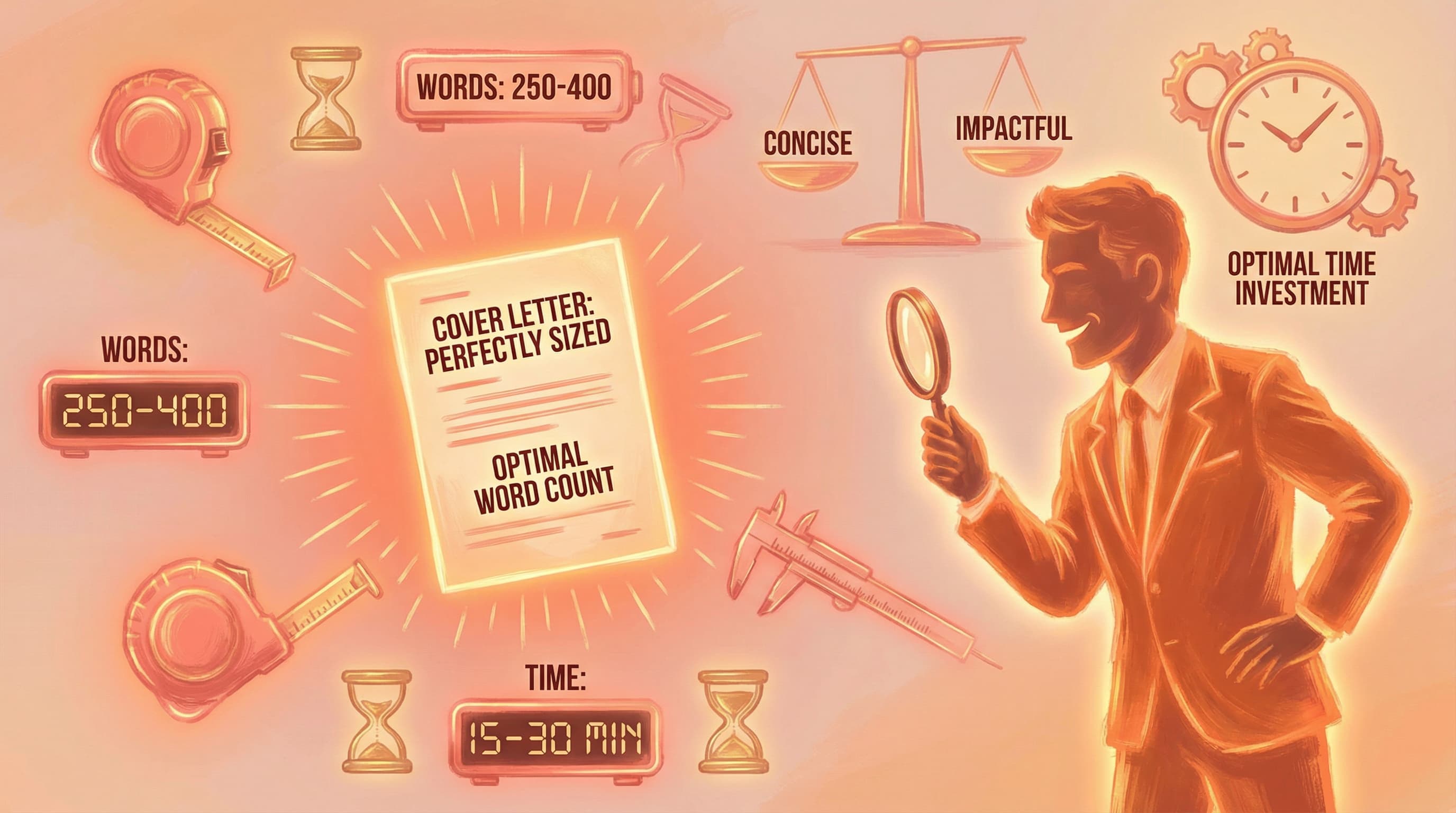
Du har polerat ditt CV, uppdaterat din portfolio och hittat den perfekta jobböppningen. Nu kommer den fruktade frågan: Hur långt ska mitt personliga brev vara?
Ska det vara en detaljerad berättelse om din livshistoria? Ett snabbt "Här är mitt CV"? Eller något mittemellan?
2026 har rekryteringslandskapet förändrats. Uppmärksamhetsspann är kortare, och rekrutterare är mer upptagna än någonsin. Dagarna med det helsides, enkelradiga formella brevet försvinner snabbt.
Personligt Brev Längd Snabbguide
- E-posttext / Onlineportal: 100-200 ord (3-4 korta stycken)
- Bifogad PDF (formell): 250-400 ord (max en halv sida)
- Nätverks-e-post: 50-100 ord (ultra-koncis)
- Ingångsnivå / Praktikplatser: 200-300 ord (stramare fokus)
- C-Suite / Akademisk: 400-600 ord (sällsynt undantag)
Den Gyllene Regeln: Om det inte tillför värde, skär bort det. Varje mening ska förtjäna sin plats.
2026 Verkligheten: 83% av rekryteringschefer läser personliga brev även när de inte krävs, och kandidater med skräddarsydda brev har 1,9 gånger större sannolikhet att få intervjuer. Men 81% av rekryterare har förkastat sökande enbart baserat på deras personliga brev. Gör ditt viktigt.
Låt oss dyka in i detaljerna om modern personligt brevlängd och hur du får varje ord att räknas.
Den Gyllene Regeln: En Halv Sida Eller Mindre
Om du bifogar ett formellt personligt brevdokument (PDF), är den ideala längden 250 till 400 ord.
Visuellt ser detta ut som en halv sida till tre fjärdedelar av en sida. Om din text rinner över på en andra sida har du skrivit för mycket. Om det är ett tätt textblock utan vitt utrymme har du också skrivit för mycket.
Snabb Jämförelse: Personligt Brev Typer Efter Längd
| Typ | Ordantal | När Att Använda | Lästid |
|---|---|---|---|
| Nätverks-E-post | 50-100 | Kall kontakt, hänvisningar, informativa intervjuer | 15-30 sekunder |
| E-posttext Ansökan | 100-200 | Startup-jobb, informella företag, onlineportaler | 30-45 sekunder |
| Ingångsnivå / Praktikplats | 200-300 | Första jobb, praktikplatser, begränsad erfarenhet | 45-60 sekunder |
| Bifogad PDF (Standard) | 250-400 | Traditionella branscher, formella ansökningar | 60-90 sekunder |
| Chefsbefattning / Akademisk | 400-600 | C-suite, professurer, forskningspositioner | 2-3 minuter |
Proffstips: Om en rekryterare inte kan läsa hela ditt personliga brev på under 90 sekunder, är det för långt. Kom ihåg: 36% av rekryteringschefer spenderar mindre än 30 sekunder på personliga brev.
Varför Kortare Är Bättre: Det Datadrivna Argumentet För Korthet
Siffrorna ljuger inte. Här är vad nylig forskning avslöjar om personligt brevlängd:
- 36% av rekryteringschefer spenderar mindre än 30 sekunder på att läsa ett personligt brev
- 70% av rekryterare föredrar kortare personliga brev framför långa
- 49% anser en halv sida vara ideal, medan 26% föredrar en hel sida, och 25% vill bara ha några meningar
- 83% av rekryteringschefer läser personliga brev även när de inte uttryckligen krävs
- Kandidater som skickar in skräddarsydda personliga brev har 1,9 gånger större sannolikhet att få intervjuer
- 81% av rekryterare har förkastat sökande enbart baserat på deras personliga brev
- 72% av rekryteringschefer prioriterar anpassning framför generiska ansökningar
Här är paradoxen: 84% av människor tror att traditionella personliga brev är föråldrade, ändå läser 83% av rekryteringschefer dem fortfarande. Lösningen? Gör dem moderna, koncisa och effektfulla—inte längre.
Ett koncist personligt brev demonstrerar en kritisk mjuk färdighet: Kommunikation. Det visar att du kan:
- Respektera läsarens tid
- Syntetisera information snabbt
- Komma till poängen utan utfyllnad
- Prioritera vad som betyder mest
I en värld där rekryteringschefer granskar 100+ ansökningar per jobbannons, är korthet din konkurrensfördel.
Scenario A: Det "E-posttext" Personliga Brevet (Den Moderna Standarden)
För många moderna startups, techföretag och informella arbetsmiljöer kommer du inte att bifoga en separat PDF. Du klistrar in ditt personliga brev direkt i texten i ett e-postmeddelande eller en textruta på en ansökningsportal.
Ideal Längd: 100 – 200 ord.
När det personliga brevet är själva e-postmeddelandet är korthet din bästa vän. Långa e-postmeddelanden arkiveras; korta e-postmeddelanden läses.
Strukturen Av En Kort E-post Ansökan:
- Ämnesrad: Tydlig och specifik (t.ex.: "Ansökan för [Jobbtitel] - [Ditt Namn]").
- Hälsning: Professionell hälsning.
- Kroken (1-2 meningar): Vem du är och varför du e-postar.
- Värdeförslaget (2-3 meningar): Framhäv en viktig prestation relevant för rollen.
- Avslutningen (1 mening): CTA (Call to Action) och länk till portfolio/CV.
Exempel (Tech Startup):
"Bäste [Rekryteringschef Namn],
Jag har följt [Företagsnamn]s tillväxt inom [Bransch]-området i år, så jag var entusiastisk över att se öppningen för en Senior Produktdesigner.
I min nuvarande roll hos [Nuvarande Företag] ledde jag omdesignen av vår mobilapp, vilket ökade användarretention med 40% på tre månader. Jag är säker på att jag kan ta med samma datadrivna designfokus till ditt team.
Mitt CV och portfolio är bifogade. Jag skulle gärna ha ett snabbt samtal för att diskutera hur jag kan hjälpa [Företagsnamn] att nå Q3-målen.
Med vänliga hälsningar, [Ditt Namn]"
Ordantal: 82 ord. Perfekt för en e-postansökan.
Branschspecifika E-post Längd Tips
Olika branscher har olika förväntningar:
- Tech / Startups: 100-150 ord. Kom snabbt till poängen. Visa metrics.
- Kreativ / Marknadsföring: 150-200 ord. Visa personlighet, men håll dig koncis.
- Finans / Konsultverksamhet: 150-200 ord. Professionell ton, kvantifierbara resultat.
- Ideell / Utbildning: 150-250 ord. Visa passion, men respektera deras tid.
Scenario B: Det "Bifogade Dokument" Personliga Brevet (Traditionellt)
Om jobbannonsen uttryckligen ber om ett "Personligt Brev" som en separat bilaga, eller om du ansöker till en mer traditionell bransch (Juridik, Akademisk, Offentlig, Bank), har du lite mer utrymme—men inte mycket.
Ideal Längd: 250 – 400 ord (3–4 stycken).
3-Stycken Formeln
Vandra inte iväg. Håll dig till denna beprövade struktur:
- Öppningsstycke (40-60 ord): Ange den position du söker, uttryck genuint intresse och nämn kort hur du fick veta om möjligheten. Nämn en ömsesidig kontakt om du har en.
- Mellersta Stycke(n) (150-220 ord): Detta är köttet i brevet. Framhäv 1-2 nyckelprestationer eller erfarenheter som direkt stämmer överens med jobbkraven. Använd relevanta nyckelord från jobbbeskrivningen. Sammanfatta inte ditt CV—berätta en kort historia om ett specifikt problem du löste.
- Avslutande Stycke (40-70 ord): Förstärk din entusiasm, föreslå nästa steg och inkludera en professionell call to action (t.ex.: "Jag skulle gärna diskutera hur min erfarenhet i X stämmer överens med ditt teams behov").
Exempel Öppningsstycke (Traditionellt Format)
"Jag skriver för att uttrycka mitt intresse för Marketing Manager-positionen hos [Företagsnamn], som annonserat på LinkedIn. Med över fem års erfarenhet av att leda digitala kampanjer för Fortune 500-företag och en dokumenterad meritlista av att öka konverteringsfrekvenser med i genomsnitt 35%, är jag säker på att jag kan bringa omedelbart värde till ditt team."
Ordantal: 55 ord. Tydligt, självsäkert och sätter scenen för huvudstycket.
"Problem-Lösning" Formatet (Modern Tillnärming)
Istället för att lista dina prestationer kronologiskt, prova problem-lösning formatet—det vinner mark 2026, speciellt i tech-roller:
Exempel:
"Jag noterade att [Företagsnamn] snabbt skalar kundoperationer. I min roll hos [Nuvarande Företag] minskade jag kund-onboarding-tiden med 40% samtidigt som jag upprätthöll en 98% tillfredsställelsegrad—en utmaning jag förstår är kritisk för er tillväxt.
Min tillnärming involverade [kort metodologi]. Jag skulle gärna diskutera hur jag kan tillämpa dessa strategier för att hjälpa [Företagsnamn] att nå Q2-skaleringsmålen."
Detta format demonstrerar omedelbart värde och visar att du har undersökt företagets utmaningar. Det fungerar särskilt bra vid ansökan till startups, produktroller och företag i snabb tillväxt.
Scenario C: Det "Nätverks-E-post" Personliga Brevet (Ultra-Kort)
Om du kontaktar någon i ditt nätverk, en rekryterare du träffade på en konferens, eller cold-emailar en rekryteringschef, ska ditt "personliga brev" vara maximalt 50-100 ord.
Detta är inte platsen för din livshistoria. Ditt mål är att:
- Påminna dem om vem du är (om tillämpligt).
- Formulera din förfrågan tydligt.
- Göra det enkelt för dem att säga ja.
Exempel Nätverks-E-post:
"Hej [Namn],
Vi träffades på [Event Namn] konferensen förra månaden, och jag älskade dina insikter om [Ämne]. Jag noterade att [Företagsnamn] anställer för en [Roll], som stämmer perfekt överens med min bakgrund i [Färdighet/Bransch].
Skulle du vara öppen för ett 15-minuters samtal för att diskutera rollen och dela råd?
Tack, [Ditt Namn]"
Ordantal: 52 ord. Kort, respektfullt och handlingsinriktat.
Nätverks-E-post Pro Tips:
- Bifoga inte ditt CV omedelbart. Vänta tills de ber om det.
- Personifiera varje rad. Generiska nätverks-e-postmeddelanden ignoreras.
- Föreslå en specifik tidsåtagande. "15-minuters samtal" är mindre skrämmande än "plocka din hjärna".
Specialfall: När Du Ska Justera Ditt Ordantal
Ingångsnivå Och Praktikplatser: 200-300 Ord
Om du ansöker om ditt första jobb eller en praktikplats kan du trimma ditt personliga brev till 200-300 ord. Du kanske har mindre professionell erfarenhet, men du kan kompensera genom att framhäva:
- Relevant kursarbete och akademiska projekt
- Volontärarbete eller campus-ledarskap
- Demonstrerade mjuka färdigheter (teamwork, problemlösning, initiativ)
- Personliga projekt eller portfolioarbete
Behåll samma tre-stycken struktur men stram åt varje sektion. Fokusera på överförbara färdigheter och iver att lära.
Exempel Öppning För Ingångsnivå:
"Som en nyutexaminerad datavetare med en passion för frontend-utveckling var jag entusiastisk över att se Junior Developer-öppningen hos [Företagsnamn]. Under mitt senior capstone-projekt byggde jag en React-baserad webbapp som förbättrade campus-event registreringseffektiviteten med 60%."
Akademiska Och Seniora Positioner: 400-600 Ord
Dessa roller är undantag från standardregeln. PhD-positioner, postdoc-roller och seniora chefsbefattningar rättfärdigar ofta 400-600 ord eftersom dessa fält förväntar sig mer detaljerad diskussion av:
- Forskningsintressen och metodologi (Akademisk)
- Undervisningsfilosofi (Akademisk)
- Strategisk vision och ledarskapsfilosofi (C-Suite)
- Karriärbana och branschpåverkan (Seniora roller)
Även i dessa fall, överskrid aldrig en sida vid utskrift.
Offentliga Roller: Följ KSA Krav
Vissa federala ansökningar har strikta krav för att adressera specifika "KSA:er" (Kunskap, Färdigheter och Förmågor) i narrativ form. Följ instruktionerna exakt, även om de begär längre svar.
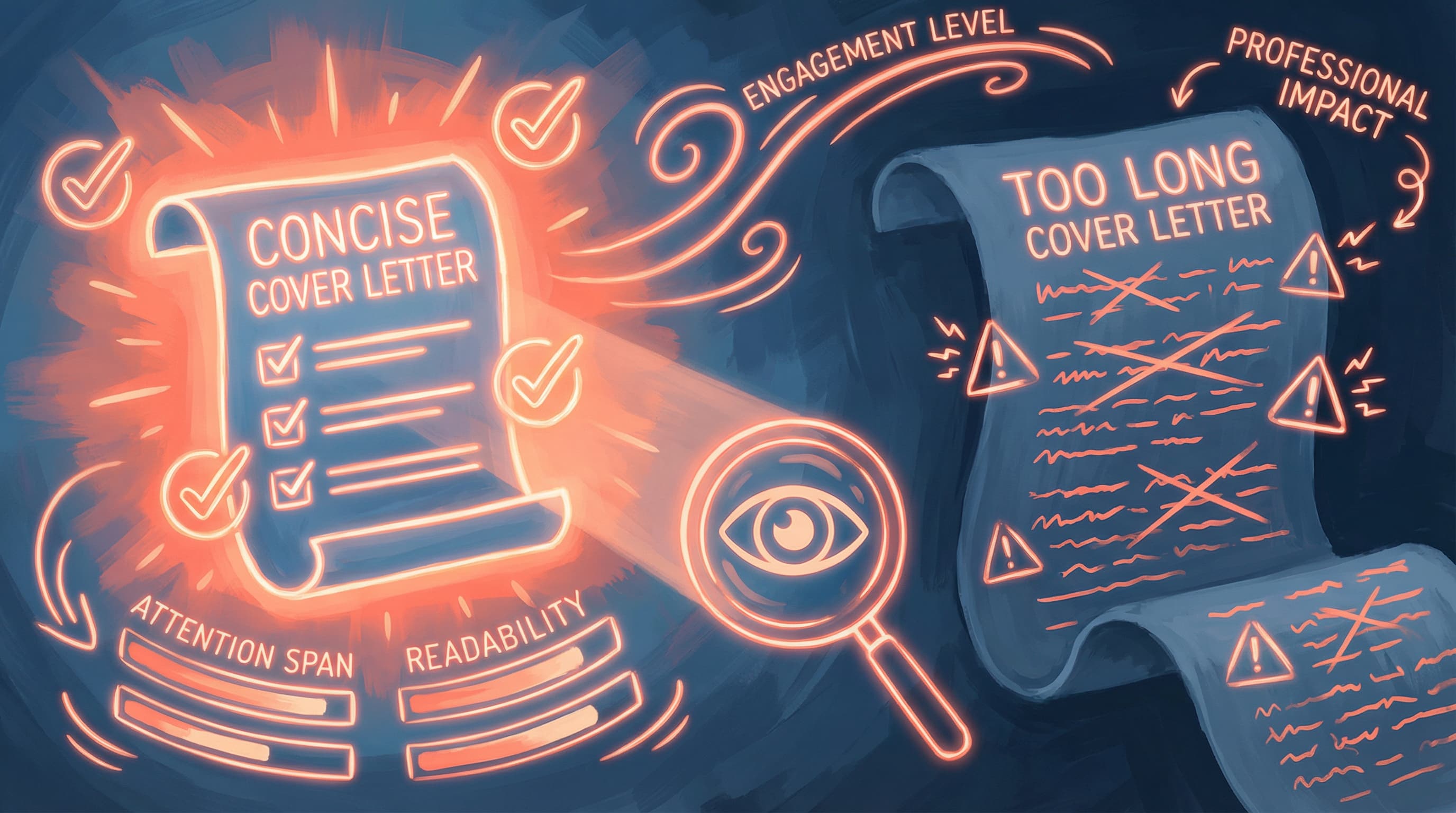
Vanliga "Längd" Misstag Att Undvika
1. "CV-Omskrivningen"
Om ditt personliga brev bara upprepar ditt CV i meningsform ("Jag arbetade hos X från 2020 till 2022, sedan arbetade jag hos Y..."), är det för långt och tillför inget värde. Använd det personliga brevet för att visa personlighet och kontext som CV:t inte kan ge.
❌ Dåligt (120 ord):
"Jag examinerades från State University 2018 med en examen i Marknadsföring. Sedan arbetade jag hos ABC Corp från 2018-2020 som Marketing Coordinator, där jag hanterade sociala mediekonton. Sedan flyttade jag till XYZ Inc från 2020-2023 som Marketing Manager, där jag ledde ett team på tre personer och hanterade olika kampanjer..."
✅ Bra (45 ord):
"Hos XYZ Inc ledde jag ett team som ökade e-post öppningsfrekvenser med 45% genom att använda A/B-testning och personalisering. Jag är entusiastisk över att ta med denna datadrivna tillnärming till [Företagsnamn]s e-postmarknadsföringsstrategi."
Vad förändrades: Tog bort den kronologiska sammanfattningen. Fokuserade på en imponerande prestation.
2. "Textväggen"
Även ett 300-ord brev kan se för långt ut om det är ett gigantiskt stycke. Bryt upp det. Använd punktlistor för prestationer. Använd korta meningar. Vitt utrymme gör din ansökan inbjudande.
❌ Dåligt:
Ett gigantiskt 300-ord stycke utan pauser, utan betoning och utan visuell hierarki.
✅ Bra:
Tre stycken på 50-100 ord vardera, med strategiskt fetstilad text på metrics och tydligt mellanrum mellan idéer.
3. "Över-Förklararen"
Använd inte det personliga brevet för att be om ursäkt för saknade färdigheter eller förklara anställningsluckor i plågsamma detaljer. Fokusera på dina styrkor. Självförtroende är koncist.
❌ Dåligt (80 ord):
"Jag vet att jobbannonsen ber om 5 års erfarenhet och jag har bara 3, och jag har inte heller erfarenhet av [Specifikt Verktyg], men jag är en riktigt snabb inlärare och jag är säker på att jag snabbt kan plocka upp det. Jag tog också ett år ledigt för att resa, men jag är redo att återvända till arbete nu..."
✅ Bra (30 ord):
"Jag har levererat mätbara resultat i liknande roller, inklusive en 35% ökning i kundretention. Jag är angelägen om att ta med denna meritlista till [Företagsnamn]."
Vad förändrades: Led med självförtroende. Framhäv inte vad du inte har.
4. "Fyllfraser" Fällan
Modern rekrytering värdesätter direkthet. Skär bort dessa föråldrade fraser:
- ❌ "Jag skriver för att uttrycka mitt intresse för..."
- ❌ "Vänligen hitta mitt bifogade CV för din granskning..."
- ❌ "Jag tror att jag skulle vara en bra passform för..."
- ✅ "Jag är entusiastisk över att ansöka om [Roll]-positionen hos [Företag]."
- ✅ "Min erfarenhet i [X] stämmer perfekt överens med ditt behov av [Y]."
Vad Att Skära (Och Vad Att Behålla)
Om ditt personliga brev överstiger 400 ord, här är din redigeringsguide:
| Ta Bort | Anledning | Behåll Istället |
|---|---|---|
| Långvarig företagsbeundran (utöver 1-2 meningar) | Rekryteringschefer vill veta vad du tar med, inte generiskt beröm | Kort, specifik nämning av varför detta företag intresserar dig |
| Detaljerad CV-duplicering | Det personliga brevet bör inte upprepa vad som redan finns i ditt CV | 1-2 prestationer med kontext som CV:t inte kan ge |
| Fyllfraser ("Jag skriver för att uttrycka...") | Modern rekrytering värdesätter direkthet | Stark öppning som går rakt på sak |
| Långa personliga ursprungshistorier | Håll personlig berättelse till maximalt 2-3 meningar | Kort, relevant kontext som förklarar ditt intresse |
| Flera orelaterade prestationer | Fokusera bara på 1-2 nyckelkvalifikationer | Riktade prestationer som matchar jobbkrav |
| Alltför komplexa meningar | Tydligt, skannbart skrivande betyder mer än vältalighet | Korta, slagkraftiga meningar med aktiv röst |
Vad Du Måste Behålla:
- Direkt uttalande om positionen du söker
- 1-2 specifika prestationer som matchar jobbkrav (med siffror/metrics när det är möjligt)
- Kort förklaring av varför du är intresserad av detta specifika företag
- Tydlig demonstration av att du har undersökt rollen och organisationen
- Stark avslutning med call to action
Formateringstips För Att Få Ditt Personliga Brev Att Se Kortare Ut (Även Om Det Inte Är Det)
Visuell formatering betyder lika mycket som ordantal. Ett välformaterat 350-ord brev kommer att se mer polerat ut än ett trångt 400-ord brev. Så här maximerar du läsbarheten utan att blåsa upp längden:
Typsnitt Och Avstånds Riktlinjer
Typsnittsstorlek:
- Använd 10,5–11 punkt typsnitt som optimalt (standard 12 är acceptabelt; undvik mindre)
- Sans-serif typsnitt (Arial, Calibri) fungerar bra för skärmläsning
- Serif typsnitt (Times New Roman, Georgia) fungerar bra för PDF-bilagor
Marginaler Och Avstånd:
- Ställ in 2,5 cm marginaler på alla sidor (1,9 cm minimum, aldrig mindre)
- Använd 1,0 eller 1,15 radavstånd för läsbarhet utan överdrivet utrymme
- Håll stycken till maximalt 3-4 rader (visuell regel: inget stycke bör ta mer än 1/3 av sidan)
- Inkludera tillräckligt vitt utrymme runt stycken—läsbarhet slår ordantal
Visuell Formatering Gör:
- Använd korta stycken: Maximalt 2-3 meningar per stycke
- Lägg till vitt utrymme: Lämna ett fullständigt radbrott mellan stycken
- Använd punktlistor: När du listar 2-3 prestationer eller färdigheter
- Fetstil nyckel-metrics: Får siffror att poppa (t.ex.: "ökade intäkter med 40%")
- Vänsterjustera allt: Centrera inte eller justera text
Visuell Formatering Gör Inte:
- Enkelt-avstånd allt: Det ser överväldigande ut
- Använd små marginaler: Rekryterare ser "Denna person försöker proppa in för mycket"
- Skriv ett gigantiskt stycke: Det skriker "Jag respekterar inte din tid"
- Använd färgade typsnitt eller grafik: Om du inte är inom ett kreativt fält (och även då, var strategisk)
- Gå mindre än 10pt typsnitt: Om du inte kan få det att passa i 11pt, är ditt brev för långt
Proffstips: Rekryteringschefer föredrar visuell klarhet framför maximal ordtäthet. Ett rent, skannbart 300-ord brev slår en tät 400-ord textvägg.
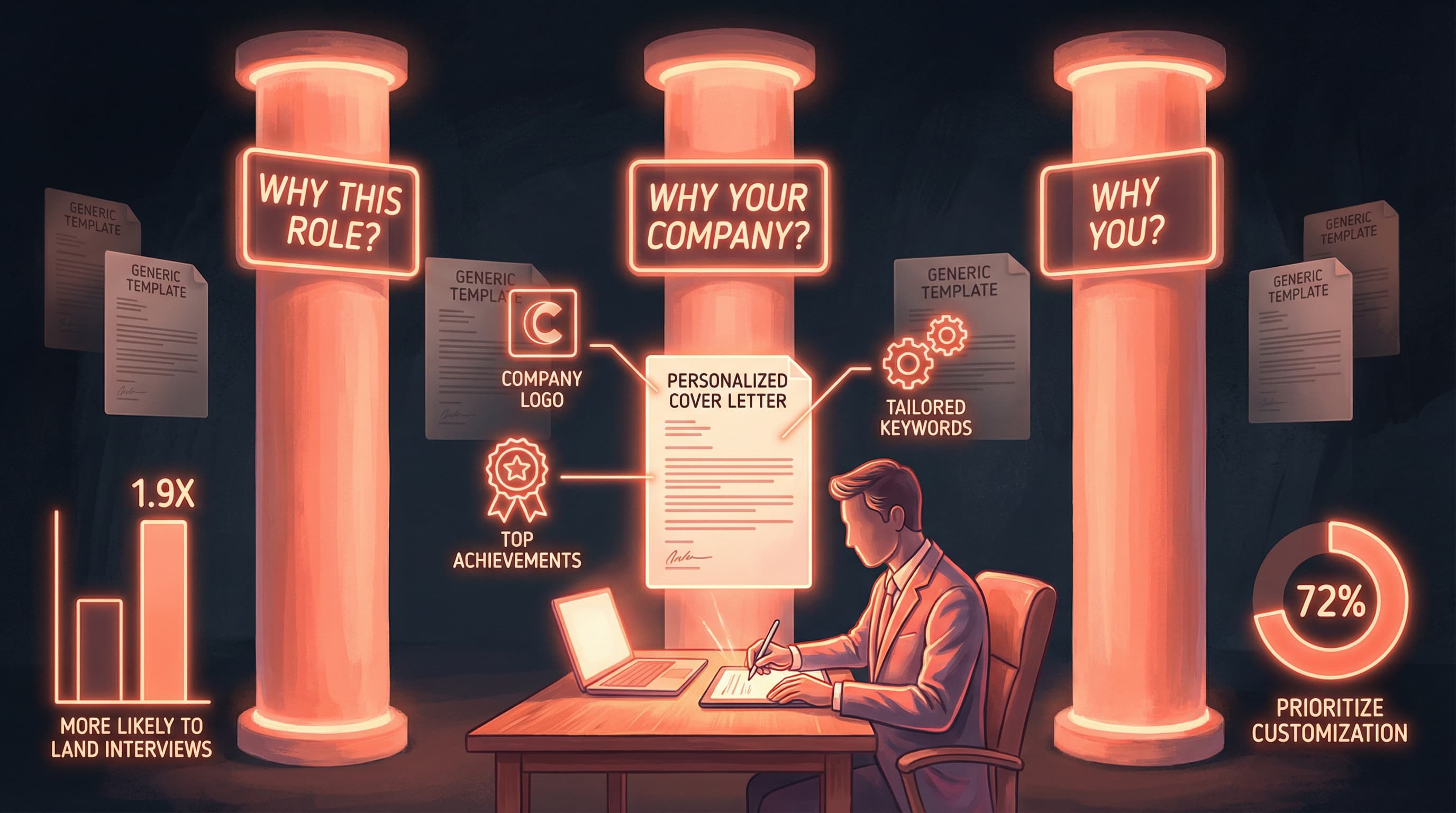
De Tre Kärnfrågorna Varje Personligt Brev Måste Besvara
Här är vad forskning konsekvent visar: det finns inget magiskt ordantal. Skillnaderna i responsfrekvenser mellan ett 250-ord och ett 350-ord personligt brev är minimala om båda är välskrivna och skräddarsydda.
Vad som betyder något är att besvara tre kärnfrågor koncist:
1. Varför Denna Roll?
Visa att du förstår positionen och förklara vad som tilltalar dig. Var specifik.
❌ Svag: "Jag har alltid velat arbeta inom marknadsföring." ✅ Stark: "Jag är entusiastisk över denna Tillväxtmarknadsföring-roll eftersom den kombinerar dataanalys med kreativ kampanjutveckling—exakt där jag har haft mina största segrar."
2. Varför Ditt Företag?
Demonstrera genuin kunskap om organisationens mission, produkter eller kultur. Undvik generiskt beröm.
❌ Svag: "Ditt företag är en ledare i branschen." ✅ Stark: "Jag har följt [Företag]s expansion till den europeiska marknaden och ert senaste partnerskap med [Partner]. Min erfarenhet av att skala internationella kampanjer skulle vara direkt tillämplig."
3. Varför Du?
Ge 1-2 specifika, relevanta exempel på hur dina färdigheter löser deras problem.
❌ Svag: "Jag har fem års erfarenhet inom försäljning." ✅ Stark: "I min senaste roll ökade jag B2B-försäljningen med 45% på 12 månader genom att implementera en konsultativ försäljningstillnärming—exakt den färdighetsuppsättning som din jobbbeskrivning betonar."
Slutsatsen: Ett personligt brev som besvarar dessa tre frågor på 200 ord kommer att slå ett omständligt 500-ord brev som inte gör det. Rekryteringschefer som spenderar 30 sekunder på att läsa skannar efter dessa svar. Gör dem lätta att hitta.
Kvalitet Över Kvantitet: Personalisering Slår Längd Varje Gång
Här är den obekväma sanningen: 72% av rekryteringschefer prioriterar anpassning framför allt annat. Ett perfekt skräddarsytt 150-ord brev kommer att överträffa ett generiskt 400-ord brev.
Hur Personalisering Ser Ut:
Generisk (300 ord, noll inverkan):
"Jag är en hårt arbetande professionell med utmärkta kommunikationsfärdigheter och en dokumenterad meritlista av framgång. Jag har alltid beundrat ditt företag och skulle älska möjligheten att bidra till ditt team..."
Personaliserad (180 ord, hög inverkan):
"Jag noterade att [Företag] nyligen lanserade sin AI-drivna kundserviceplattform. Efter att ha lett en liknande implementering hos [Nuvarande Företag] som minskade svarstider med 60%, förstår jag de tekniska och förändringshanteringsutmaningarna ni sannolikt står inför.
Er jobbannons nämner skalning av kundframgångsteamet—min specialitet. Hos [Företag] växte jag CS-teamet från 5 till 25 personer samtidigt som jag upprätthöll en 95% retention..."
Personaliseringschecklista:
- ✅ Rekryteringschefens namn (inte "Till Den Det Berör")
- ✅ Specifik företagsprestation, produkt eller senaste nyheter
- ✅ Nyckelord från den faktiska jobbbeskrivningen
- ✅ Skräddarsydd prestation som speglar deras angivna behov
- ✅ Företagsspecifik anledning till varför du är intresserad
Tidsinvestering: Spendera 15-20 minuter på att anpassa varje brev. Det är bättre att skicka 5 personaliserade 200-ord brev än 20 generiska 400-ord brev.
Vanliga Frågor
Hur långt ska ett personligt brev vara för en intern position?
100-200 ord. Du arbetar redan där, så hoppa över företagsforskningen. Fokusera på varför du är entusiastisk över den nya rollen och vilket unikt värde du tar med från din nuvarande position.
Kan ett personligt brev vara för kort?
Ja. Allt under 75 ord (för en formell ansökan) ser lat ut. Du behöver minst 3-4 meningar för att framföra ett övertygande argument.
Ska jag skriva en annan personligt brevlängd för ATS (Applicant Tracking Systems)?
Nej. ATS-system parsar innehåll, inte längd. Fokusera på att använda relevanta nyckelord från jobbbeskrivningen, oavsett ordantal.
Hur långt ska ett personligt brev vara om jag byter karriär?
300-400 ord. Du behöver utrymme för att förklara dina överförbara färdigheter och varför du gör bytet. Men gå inte över en halv sida.
Vad händer om jobbannonsen säger "valfritt personligt brev"?
Skriv ett ändå—men håll det ultra-kort (100-150 ord). Det visar att du går den extra milen.
Hur räknar jag ord i mitt personliga brev?
- Microsoft Word: Verktyg → Ordräkning
- Google Docs: Verktyg → Ordräkning
- Online: Använd ett gratis verktyg som WordCounter.net
Ska jag använda hybridtillnärmingen (kort e-post + bifogat personligt brev)?
Ja, detta kan fungera bra. Skriv en kort 2-3 meningar introduktion i e-posttexten (50-75 ord), lägg sedan till "Vänligen se mitt bifogade personliga brev för mer detaljer." Detta tillgodoser:
- Bekvämlighetssökare: Kan snabbt skanna din e-post
- Detaljorienterade granskare: Kan läsa hela PDF:en
- Mobila läsare: E-post är enklare att läsa på telefoner
Se bara till att e-postintroduktionen är stark nog att stå ensam om de aldrig öppnar bilagan.
Sammanfattningschecklista
Innan du trycker skicka, använd denna slutliga checklista:
✅ Ordantal:
- E-post / Textruta: 100-200 ord
- Bifogad PDF: 250-400 ord
- Nätverks-E-post: 50-100 ord
✅ Formatering:
- Korta stycken (2-3 meningar)
- Punktlistor för prestationer
- Gott om vitt utrymme
- Professionellt typsnitt (11-12pt)
✅ Innehåll:
- Krok i första meningen
- En specifik prestation med siffror
- Tydlig call to action
- Inga stavfel eller grammatikfel
✅ Slutligt Test:
- Läs det högt. Om du uttråkas kommer de också att göra det.
- Skär bort varje mening som inte tillför värde.
- Fråga: "Skulle jag läsa detta om jag hade 30 sekunder?"
Avslutande Tankar
Kom ihåg, målet med det personliga brevet är inte att få dig jobbet—det är att få rekryteraren att läsa ditt CV med entusiasm.
2026 är koncist självsäkert. Varje ord ska förtjäna sin plats. Ett tätt, fokuserat 200-ord personligt brev kommer alltid att överträffa en omständlig 600-ord uppsats.
Din Handlingsplan:
- Sikta på 250-350 ord för de flesta ansökningar (något kortare än 400-ord maximum ger dig manöverutrymme)
- Besvara de tre kärnfrågorna: Varför denna roll? Varför ditt företag? Varför du?
- Personifiera skoningslöst: Spendera 15-20 minuter på att anpassa varje brev
- Formatera för skannbarhet: Korta stycken, vitt utrymme, fetstilta metrics
- Bifoga som PDF om inte uttryckligen annat anges
Det personliga brevet är inte längre en formalitet. Med 83% av rekryteringschefer som läser dem och skräddarsydda brev som gör dig 1,9 gånger mer benägen att få intervjuer, är detta halvsidiga dokument din konkurrensfördel.
Men den fördelen fungerar bara när ditt brev är skarpt, relevant och respektfullt för läsarens tid. I modern jobbsökning överträffar kortare, mer strategiska personliga brev längre, generiska.
Håll det kort, håll det slagkraftigt, och du kommer att se bättre resultat.
Redo att skriva ditt personliga brev? Använd mallarna och exemplen ovan som en startpunkt, anpassa dem för din bransch och se dina responsfrekvenser klättra.
Var den här artikeln till hjälp?
Innehållsförteckning
Personligt Brev Längd Snabbguide
Den Gyllene Regeln: En Halv Sida Eller Mindre
Scenario A: Det "E-posttext" Personliga Brevet (Den Moderna Standarden)
Scenario B: Det "Bifogade Dokument" Personliga Brevet (Traditionellt)
Scenario C: Det "Nätverks-E-post" Personliga Brevet (Ultra-Kort)
Specialfall: När Du Ska Justera Ditt Ordantal
Vanliga "Längd" Misstag Att Undvika
Vad Att Skära (Och Vad Att Behålla)
Formateringstips För Att Få Ditt Personliga Brev Att Se Kortare Ut (Även Om Det Inte Är Det)
De Tre Kärnfrågorna Varje Personligt Brev Måste Besvara
Kvalitet Över Kvantitet: Personalisering Slår Längd Varje Gång
Vanliga Frågor
Sammanfattningschecklista
Avslutande Tankar
Dela den här artikeln
Andra artiklar
Hur Man Skriver Ett Personligt Brev Som Faktiskt Blir Läst
Din guide till att skriva personliga brev som fångar rekryterares uppmärksamhet och klarar ATS.
Öppningsrader för personliga brev som fångar rekryterare (18 beprövade exempel)
Glöm den tråkiga introduktionen. Dessa uppmärksamhetsfångande första meningar kommer att få rekryteringschefer att verkligen vilja läsa ditt personliga brev.
Behöver du verkligen ett personligt brev? (+ När du ska hoppa över det 2026)
Det definitiva svaret på om personliga brev fortfarande spelar roll—plus de exakta scenarierna där du kan hoppa över dem utan att skada dina chanser.